This article explores Italy's political and energy crisis in 2026, reflecting on the meaning of resistance and collaboration in the context of European investments, the Ukraine conflict, and domestic political dynamics. It critiques government decisions, media narratives, and calls for greater transparency and citizen involvement in public spending.
April 25 is a significant date in Italy, commemorating the liberation from fascism. However, in 2026, this day prompts reflection on what resistance means today amid a devastating energy crisis and complex geopolitical tensions. This article delves into the current state of Italy and Europe, examining the investments in Ukraine, the energy policies, and the political discourse surrounding these issues.
Europe is facing one of the most devastating energy crises in recent history. In response, the European Union has decided to invest 90 billion euros to arm Ukraine. This decision comes at the cost of relying less on Russia, which previously supplied low-cost gas. The shift has led to economic and political consequences, including the rise of Kyiv as a major market for luxury British cars like Bentley.
The crisis has also sparked debates about the so-called Green Deal, which some critics describe as impractical or symbolic, involving outdated or ineffective measures such as animal traction and bamboo umbrellas.
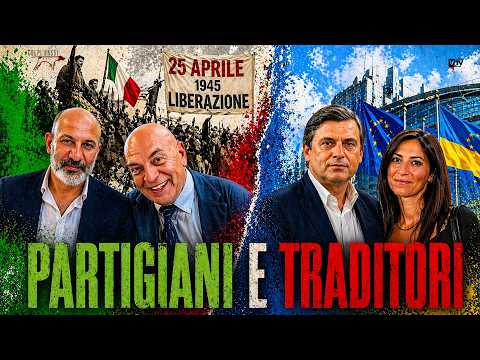
The article questions who the true partisans are in 2026. Who fights for a free Italy under occupation, sabotaging the regime's compliance? Conversely, who are the collaborators, the puppets of corrupt powers serving an immoral authority?
This reflection is set against the backdrop of ongoing conflicts and political maneuvering, where the lines between resistance and collaboration blur.
Carlo Calenda, a prominent Italian politician, is mentioned critically. He is accused of lacking intelligence capabilities and of spreading misinformation. The article highlights the difficulty in tracing financial flows, especially concerning alleged Russian funding of certain associations.
The media landscape is also scrutinized, with accusations that some journalists and commentators have vilified political figures like Giorgia Meloni, labeling her with derogatory terms and comparing Russian President Vladimir Putin to historical tyrants without facing consequences.
The presence of Russian drones in NATO territory is cited as evidence of the ongoing threat. The article suggests that instead of focusing on minor reforms, Italy should hold a referendum on energy policies, specifically on whether to allow the import of liquefied natural gas from Russia, which the EU plans to block by 2027.
The article recounts how Giorgia Meloni was insulted by a Russian journalist and how the Italian government responded by summoning the ambassador. It contrasts this with the harsh rhetoric used by Italian politicians against Russia since February 2022, including multiple sanctions and support for the Ukrainian conflict.
The left-wing political figures are portrayed as engaging in provocative actions, such as Ilaria Salis's controversial posters criticizing migration policies. The article suggests that some leftist politicians prefer cosmopolitan and fluid identities over more traditional or nationalist figures.
A significant point raised is the need for total transparency in tax spending. While technology allows tracking products from origin to consumer, citizens lack insight into how their taxes are used. The article argues for a system where taxpayers can choose how their contributions are allocated, whether to healthcare, education, military spending, or climate initiatives.
This approach would enhance democracy, reduce corruption, and discourage tax evasion. It calls for political forces to champion this cause to limit technocratic discretion and expose inefficiencies and criminal expenditures.
The article closes by wishing readers a meaningful April 25, hoping for liberation from various forms of oppression and occupation. It calls for awareness and action against the forces that control and exploit society, urging a reconsideration of what it means to resist and collaborate in today's Italy.
This comprehensive analysis of Italy's political and energy situation in 2026 highlights the complexities of resistance, collaboration, and governance amid international conflict and domestic challenges. It underscores the importance of transparency, citizen engagement, and critical reflection on the narratives shaping public discourse.