This blog post explores the fundamental concepts of supply and demand in economics, illustrating how markets operate through voluntary exchange, price signals, and the equilibrium of supply and demand. It also discusses the implications of these concepts in real-world scenarios, including the ethical considerations of market regulation.
In the world of economics, one of the most fundamental concepts is that of supply and demand. This principle governs how markets operate and how resources are allocated. In this post, we will delve into the intricacies of supply and demand, exploring how they shape our economy and influence our daily lives.
A market is defined as any place where buyers and sellers come together to exchange goods and services. The essence of a market lies in the concept of voluntary exchange, where both parties willingly engage in a transaction. For instance, when you purchase a box of strawberries for $3, you value the strawberries more than the money you spent, while the seller values the $3 more than the strawberries. This mutual benefit is the foundation of market transactions.
One of the most remarkable aspects of competitive markets is their efficiency in allocating scarce resources. When farmers produce an excess of strawberries, the price tends to fall, prompting them to consider alternative crops like lettuce or Brussels sprouts. Conversely, if there is a shortage of strawberries, prices rise, incentivizing farmers to increase production. This dynamic adjustment is driven by what economists refer to as price signals, which guide producers on how to allocate their resources effectively.
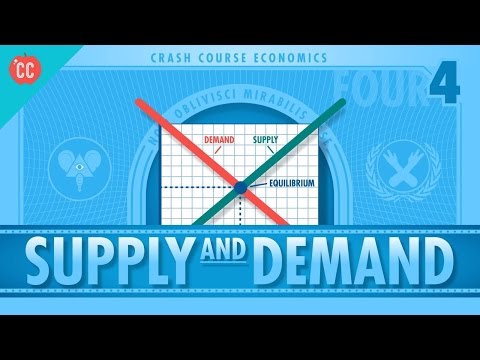
The law of demand states that as the price of a good increases, the quantity demanded decreases, and vice versa. This relationship is represented by a downward-sloping demand curve on a graph. For example, if the price of strawberries rises, consumers may opt for alternatives, leading to a decrease in the quantity demanded.
Conversely, the law of supply indicates that as the price of a good increases, the quantity supplied also increases. This is illustrated by an upward-sloping supply curve. If strawberry prices rise, farmers are motivated to produce more strawberries to capitalize on higher profits.
The intersection of the supply and demand curves reveals the equilibrium price and quantity, where the quantity demanded equals the quantity supplied. At this point, the market is balanced, and there is no surplus or shortage of goods.
Prices are not static; they fluctuate due to various external factors. For instance, seasonal changes can impact supply. In winter, colder temperatures may reduce strawberry production, shifting the supply curve to the left and resulting in higher prices. Understanding these shifts is crucial for analyzing market behavior.
Prices serve as signals to both consumers and producers. When demand for strawberries decreases, the equilibrium price falls, which may lead to a reduction in production. Economists argue that market forces should dictate these changes without government intervention, as subsidies can misallocate resources and lead to inefficiencies.
The principles of supply and demand extend beyond agricultural products. A prime example is the gasoline market, which is known for its price volatility. In 2014, a significant drop in gas prices occurred due to decreased demand from weakening economies and increased supply from new production technologies. This scenario illustrates how interconnected global markets can influence local prices.
While markets are generally efficient, there are instances where unregulated markets can lead to ethical dilemmas. For example, the idea of a market for human organs raises significant moral questions. The potential for exploitation of vulnerable populations and the risk of illegal activities, such as organ trafficking, highlight the need for regulation in certain markets.
Understanding supply and demand is essential for grasping the fundamentals of economics. These concepts illustrate how human choices and market dynamics interact to shape our economy. While markets can efficiently allocate resources, they are not infallible and sometimes require regulation to address ethical concerns. As we navigate the complexities of economics, it is crucial to remember that human behavior ultimately drives market outcomes, distinguishing economic principles from absolute laws like gravity.





