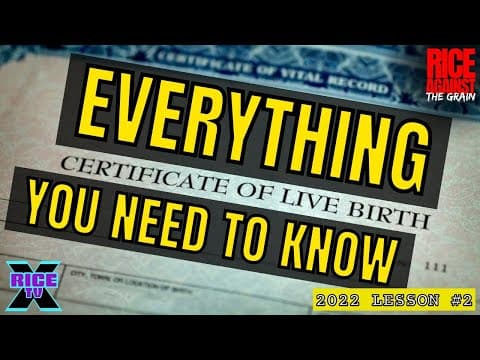
In this comprehensive discussion, Dr. KL Beneficiary explains the complexities surrounding birth certificates, the legal implications of their creation, and how they relate to the concept of legal fictions and trusts. He emphasizes the importance of understanding one's legal status and the potential for reclaiming rights through proper documentation and legal processes.
In the second lesson of the series "Great Birth Certificate Deception," Dr. KL Beneficiary joins Rice Against the Grain to delve into the intricacies of birth certificates and their implications in the legal system. This post aims to summarize the key points discussed in the video, providing a clear understanding of the birth certificate's role in legal fiction and personal rights.
Dr. KL Beneficiary, also known as Mr. Beneficiary, emphasizes the importance of understanding the concept of legal fiction, particularly how it relates to the birth certificate. He encourages viewers to watch the first lesson in the series to grasp the foundational concepts before diving into the specifics of birth certificates.
The discussion begins with the events surrounding a birth. When a baby is born, the umbilical cord is cut, separating the child from the mother. This moment is crucial as it marks the transition from a singular entity to two distinct legal entities. The parents typically grant the child a name, which establishes a trust relationship where the parents act as trustees until the child reaches the age of majority.
Dr. Beneficiary references specific legal codes from the District of Columbia that define terms related to birth. For instance, a "live birth" is defined as the complete expulsion of a product of human conception, regardless of whether the newborn breathes or shows other signs of life. This definition is pivotal in understanding the legal status of the newborn and the subsequent creation of the birth certificate.
Dr. Beneficiary explains that there are two types of birth certificates: the county-level certificate and the state-level certificate. The county certificate, often referred to as the "long form," includes a doctor's signature and serves as evidence of the live birth. In contrast, the state certificate is typically issued in all capital letters and lacks a doctor's signature, indicating a different legal status.
The birth certificate represents a trust agreement. The parents, as creators of the trust, grant the name to the child, establishing a legal identity. However, once the birth certificate is issued, a separate entity, often referred to as the "straw man," is created. This straw man is a legal fiction that the government uses to exert control over the individual.
Dr. Beneficiary stresses that understanding the distinction between the real person and the straw man is essential. The straw man, represented by the all-caps name on the state-issued birth certificate, is subject to government jurisdiction. In contrast, the real person retains certain rights and can reclaim their status as a Union State Citizen or American National.
To navigate the legal system effectively, individuals must possess the correct documentation. Dr. Beneficiary advises obtaining the original birth certificate with a doctor's signature and getting it authenticated by state and federal authorities. This process strengthens one's legal standing and can be used in court to assert rights.
Dr. Beneficiary introduces the concept of the redemption process, where individuals can reclaim their rights by asserting their status as beneficiaries of the original constitutional trust. This involves legally claiming the property associated with the straw man and transferring it into a private trust, where the individual becomes the beneficiary.
The discussion also touches on how to handle legal challenges, such as traffic violations. By understanding the distinction between the straw man and the real person, individuals can avoid inadvertently consenting to jurisdiction by simply answering questions incorrectly during encounters with law enforcement.
In conclusion, Dr. KL Beneficiary provides valuable insights into the complexities of birth certificates and their implications in the legal system. By understanding the creation of the straw man and the importance of proper documentation, individuals can reclaim their rights and navigate the legal landscape more effectively. This lesson serves as a crucial step in demystifying the legal fiction surrounding birth certificates and empowering individuals to take control of their legal status.