This article analyzes the recent closure of the Strait of Hormuz by Iran, exploring the historical context, the conflicting statements from U.S. leadership, and the strategic dynamics between Iran and the United States. It highlights the importance of understanding Iran's perspective shaped by decades of conflict and foreign intervention, and discusses the complexities of negotiations and military posturing in this critical geopolitical hotspot.
The Strait of Hormuz, a vital maritime chokepoint for global oil shipments, has once again become a focal point of international tension following Iran's decision to close it. This article delves into the complexities surrounding this development, examining the historical background, the conflicting narratives from U.S. officials, and the broader geopolitical context.
Recent statements from U.S. leadership, including President Trump, have been marked by contradictions and confusion. It is crucial to listen carefully to what all parties—the Americans, Israelis, and Iranians—say and then compare these statements with the realities on the ground. This approach helps in understanding the true nature of the conflict and the motivations behind each side's actions.
To comprehend Iran's current stance, one must consider its history and cultural mindset. The relationship between the United States and Iran has been fraught with conflict for decades:
1953 CIA Coup: The U.S. and Britain orchestrated a coup to overthrow Iran's democratically elected government because it was not cooperating with Western oil interests. This led to the installation of the Shah, who was favorable to Western powers.
1979 Iranian Revolution: The Iranian people overthrew the Shah, leading to the establishment of the Islamic Republic.
Iran-Iraq War (1980-1988): The U.S. supported Iraq in a devastating war against Iran, resulting in hundreds of thousands of Iranian deaths and long-term damage to the country.
U.S. Involvement in Iraq (2003-2008): Iran allegedly supported Shia militias in Iraq, which used effective roadside bombs (EFPs) that killed hundreds of American soldiers. While this is condemned, it must be understood in the context of the prior eight years of war where the U.S. supported Iraq against Iran.
This history shapes Iran's perception of the United States and informs its strategic decisions.
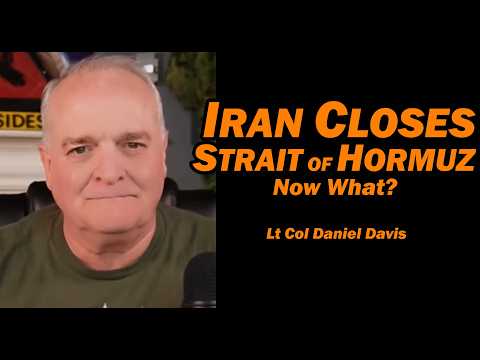
Iran has a history of threatening to close the Strait of Hormuz, a critical passage for global oil shipments. Recently, Iranian gunboats reportedly fired on a tanker in the Strait, and Iran announced the closure of the Strait again.
Iranian officials stated that they agreed to allow a limited number of ships to pass through the Strait according to ceasefire terms. However, they claimed the U.S. did not fulfill its obligations, leading to the closure and requiring Iranian approval for passage.
The Islamic Revolutionary Guard Corps (IRGC) spokesman clarified that the situation is not an all-or-nothing deal. They demanded that the U.S. lift its blockade for Iran to do the same. President Trump, however, stated that only Iran lifted its blockade while the U.S. maintained its own, undermining negotiations.
Negotiations and military posturing in this context require mutual concessions. It is illogical to expect Iran to unilaterally lift its blockade while the U.S. maintains its own. Such a stance sabotages any chance of progress and may be intended to portray Iran negatively to the American public.
The U.S. blockade and Iran's response must be understood as part of a broader strategic game where each side seeks leverage. The failure to offer reciprocal concessions complicates efforts to reopen the Strait and ease tensions.
The ongoing conflict and rhetoric often lack honesty about the historical and current realities. The U.S. narrative tends to paint Iran as the aggressor without acknowledging past actions that have contributed to the hostility.
Understanding Iran's perspective, shaped by decades of foreign intervention and conflict, is essential for crafting policies that lead to beneficial outcomes rather than escalating tensions.
The closure of the Strait of Hormuz by Iran is a complex issue rooted in a long history of conflict and mistrust between Iran and the United States. Conflicting statements from U.S. leadership and unilateral demands undermine the potential for peaceful resolution. A nuanced understanding of Iran's history, culture, and strategic motivations is critical for any meaningful dialogue and resolution. Mutual concessions and honest communication are necessary to reopen the Strait and stabilize this vital region.
This analysis underscores the importance of looking beyond surface-level narratives to grasp the full scope of geopolitical events and their implications for global security and diplomacy.