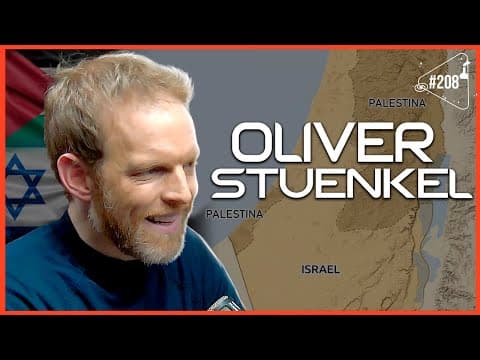
In a recent discussion, Oliver Stuenkel delves into the intricate dynamics of the Israel-Palestine conflict, emphasizing the historical context, the role of social media in shaping narratives, and the geopolitical implications of current events. He highlights the challenges of neutrality in a polarized environment and the importance of understanding multiple perspectives to foster dialogue and peace.
In a recent episode of "Ciência Sem Fim," Oliver Stuenkel, a prominent political analyst, shared his insights on the ongoing Israel-Palestine conflict, emphasizing the need for a nuanced understanding of the situation. This blog post summarizes the key points discussed during the episode, providing a comprehensive overview of the complexities surrounding this long-standing issue.
The conversation began with Stuenkel acknowledging the chaotic nature of current global events, particularly the escalating tensions in the Middle East. He encouraged viewers to engage with the discussion by asking questions and sharing their perspectives, highlighting the importance of staying informed in such turbulent times.
Stuenkel pointed out that the current climate is marked by extreme polarization, especially on social media. He noted that individuals often feel compelled to take sides, which complicates the discourse surrounding the conflict. As someone who has studied the issue academically, he expressed his discomfort with the lack of a clear stance, stating that both sides have valid historical grievances.
The discussion turned to recent events, including the tragic missile strike on a hospital in Gaza, which resulted in significant casualties. Stuenkel explained that the situation is fraught with misinformation, as both sides present conflicting narratives. He emphasized the difficulty of obtaining accurate information during wartime, where journalists face immense risks and the truth often becomes obscured.
Stuenkel highlighted the impact of social media on public perception, noting that it can amplify misinformation and deepen divisions. He advised viewers to critically evaluate the sources of information they consume, suggesting that they follow a diverse range of perspectives to gain a more balanced understanding of the conflict.
To provide context, Stuenkel discussed the historical roots of the Israel-Palestine conflict, tracing back to the establishment of Israel in 1948 and the subsequent displacement of Palestinians. He explained that both Israelis and Palestinians have experienced significant suffering and trauma, which fuels the ongoing cycle of violence.
Stuenkel pointed out that identity plays a crucial role in the conflict. Many individuals on both sides feel a deep connection to their historical narratives, which complicates efforts for reconciliation. He noted that the trauma experienced by previous generations continues to influence current attitudes and actions.
The conversation also touched on the broader geopolitical implications of the conflict. Stuenkel explained that the United States has historically been a key ally of Israel, while many countries in the Global South, including Brazil, have shown support for the Palestinian cause. He emphasized the need for a balanced approach to diplomacy that acknowledges the rights and aspirations of both peoples.
Stuenkel discussed the influence of external actors, including Iran and the United States, on the conflict. He noted that while Iran supports groups like Hamas, the U.S. has a vested interest in maintaining its alliance with Israel. This dynamic complicates the prospects for peace, as external pressures often exacerbate tensions.
In concluding the discussion, Stuenkel expressed skepticism about the immediate prospects for peace. He emphasized the importance of dialogue and understanding, urging individuals to engage with diverse perspectives rather than retreating into echo chambers. He also highlighted the role of education in fostering a more informed public discourse.
The Israel-Palestine conflict is a multifaceted issue that requires careful consideration of historical, social, and geopolitical factors. As Oliver Stuenkel articulated, understanding the complexities of this conflict is essential for fostering dialogue and working towards a peaceful resolution. By engaging with diverse perspectives and remaining informed, individuals can contribute to a more nuanced understanding of this critical global issue.