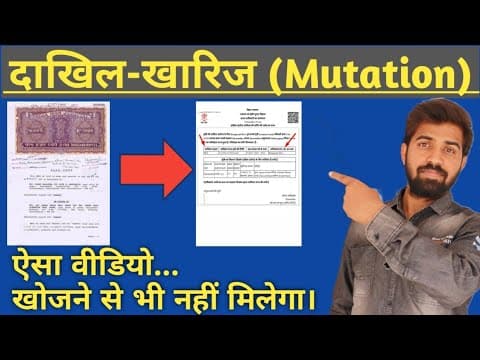
This blog post provides an in-depth explanation of the mutation process of property, known as 'dakhil-kharij' in Hindi. It covers the significance of mutation, the steps involved in property transfer, and the importance of maintaining accurate records to avoid future disputes.
In the realm of property transactions, the term 'mutation' or 'dakhil-kharij' plays a crucial role. This process is essential when buying or selling land, ensuring that ownership is accurately reflected in official records. In this blog post, we will explore the meaning of mutation, its significance, and the detailed steps involved in the process.
Mutation refers to the process of updating land records to reflect changes in ownership. When a property is sold, the ownership must be transferred from the seller to the buyer in the official records. This ensures that the new owner has legal rights to the property and can utilize it for various purposes, including obtaining loans or selling it in the future.
The term 'dakhil' means to enter or include, while 'kharij' means to exclude or remove. Therefore, dakhil-kharij signifies the process of entering the new owner's name in the land records while removing the previous owner's name. This process is vital for establishing clear ownership and preventing disputes.
When a property owner (let's call them A) decides to sell their land to another individual (B), the first step is to create a sale agreement. This agreement must be registered at the local registration office, which involves paying applicable taxes and fees. The registration process varies by state, with different rates for stamp duty and registration fees.
Once the property is registered, the original document remains with the buyer (B). The seller (A) may keep a photocopy for their records. However, registration alone does not complete the transfer of ownership; the mutation process must also be initiated.
After registration, the buyer must apply for mutation at the local administrative office (often referred to as the block office). This application must include details of the sale, such as the registered document and any relevant identification.
The local authorities will verify the application to ensure that the seller had the legal right to sell the property and that the transaction is legitimate. This involves checking the land records to confirm the previous ownership and the details of the sale.
Once the verification is complete, the authorities will update the land records. This involves deducting the sold area from the seller's account and adding it to the buyer's account. For example, if A sold 5 acres of land to B, A's account will reflect a decrease of 5 acres, while B's account will show an increase of 5 acres.
After the records are updated, a mutation certificate is issued to the new owner (B). This certificate serves as proof of ownership and is crucial for any future transactions involving the property.
The mutation process is not just a formality; it has significant implications for property ownership. Here are a few reasons why mutation is essential:
In summary, the mutation process, or dakhil-kharij, is a critical step in property transactions that ensures the legal transfer of ownership. Understanding this process helps buyers and sellers navigate the complexities of property laws and maintain accurate records. By following the outlined steps, individuals can ensure a smooth transition of property ownership and avoid potential disputes in the future.
This comprehensive guide aims to clarify the mutation process and its significance in property transactions, empowering individuals to make informed decisions when dealing with real estate.