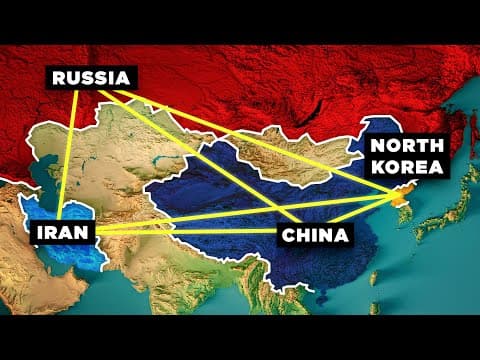
The ongoing war in Ukraine has seen an unprecedented alliance forming between Russia, Iran, North Korea, and China, driven by shared geopolitical ambitions against the US-led global order. This blog post explores the dynamics of this new axis, their individual goals, and the implications for global stability.
The war in Ukraine has evolved into a complex geopolitical conflict, drawing in various nations and reshaping alliances. As the conflict drags on, Russia has increasingly relied on support from countries like Iran, North Korea, and China. This blog post delves into the dynamics of this emerging axis, exploring the motivations behind their cooperation and the implications for global stability.
Since the onset of the Ukraine invasion, Iran has played a significant role in bolstering the Russian military. Reports indicate that Iran has supplied over 3,700 kamikaze drones, known as Shahed 136, to Russia, which have been used extensively to target Ukrainian energy infrastructure. Furthermore, Iran is reportedly assisting Russia in manufacturing these drones domestically and has provided at least 400 short-range ballistic missiles since the conflict began.
North Korea has also stepped into the fray, with leader Kim Jong-un visiting Russia and facilitating the transfer of arms. It is estimated that North Korea has sent at least 11,000 containers of military supplies, including 5 million rounds of artillery and short-range ballistic missiles, to support Russian efforts in Ukraine. This collaboration marks a significant shift in North Korea's foreign relations, aligning it more closely with Russia.
China's involvement has been pivotal for Russia, providing an economic lifeline through the purchase of Russian oil and gas. Additionally, China has supplied dual-use products, such as semiconductors and machine tools, essential for Russia's military capabilities. Estimates suggest that around 90% of Russia's imported semiconductors come from China, highlighting the depth of their economic ties.
The cooperation among Russia, Iran, North Korea, and China has led analysts to refer to them as a new axis, challenging the US-led global order. This alliance is characterized by shared geopolitical objectives, including the desire to diminish American influence in their respective regions. Each nation views the US as a common adversary, prompting them to collaborate despite their historical differences.
The US has imposed heavy sanctions on Iran and North Korea, limiting their ability to engage with the global economy. This has forced both nations to seek partnerships with Russia, which has also faced significant sanctions following its invasion of Ukraine. The shared experience of isolation from the West has fostered a sense of camaraderie among these nations, further solidifying their alliance.
Despite their cooperation, the alliance among these four nations is not without its challenges. Each country has distinct interests that could lead to friction:
The alliance between Russia, Iran, North Korea, and China represents a significant shift in global geopolitics, challenging the established US-led order. While their cooperation is driven by shared interests and mutual adversaries, the underlying tensions and divergent goals could ultimately undermine their alliance. As the situation in Ukraine continues to evolve, the implications of this new axis will be felt across the globe, shaping the future of international relations for years to come.