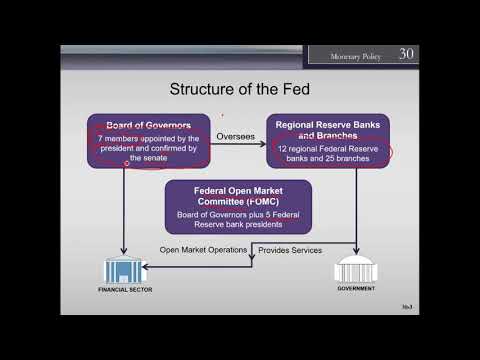
This blog post explores the structure and responsibilities of the Federal Reserve System, highlighting its role as a quasi-governmental agency responsible for conducting monetary policy, regulating the banking system, and monitoring economic health through regional banks.
The Federal Reserve, established in 1913, plays a crucial role in the U.S. economy. This post delves into its structure, responsibilities, and the evolution of its monetary policy, providing a comprehensive overview of how it operates as a quasi-governmental agency.
The Federal Reserve was created in response to banking crises, aiming to prevent runs on banks and ensure stability in the financial system. At its inception, the understanding of monetary policy was limited, and the Fed's primary role was to act as a lender of last resort during banking emergencies.
The Federal Reserve has several key responsibilities, including:
The Federal Reserve System is governed by a Board of Governors, consisting of seven members appointed by the President and confirmed by the Senate. Each member serves a 14-year term, providing the Fed with a degree of independence from political pressures. This autonomy is crucial for maintaining credibility in monetary policy.
The Fed comprises 12 regional banks, each responsible for monitoring economic conditions in their areas. These banks report back to Washington, D.C., contributing to the overall understanding of the national economy. Each regional bank has its own president and may have several branch banks to serve local populations.
The FOMC is the key decision-making body within the Fed, responsible for setting monetary policy. It includes all seven members of the Board of Governors and five rotating presidents from the regional banks. The president of the Federal Reserve Bank of New York is a permanent voting member due to the bank's significance in the financial system.
The FOMC meets approximately every eight weeks to review economic data, assess interest rates, and determine the appropriate course of monetary policy. Their decisions are influenced by current economic conditions, including unemployment rates and inflationary pressures.
The Chairman of the Federal Reserve, currently Jay Powell, is selected from the Board of Governors and serves a four-year term, which can be renewed. The Chairman plays a pivotal role in guiding monetary policy and is often regarded as one of the most powerful figures in the U.S. government.
The Fed conducts monetary policy primarily through influencing the banking system's reserves, which affects the money supply, credit availability, and interest rates. Unlike fiscal policy, which is directly controlled by the government through taxation and spending, monetary policy is managed independently by the Fed.
The Federal Reserve System is a complex and essential institution in the U.S. economy. Its structure, characterized by a balance of independence and accountability, allows it to conduct monetary policy effectively. Understanding the Fed's role and operations is crucial for grasping how monetary policy influences economic conditions and stability in the United States.





