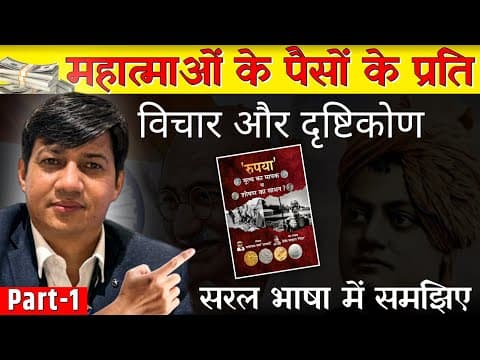
This blog post explores the themes and insights from the book 'Rupee: A Measure of Value or a Tool for Exploitation' by Ghanashyam Verma, discussing the historical context of currency exploitation, the impact of colonialism, and the perspectives of notable figures like Subhas Chandra Bose and Vinoba Bhave on the economic system in India.
In this blog post, we delve into the key themes and insights from the book "Rupee: A Measure of Value or a Tool for Exploitation" authored by Ghanashyam Verma. The book aims to shed light on the exploitation of currency and its implications for the people of India and beyond. Before we explore the chapters of the book, it is essential to understand its purpose and the context in which it was written.
Ghanashyam Verma, the author, has a rich background, having worked with the Reserve Bank of India, the Ministry of Finance, and the Prime Minister's Office. His research is grounded in extensive documentation, including RTI (Right to Information) requests that reveal the underlying issues related to currency and economic exploitation.
The primary objective of this book is not merely to advocate for debt relief but to highlight how the people of India and other nations have been systematically exploited through financial systems. Verma emphasizes that understanding this exploitation is crucial for the citizens of India and other countries, such as Nepal, which have faced similar economic challenges.
Verma draws parallels between the historical events in Nepal and India, particularly focusing on the end of monarchy in Nepal around 2008. He discusses how the royal family was eliminated, leading to a shift in power dynamics and the introduction of democratic systems influenced by global economic powers like the Rockefeller Foundation and the World Economic Forum. This transition, he argues, has resulted in widespread indebtedness among the populace.
The book references the thoughts of Subhas Chandra Bose, who understood the intricacies of economic exploitation. Bose's establishment of the Azad Hind Government and his efforts to create a currency system independent of British control are highlighted as significant steps towards economic sovereignty. His declaration in 1943 emphasized the need for a government that reflects the will of the Indian people, free from colonial influences.
Vinoba Bhave's perspective on currency is also discussed. He criticized the fluctuating value of money and its impact on society. Bhave argued that the true value of currency should not be determined by market fluctuations but by its ability to meet the basic needs of the people. He lamented the increasing dependence on currency in rural areas, where previously, barter systems sufficed.
Verma critiques the current economic system, which he claims is a remnant of colonial rule designed to perpetuate poverty and exploitation. He argues that the parliamentary democratic system established by the British continues to serve the interests of the wealthy elite, leaving the common people in a cycle of debt and dependency.
The book also references Dr. B.R. Ambedkar, who was not only a key figure in drafting the Indian Constitution but also an economist. Ambedkar warned about the dangers of economic inequality and the need for a system that ensures social and economic justice. His insights are crucial for understanding the ongoing struggles against economic exploitation in India.
In conclusion, "Rupee: A Measure of Value or a Tool for Exploitation" serves as a critical examination of the economic systems that govern our lives. Through the lens of historical events and the thoughts of influential leaders, Ghanashyam Verma invites readers to reflect on the true value of currency and its implications for society. The book is a call to action for individuals to understand their economic realities and strive for a system that prioritizes the welfare of all citizens.
As we continue to explore the chapters of this book, it is essential to engage with these ideas and consider how they apply to our current economic landscape. The journey towards understanding the value of the rupee is not just about currency; it is about the broader implications for justice, equity, and freedom in society.