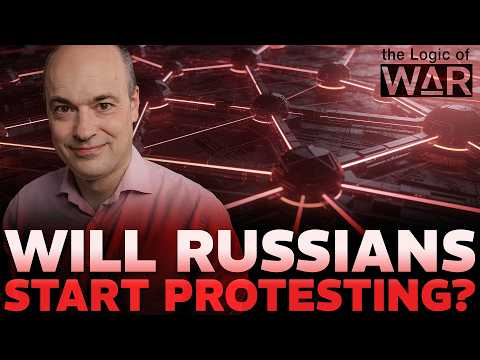
This article explores the complex question of when Russians might begin protesting, analyzing three main theories: social contract, passive adaptation, and aggressive immobility. It highlights current internet crackdowns as a potential catalyst for protests, given their impact on daily life and societal functioning. The piece also discusses the importance of online privacy tools like ProtonVPN in the context of increasing censorship and surveillance.
This article addresses a pressing question that has been widely discussed since the full-scale invasion of Ukraine in 2022: when will Russians start protesting? This question is significant for two main reasons. First, protests in Russia could potentially pressure President Putin to end the war in Ukraine. Second, recent crackdowns on internet freedom have sparked protests in Russia in a way not seen before, raising the question of whether these are the beginnings of a larger movement or will fizzle out.
To understand when Russians might start protesting, it is helpful to explore the theoretical frameworks that explain Russian political behavior. Drawing heavily on the work of Professor Sam Greene from King's College London, three main perspectives are considered.
This theory posits a tacit agreement between the Russian elite and the population: the people stay out of politics in exchange for security and economic prosperity. This view is common among Western analysts. However, the theory struggles to explain the current situation because despite declining security and prosperity under Putin, Russians have not started protesting. Therefore, the social contract theory does not effectively predict protest behavior in Russia today.
Popular among some Russian analysts and Ukrainians, this theory suggests that Russians have become so accustomed to hardship and poor governance that they passively adapt rather than protest. They are cynical about politics, believing no government will be better than the last. Protesting is seen as futile since any new leaders would be just as bad. Instead, Russians focus on coping and making the best of their personal lives. According to this theory, protests are unlikely as long as people can meet their basic needs. However, this theory also falls short because there have been localized protests in Russia over specific issues, which sometimes led to government concessions.
The most convincing theory, according to Greene, is aggressive immobility. Russians are not merely passively adapting; they aggressively resist changes to the system because their lives depend on coping mechanisms and workarounds that rely on the system remaining stable. Any change threatens these mechanisms, so Russians prefer the status quo, even if it is dysfunctional. This conservative stance means that protests are likely only when the government attempts to fundamentally alter how society functions.
Currently, the Russian government is undertaking unprecedented measures to control the internet. Unlike previous efforts that involved blocking certain websites or slowing traffic, the government now aims to create a "white list" of approved websites and services, blocking all others. This effort is technically challenging and has made the internet increasingly unreliable for Russians.
The crackdown affects many aspects of daily life:
Businesses that want to be on the approved list must block VPN access, complicating the use of VPNs for ordinary users. This situation forces Russians to constantly toggle VPNs on and off depending on the websites they visit.
This disruption has sparked protests among various groups, including influential bloggers and longtime Putin supporters who have publicly criticized the government. For example, Instagram blogger Victoria Bona has released critical videos about the government's direction, signaling a shift in political engagement among previously apolitical figures.
The internet crackdown is a significant change to the fundamental infrastructure of Russian society, potentially mobilizing protests due to the aggressive immobility mindset. However, this is just one of many changes Putin will need to implement as the war and economic crisis worsen. The current system is broken, and more interventions that directly affect people's lives are expected.
The government is also shaping the information environment to prepare the population for future controversial decisions. These changes could provoke further protests as they interfere with people's coping mechanisms.
The rapid erosion of online freedom in Russia serves as a reminder that censorship, surveillance, and information restrictions can escalate quickly. Tools that protect privacy and enable access to the open internet are increasingly valuable.
ProtonVPN is one of the fastest, most reliable, and secure VPN services available. A VPN encrypts your internet traffic, preventing your internet service provider from seeing which websites you visit. This encryption protects your browsing history from being logged or sold to advertisers and shields you from government surveillance.
ProtonVPN is trusted globally, keeps no logs, and is independently audited. It offers servers in 145 countries, allowing users to access content worldwide. For example, it can help access Russian news websites blocked by local providers without routing traffic through Russia, which could expose users to monitoring.
Understanding when Russians might start protesting requires considering the complex interplay of societal coping mechanisms, government actions, and fundamental changes to daily life. The aggressive immobility theory best explains the current lack of widespread protests but also highlights that significant changes to societal functioning, such as the ongoing internet crackdown, could trigger protests.
As Russia continues to face economic and wartime pressures, more disruptive changes are likely, making it essential to monitor these developments closely. Meanwhile, protecting online privacy and access remains crucial in an era of increasing censorship and surveillance worldwide.