This blog post explores William Blake's poem 'The Tyger,' discussing its themes of creation, duality, and the nature of good and evil, while contrasting it with his other work, 'The Lamb.'
William Blake's poem "The Tyger" is a profound exploration of the nature of creation and the duality of existence. In this post, we will delve into the themes, symbolism, and contrasts presented in the poem, as well as its place within Blake's larger body of work, particularly in relation to his other collection, "Songs of Innocence."
William Blake was a visionary poet and artist known for his unique perspective on society and the human condition. His works often reflect a deep understanding of the contrasts between innocence and experience, good and evil. "The Tyger" is part of his collection "Songs of Experience," which highlights the darker aspects of life and the complexities of human nature.
Before diving into the poem itself, it is essential to understand the context in which Blake wrote it. "The Tyger" poses a critical question about the existence of evil in a world that also contains innocence. Blake contrasts the fierce and fearsome nature of the tiger with the gentle and innocent lamb, which he explores in his other poem, "The Lamb," from the collection "Songs of Innocence."
Blake's two collections, "Songs of Innocence" and "Songs of Experience," serve as counterpoints to each other. While "Songs of Innocence" celebrates purity, joy, and the beauty of the world, "Songs of Experience" reveals the harsh realities and moral complexities of life. This duality is central to understanding Blake's work and the themes he explores in "The Tyger."
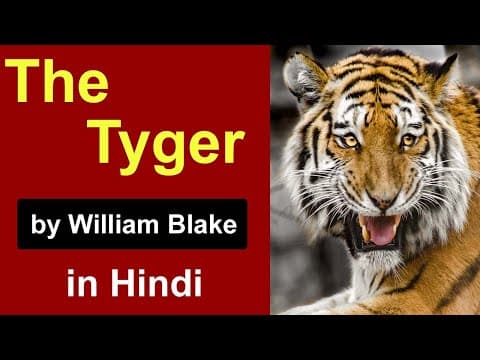
The poem begins with the striking line, "Tyger Tyger, burning bright, / In the forests of the night." This imagery evokes a sense of awe and fear, setting the tone for the exploration of the tiger's fierce beauty and power. The use of fire symbolizes both destruction and creation, suggesting the dual nature of the tiger itself.
Blake poses a series of rhetorical questions about the creator of the tiger, asking, "What immortal hand or eye, / Could frame thy fearful symmetry?" Here, he questions the nature of God and the reasoning behind creating such a fearsome creature. This inquiry reflects a deeper philosophical contemplation about the existence of evil and the role of the divine in the world.
The poem continues to explore the theme of evil through the imagery of the tiger's eyes, described as having a fiery glow. Blake wonders about the source of this fire and the power behind the creation of such a creature. The tiger symbolizes not only physical strength but also the darker aspects of human nature and the potential for cruelty.
Blake's exploration of duality is evident as he contrasts the tiger with the lamb. While the tiger represents ferocity and danger, the lamb embodies innocence and gentleness. This juxtaposition raises questions about the nature of creation: how can a single creator produce such vastly different beings? This theme of duality is central to understanding the complexities of existence.
In conclusion, William Blake's "The Tyger" serves as a powerful meditation on the nature of creation, the existence of evil, and the duality of life. Through vivid imagery and profound questions, Blake invites readers to reflect on the complexities of the world around them. By contrasting the tiger with the lamb, he highlights the coexistence of innocence and experience, urging us to consider the deeper implications of creation and the moral fabric of society.
As we ponder the fierce beauty of the tiger, we are reminded of the intricate balance between good and evil that defines our existence.