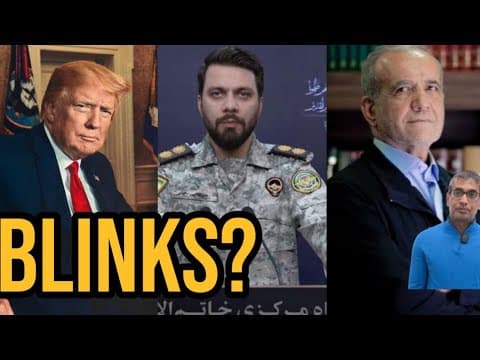
US President Donald Trump has extended the ceasefire with Iran indefinitely, despite Iran refusing to send its delegation to peace talks in Pakistan. The article explores the political dynamics, criticisms of Trump's approach, Iran's internal debates, and a glimpse into daily life in Iran, highlighting the complexities of the ongoing conflict and diplomatic efforts.
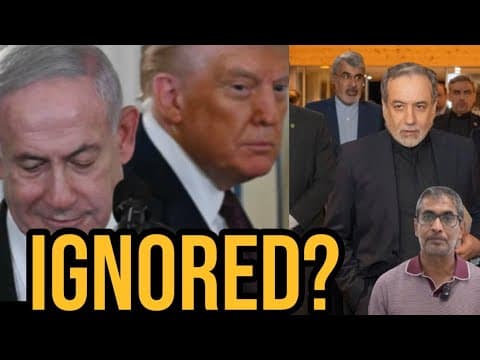
US President Donald Trump has faced significant challenges and criticism as his claims regarding Iran have been exposed as inaccurate. Despite Trump's assertions that Iran would comply with peace negotiations, Iran did not send its delegation to Pakistan for talks. In response, Trump has extended the ceasefire indefinitely, even though Iran refused to participate in the talks.
Trump announced the extension of the ceasefire on Truth Social, citing the fractured state of the Iranian government and the request from Pakistan's Prime Minister Shehbaz Sharif to hold off attacks until a unified proposal from Iranian leaders could be reached. Trump stated:
"Based on the fact that the government of Iran is seriously fractured, not unexpectedly so, and upon the request of Field Marshall Aim and Prime Minister Shabbaz Sharif of Pakistan, we have been asked to hold our attack on the country of Iran until such time as the leaders and representatives can come up with a unified proposal. I have therefore directed our military to continue the blockade and in all other respects remain ready and able and will therefore extend the ceasefire until such time as their proposal is submitted and discussions are concluded one way or the other."
Despite this, Iran did not send its delegation to the talks, signaling a rejection of the peace process as proposed by the US.
Earlier, Trump had confidently claimed in a CNBC interview that Iran had no choice but to accept his peace deal, asserting that the US and Israeli forces had defeated Iran's navy, air force, and leadership. He described the situation as an indirect regime change and expressed optimism about negotiating from a position of strength.
However, these claims were contradicted by Iran's refusal to participate in the talks and the lack of objective reporting by US media outlets. The media's failure to accurately report the situation was highlighted, with some outlets falsely stating that Iran had agreed to send representatives.
A notable exchange on MS Now between presenter Katy Tur and Republican Congressman Mike Lawler revealed differing perspectives on the conflict. Tur suggested that Iran, despite being backed into a corner, still held significant leverage, particularly over the strategic Strait of Hormuz, which impacts the global economy. She argued that the US appeared more desperate for peace talks than Iran.
Lawler defended the US actions as a necessary war to prevent Iran from acquiring nuclear weapons, emphasizing the elimination of Iran's leadership and the difficult decisions made by President Trump.
Concerns have been raised domestically about Trump's decision to attack Iran and the involvement of his family members in profiting from the conflict. Senator John Ossoff criticized Jared Kushner, Trump's son-in-law, for allegedly using his diplomatic position to extort billions from Middle Eastern entities while conducting nuclear diplomacy. This situation has been described as grotesque and cartoonish, highlighting the intersection of politics, diplomacy, and personal gain.
Within Iran, there is significant debate about the rationale behind agreeing to the ceasefire. Iranian academic Hassan Ahmedan noted discussions in Tehran questioning why the war was stopped after Iran had been attacked and suffered damage to its infrastructure. Some factions believe Iran should have imposed greater pressure on its enemies.
The Iranian military, particularly the Islamic Revolutionary Guard Corps (IRGC), appears to be taking a more assertive role in foreign affairs. The IRGC's representative Abdullah Sadi has stated that Iran will only negotiate if its conditions are accepted, signaling a tougher stance compared to previous political leadership.
Amidst the geopolitical tensions, the daily lives of ordinary Iranians continue. A video from Tehran showcases an Iranian woman filling up her car with gas, illustrating the country's subsidized fuel system. The rationing system allocates 60 liters of highly subsidized fuel per month at about one cent per liter, with additional tiers available at slightly higher prices, still very affordable.
The woman explains the process of using a gas card and paying with a bank card, highlighting the safety and normalcy of such transactions despite Western propaganda often portraying Iran negatively. Her full tank cost less than 75 cents, a stark contrast to fuel prices in many other countries.
The extension of the ceasefire by President Trump, despite Iran's refusal to engage in peace talks, underscores the complexities and challenges of the current US-Iran relations. The situation reveals internal divisions within Iran, criticisms of US policy and media coverage, and concerns about corruption and profiteering linked to the conflict.
Meanwhile, the resilience and daily realities of the Iranian people provide a nuanced perspective often missing from mainstream narratives. As the situation evolves, the roles of political leadership, military forces, and public sentiment in both countries will continue to shape the prospects for peace or further conflict.
The ongoing developments call for careful observation and a balanced understanding of the multifaceted issues at play in this critical international matter.