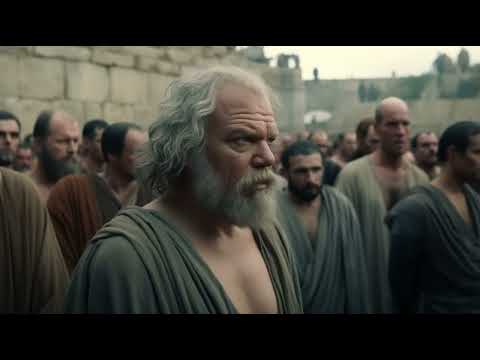
Socrates, the father of Western philosophy, opposed Athenian democracy due to concerns about majority rule, lack of expertise in governance, and the potential for demagoguery. His critiques highlight the importance of wisdom and virtue in political decision-making, which remain relevant in contemporary discussions about democracy.
Few figures in human history have shaped our understanding of philosophy, ethics, and the pursuit of wisdom as much as Socrates, the father of Western philosophy. While he is widely known for his Socratic method, which seeks knowledge through questions and answers, one of the lesser-discussed aspects of his philosophy is his strong opposition to democracy. This article explores the reasons behind Socrates's disdain for democratic governance and its implications.
To understand Socrates's objections to democracy, it is crucial to consider the political climate of Athens during his lifetime in the 5th Century BCE. Athens was the cradle of democracy, where a system was established allowing every free male citizen a say in the decision-making process of the state. Although revolutionary for its time, this Athenian democracy was markedly different from modern representative democracies, as it functioned on the basis of direct participation rather than elected representatives.
Socrates championed the pursuit of wisdom, moral virtue, and the good life (eudaimonia). He believed that most people were unenlightened and, therefore, incapable of making wise decisions about moral and political matters. Socrates emphasized that an individual's main concern should be the health of the soul, prioritizing moral virtues over physical or material wealth. He held an elitist perspective, believing that only those who had contemplated issues of justice, goodness, and truth were fit to rule.
Given these philosophical underpinnings, Socrates found Athenian democracy problematic for several reasons:
Socrates had deep reservations about the rule of the majority, which is the foundation of democratic government. He believed that the majority of the populace were not inherently wise or just and could therefore make flawed decisions. Socrates was critical of the Athenian public's ability to be easily swayed by skilled rhetoricians, regardless of the moral rectitude or practical value of their proposals.
Democracy implies that every citizen has an equal say in matters of the state. Socrates argued against this premise, asserting that just as one would want an expert helmsman to steer a ship or a trained doctor to administer medicine, political decisions should be made by those who possess knowledge and understanding of governance.
Socrates was wary of the propensity of democracy to devolve into demagoguery. He recognized that persuasive speakers could easily manipulate the emotions of the masses for their own ends. This concern was later echoed by his student Plato in his work "The Republic," where he discussed the potential transformation of democracy into tyranny.
Socrates's critique of democracy was not without personal consequences. In 399 BCE, he was put on trial on charges of impiety and corrupting the youth. His constant questioning of traditional beliefs and his criticism of Athenian democracy had made him many enemies. Despite having the chance to escape, Socrates chose to accept his sentence: a lethal dose of the poison hemlock. This event exemplified the very issues Socrates found with democracy—the tyranny of the majority and the punishment of dissenting voices.
Socrates's dissent against democracy should not be seen as an outright rejection of the democratic idea itself but rather as a critique of its implementation in Athenian society. He sought a system where wisdom and knowledge were valued over uninformed opinion. His criticisms were directed towards a democratic system that allowed and even encouraged decisions based on the whims of the uninformed majority.
While Socrates proposed the philosopher-king model, as detailed by Plato, this alternative carries its own issues of potential autocracy and elitism. Nevertheless, his critique remains valuable, highlighting the potential pitfalls of democracy, such as susceptibility to demagoguery, the danger of majority rule without adequate safeguards for minorities, and the risk of crucial decisions being made without proper expertise.
In the modern world, representative democracies with checks and balances have evolved to address some of these concerns. They attempt to ensure that those in power are at least somewhat knowledgeable about governance. Similarly, constitutional protections are in place to guard against the tyranny of the majority. Still, Socrates's critique resonates with contemporary political issues, such as the spread of misinformation, the impact of populism, and the value of expertise in political decision-making.
Even today, we grapple with questions about who should have the right to govern and how to balance the will of the majority with the rights and protection of minorities.
While Socrates may have hated democracy in its Athenian form, his critique serves as a call to continuously examine, challenge, and improve our systems of governance. His dissent is a timeless reminder that the pursuit of a just society requires constant vigilance, critical thinking, and an unyielding commitment to wisdom and truth.