This article explores the controversy surrounding the credibility of non-academic economists in public discourse, sparked by Rory Stewart's criticism of Gary Stevenson. It delves into the divide between academic and applied economics, the rising importance of wealth taxes, and the need for inclusive debate and strategic activism to address growing inequality and falling living standards.
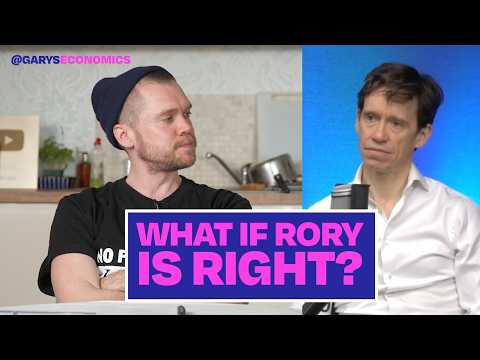
In recent months, a heated debate has emerged around who is qualified to speak authoritatively on economics, particularly in the context of advocating for wealth taxes and addressing inequality. This discussion was ignited by Rory Stewart, a former Conservative MP and co-host of the UK’s prominent politics podcast The Rest is Politics, who publicly questioned the economic credentials of Gary Stevenson, a former trader and Oxford graduate advocating for wealth taxes.
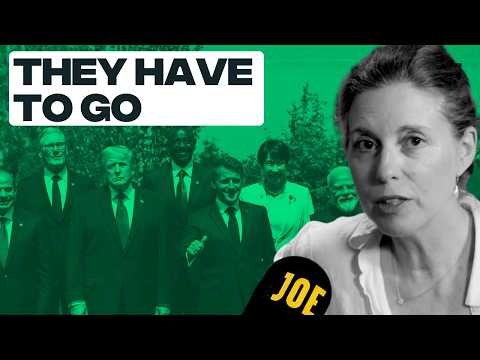
The Rest is Politics podcast, hosted by Rory Stewart and Alistair Campbell, interviewed Zach Palansky, the leader of the Green Party, in November last year. During the conversation, Stewart challenged the economic expertise of Gary Stevenson and Palansky, implying they lacked the academic credentials to be taken seriously on economic matters.
Stewart questioned the academic consensus on wealth taxes and dismissed the credentials of those like Stevenson, who, despite holding a postgraduate degree from Oxford and having extensive practical experience, were labeled as not "real economists." This sparked a public dispute, with Stevenson promptly providing proof of his qualifications and demanding a public apology, which he received.
Economics as a discipline often splits into two tracks:
Stevenson explains that many economics students, especially at elite institutions like the London School of Economics (LSE), pursue economics primarily as a pathway to lucrative careers in finance rather than academia. The best students often become traders, a profession that requires deep economic understanding but does not necessarily involve academic credentials.
Stevenson shares a personal story about a trader named "Billy," who, despite lacking a university degree, was the most successful trader at City Bank and accurately predicted the 2008 financial crisis and its aftermath. This example challenges the notion that academic qualifications are the sole marker of economic expertise.
The criticism from Stewart and others reflects a broader elitism in economics, where only those with formal academic credentials are deemed credible. Stevenson points out the hypocrisy of Stewart himself holding prestigious academic positions at Harvard and Yale without postgraduate degrees, yet denying the legitimacy of others with such qualifications.
This gatekeeping excludes many knowledgeable voices, especially those with practical experience or from less privileged backgrounds, reinforcing social and economic inequalities.
Wealth taxes have gained prominence recently, with countries like Switzerland, Norway, Spain, and Hungary implementing or considering them. The Green Party in the UK, under Zach Palansky’s leadership, has brought wealth taxes to the forefront of political discourse, significantly increasing their media salience.
However, Stewart and others argue that there is no broad academic consensus supporting wealth taxes. Stevenson acknowledges this but counters that the absence of consensus is precisely why alternative voices and new ideas are necessary. He emphasizes that the mainstream economic consensus has repeatedly failed to predict economic realities, such as the prolonged low interest rates following the 2008 crisis.
Stevenson recounts his experience working as a trader during and after the 2008 financial crisis, witnessing firsthand the consistent failure of economists to accurately predict economic trends. This failure suggests that the prevailing economic models may be missing critical factors, such as the impact of wealth inequality on living standards and macroeconomic outcomes.
He argues for the importance of challenging established economic dogma and embracing diverse perspectives, including those from practitioners and non-traditional economists.
The traditional political center, represented by the Labour and Conservative parties in the UK, is collapsing in popularity. New parties like the Greens, advocating for wealth taxes and addressing inequality, are gaining traction.
Stevenson highlights the aggressive attacks from establishment figures on these new voices as a sign of their threat to the status quo. He urges public support for politicians like Zach Palansky who champion wealth taxes and calls for increased political engagement, including voting and party membership.
Social media has become a powerful tool for shaping political discourse and mobilizing support. Stevenson advocates for creating a vibrant, diverse social media presence around wealth taxes and inequality, akin to the dynamic and engaging nature of American wrestling entertainment.
He stresses the need to support emerging influencers, build connections with politicians, and improve lobbying efforts to effect real change.
The debate over who can speak on economics is more than a personal dispute; it reflects deeper issues of elitism, social mobility, and the failure of traditional economic thought to address pressing societal challenges.
Stevenson calls for openness to new ideas, respect for practical expertise, and collective action to challenge inequality. He emphasizes that the future of economic policy and political power lies in inclusive, evidence-based debate and strategic activism.
He invites Rory Stewart and others to engage in open dialogue and stresses the urgency of building a movement capable of transforming economic policy for the betterment of all.
Tax wealth, not work, and get involved in shaping the future of economic policy.