Editorial Team
6 min read
OpenAI's OpenWorks pilot offers free AI assistance to eligible small businesses in 20 U.S. communities, pairing paid local partners with a three-month ChatGPT Business trial. It builds on earlier training efforts, but its total budget is undisclosed and typical business returns are unproven.
OpenAI, the artificial intelligence company behind ChatGPT, has introduced OpenWorks, offering local AI specialists stipends of up to $8,000 a month to help independently owned U.S. small businesses use the technology. OpenAI says the pilot is active in 20 communities, combining free practical assistance with a temporary subscription to its business software.
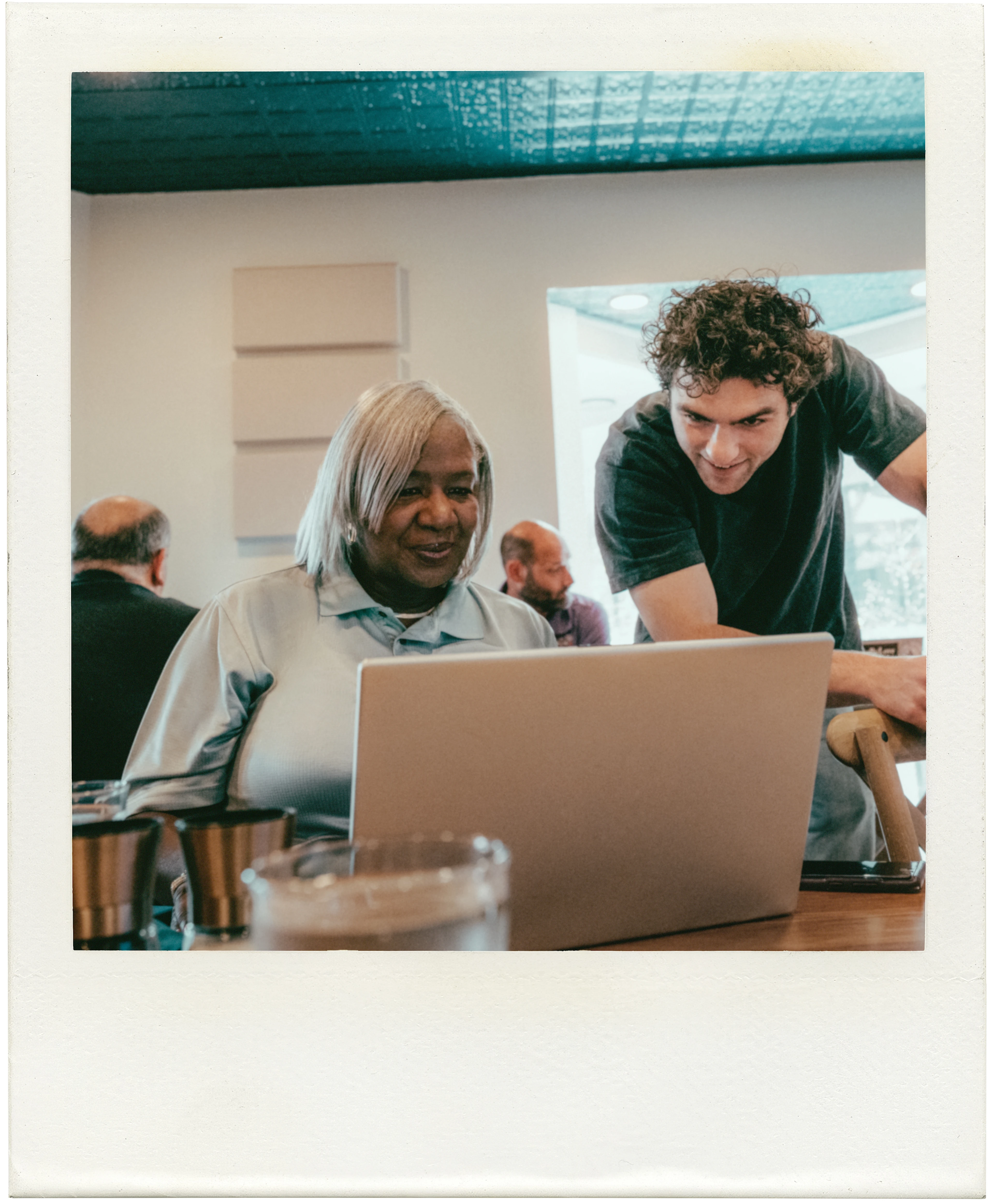
A workshop photograph from OpenAI’s OpenWorks launch page illustrates the program’s hands-on assistance model. Image: OpenAI. Source: OpenAI.
OpenAI says in its program announcement that OpenWorks Partners will work alongside owners on projects the businesses choose, including finding customers, launching advertising campaigns and building tools employees can continue using independently. Participation is free and requires no technical experience from the business.
The offer pays for help choosing a business task and putting AI into everyday use. It also gives OpenAI, which already sells a team workspace for ChatGPT, another way to introduce its software through local advisers.
Partners must dedicate days each month to working directly with businesses, host a monthly community workshop and teach practical AI skills. OpenAI is recruiting technically skilled individuals and small teams, including software and AI consultancies that can participate alongside their existing client work. It offers resources, workshop support and a monthly stipend of up to $8,000.
The payment ceiling leaves important economics unresolved. A launch report notes that OpenAI has not disclosed how many partners it plans to recruit, how long stipends will continue or whether each selected partner will receive the maximum. The published offer therefore does not establish a total program budget or the amount of support available per business.
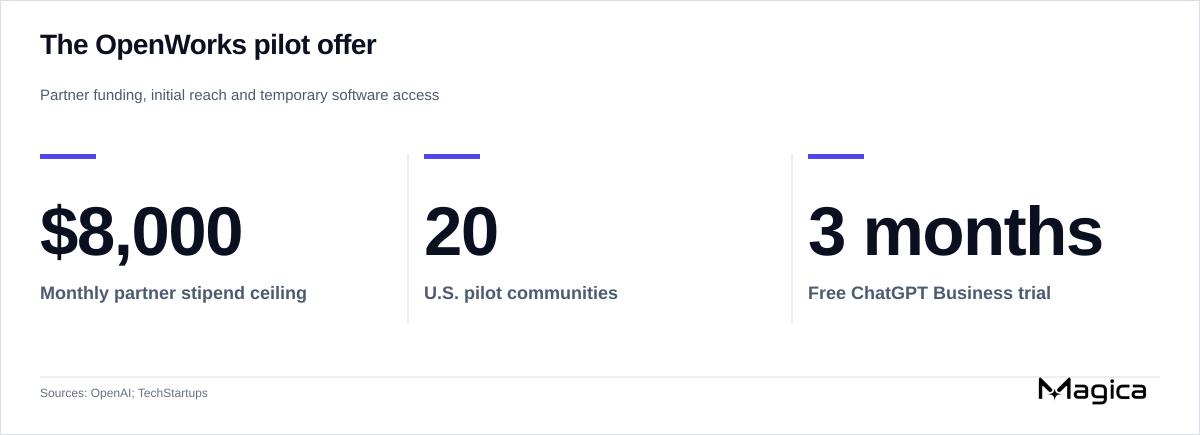
The company-reported offer combines partner stipends of up to $8,000 monthly with a 20-community pilot and three free months of ChatGPT Business. The maximum stipend is not guaranteed. Graphic: Magica. Source: OpenAI.
Eligible businesses include independently owned restaurants, retailers, service firms and manufacturers. Software and software-as-a-service companies, venture-backed businesses and private equity-owned businesses are excluded. The rules distinguish the consultants supplying assistance from the businesses receiving it: software consultancies may apply as partners even though software companies cannot join as business beneficiaries.
The pilot spans communities including Fargo, North Dakota; Charleston, South Carolina; Incline Village, Nevada; Los Angeles; and New York. OpenAI describes a nationwide ambition, but current coverage is the 20-community pilot, with recruitment continuing.
Businesses receive one-on-one support, practice using AI with tools they already use and three months of ChatGPT Business at no cost. That product is OpenAI's team workspace, originally introduced as ChatGPT Team in January 2024 and renamed ChatGPT Business in August 2025. The original offering combined access to AI models with a collaborative workspace and administrative tools.
OpenAI's current Business FAQ lists standard seats at $25 per user per month on monthly billing, or $20 per user per month when billed annually. Those are regular subscription prices, not announced OpenWorks renewal terms.
As a report on the launch terms notes, OpenAI has not explained what happens to participants' subscriptions after the free period. The launch page also does not specify seat allocations or any separate costs of connecting and maintaining business tools. The subsidy therefore establishes the initial offer, rather than the full cost of continuing a workflow.
OpenWorks extends an existing effort to reach small businesses through human advisers. On September 30, 2026, OpenAI announced a partnership with America's SBDC, the national network of small business development centers. OpenAI described the network as serving 1 million entrepreneurs each year—an existing base of business relationships for delivering training.
That initiative planned to train around 150 advisers through OpenAI Academy's Community Trainer Program, aiming to reach at least 1,000 businesses through in-person training, with additional support through advising and resources. Those were announced targets, not reported outcomes.
OpenAI's announcement also described earlier hands-on AI events with business organizations in five U.S. cities in November 2025 and a small-business program introduced in July 2026 that added training and resources.
The distinction between the SBDC effort and OpenWorks is their delivery structure: the former trains advisers within an established business-support network, while OpenWorks directly funds a network of local partners. The available announcements do not establish that one replaces the other or show which approach delivers better results.
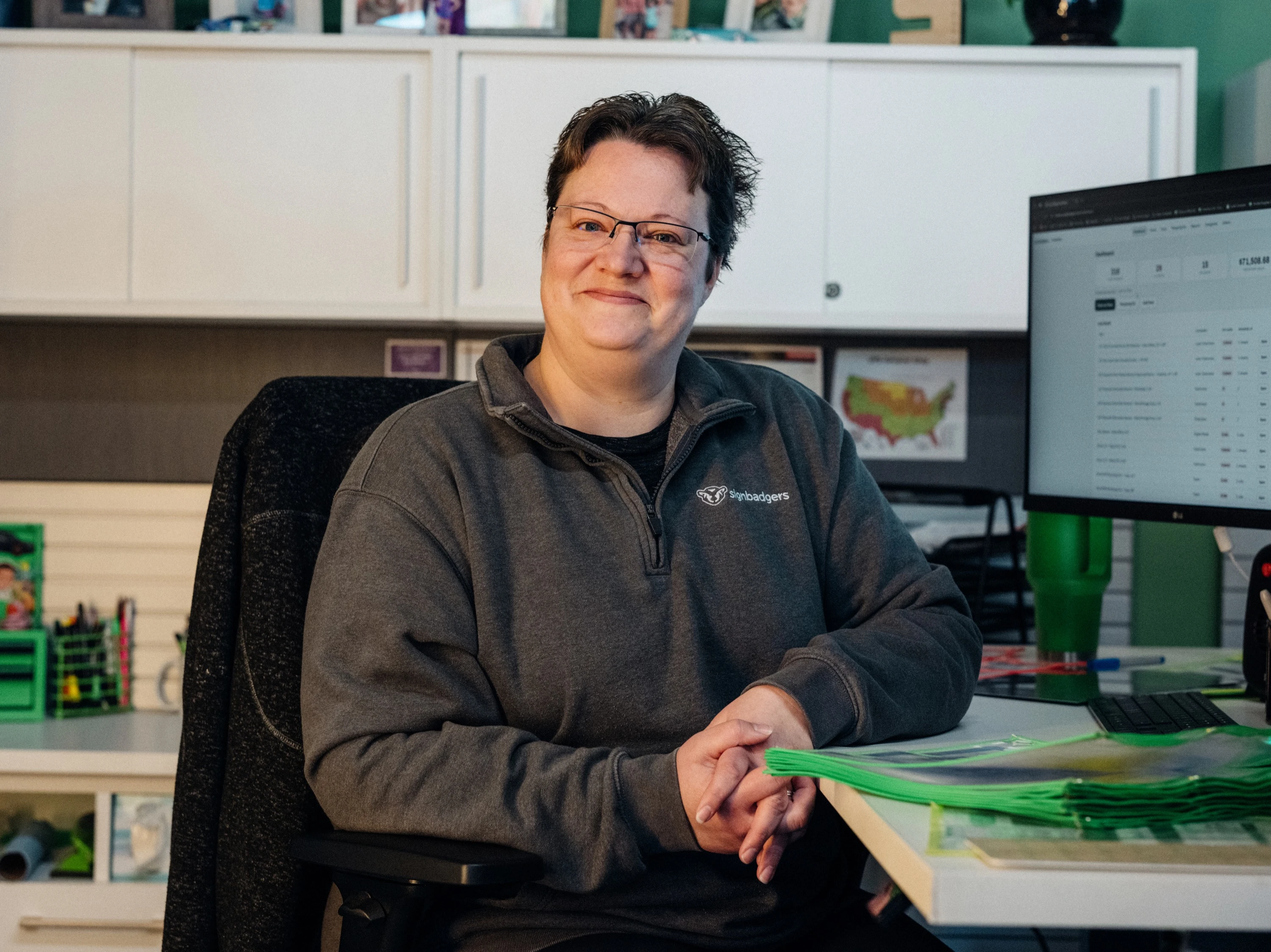
Sign Badgers in Fargo features in OpenAI’s account of automating inventory and vendor-price checks. The benefits are company-reported and have not been independently verified. Image: OpenAI. Source: OpenAI.
OpenAI's published examples describe concrete operational tasks. At Tiny Things, a Fargo miniature gift shop with more than a thousand products, a partner helped build a ChatGPT inventory dashboard connected to existing tools. A co-owner estimated that commissioning such a system would cost around $50,000. That is an owner's estimate of an alternative build, rather than a documented expenditure avoided.
At Ghost Grow 843, a Charleston microgreens and hydroponic lettuce business, OpenAI says the owner used ChatGPT to identify restaurants and chefs and draft outreach emails. He estimated that his response rate rose from 20% to 75% and that he gained 10 restaurant customers within four months. The account does not provide the number of contacts behind those response rates or a comparison that isolates AI's contribution.
At Fargo sign maker Sign Badgers, OpenAI says a partner helped an employee use ChatGPT and Codex, its coding tool, to automate inventory tracking and vendor-price checks. The employee reported saving two to five hours a week; price checks that previously took hours reportedly fell to 15–20 minutes. Gift-wrap business Black Paper Party used ChatGPT to compare purchase orders with shipping records and, according to OpenAI, avoided thousands of dollars in chargebacks after identifying billing errors.
These accounts appear in OpenAI's program announcement. They illustrate possible uses, but do not establish average savings, typical sales gains or independently verified returns across the pilot.
OpenAI is accepting applications from partners and eligible businesses as it seeks to extend OpenWorks to more locations. The launch material leaves the expansion timetable, individual stipend criteria and complete pilot evaluation measures unspecified.
The evidence needed next is broader than another success story: how many businesses receive support, how much adviser time they need, whether employees can maintain the resulting tools and whether benefits persist after the free subscription ends. Those results would show whether a subsidized introduction becomes a useful operating capability—and what it costs to make that happen.
Jensen Huang’s return as Nvidia CEO leaves December congressional questioning intact. Lawmakers want evidence behind the board’s security assurance and answers about chip exports and the administration’s involvement.
The Commerce Department added Singapore-based Megaspeed to its Entity List, imposing a licensing barrier on supplies to a longstanding Nvidia customer while allegations of chip diversion remain unresolved.
Google is rolling out optional Wallet access in Search’s AI Mode, with Drive and Gemini connections to follow. The expansion brings existing personal-finance capabilities into Search, while data-use permissions extend beyond the read-only limit on financial actions.
Anthropic has launched Claude Ship for GitHub repositories, combining code review with new agents that fix problems and apply approval policies. Teams retain control through repository rules, while automation adds token costs and can allow changes to merge without human review.
Google’s patent application describes generating videos from viewing habits, demographics and device context, with optional replicas of the viewer and inserted ads. Existing video tools show parts of the idea are already available; a commercial service and its economics remain unproven.
Google’s Gemini API can slice documents, spreadsheets and recordings on its servers and bill for selected content sent to the model. The controls reduce local preparation work, but upload limits, model defaults and the cost of finding relevant material qualify the savings.
Nothing plans to unveil Ear (note) on December 8, pairing call-recording earbuds with a case that captures meetings for AI transcription. Existing recording products, uncertain service costs and unresolved privacy details narrow the novelty of the pitch.
Anthropic’s Enterprise Frontier Safeguards beta lets eligible businesses use its most capable Claude models while keeping encrypted safety records in their own cloud accounts. Automated monitoring remains; customers pay cloud costs and review flagged cases.
Hakeem Jeffries promised an investigation after Nvidia reinstated Jensen Huang following Donald Trump’s intervention. Reports that directors excluded interim CEO Colette Kress sharpen questions about the reversal and its national security assurances.
The European Commission has confirmed a leak affecting users of its public learning platform, while the number affected, the wider exposure of staff data and responsibility for the attack remain unresolved.
Maintainers defend continued distribution of the AI penetration-testing framework after its creator withdrew it. Investigations document data theft and cheap automation, but also failed payouts, blocked attacks and safeguards that vary by version.
China Telecom's AI arm has released the 285-billion-parameter Xing4.1-Preview under Apache 2.0, extending its TeleChat model lineage and domestic-compute strategy. Its million-token context and quantized variants widen deployment choices, but mixed benchmarks and incomplete cost disclosures leave its low-cost pitch unproven.
Applied Digital signed an 18-year lease for 150 MW with an unnamed investment-grade hyperscaler. Higher pricing strengthens its contracted revenue book, but financing, power arrangements and construction still stand between the agreement and delivery.
Sarvam Dictate combines speech recognition and text editing for English and 22 Indian languages at ₹0.50 per audio minute. Its company-run benchmarks show fewer character edits than rival APIs, but the advantage varies by language and recording length.
Arm CEO Rene Haas will become SoftBank Group vice chairman on December 1, building on existing roles at its controlling shareholder as Arm expands beyond processor licensing into its own chips. The extension follows a reported Nvidia recruitment approach, but Nvidia has since reinstated co-founder Jensen Huang as CEO.
Trump claimed personal credit for Jensen Huang’s reinstatement after Nvidia received government security assurances. The reversal leaves questions about export controls, presidential influence and Trump’s financial stake unresolved.
Sierra’s $1.75 billion Series F follows reported annual recurring revenue above $400 million. Competitors already offer outcome pricing and agents that act on customer accounts, making reliability and delivery costs central to its $30 billion valuation.
The states allege that Grok and X enabled nonconsensual sexualized images while misleading consumers about safeguards. Their consumer-protection cases seek financial penalties and court orders against SpaceX and its subsidiaries.
Founded in May, Marlowe has raised $277 million at a company-reported $1.15 billion valuation to build inference infrastructure using AMD and Etched chips. Its first deployments will test whether engineering across hardware and software can deliver its promised efficiency gains.

Amazon has agreed to buy Decart’s optimization technology and recruit its founders and engineers after working together on Trainium since 2025. Reports value the deal at $7.5 billion or more, with deferred payments and five-year retention commitments; Amazon has disclosed neither a price nor quantified savings.