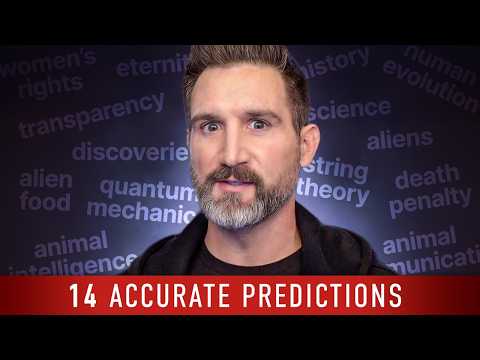
An 1857 book, The Spirits Book by Allan Kardec, made remarkably accurate predictions about molecular science, human evolution, animal intelligence, gender equality, and more, many of which were only proven true decades or even over a century later. This article explores these predictions and their significance in modern understanding.
Predicting the future is notoriously difficult. Many past predictions have been proven wrong, such as the belief that the automobile was just a novelty or that heavier-than-air flying machines were impossible. However, there exists a remarkable book written in 1857, known as The Spirits Book by Allan Kardec, which made a series of astonishingly accurate predictions about science, history, and the evolution of humanity. Nearly every prediction has come true, some only recently confirmed, while two remain unfulfilled but intriguing.
Although the original book was published in 1857, the version referenced here is from 1860 due to availability. Despite this slight difference, the predictions remain impressively accurate and insightful.
The book predicted that molecules have specific shapes, with basic molecules maintaining a fixed shape while secondary molecules could change theirs. At the time, this was purely hypothetical. It was not until 1874 that scientists theorized molecules have fixed 3D shapes, and only in 1912 was this proven through x-ray crystallography. Later, in 1932, it was shown that larger molecules can change shape, exactly as predicted.
Moreover, the book suggested that molecules are not the smallest building blocks, anticipating discoveries in particle physics such as electrons (1897), protons and neutrons (1911 and 1932), and quarks (1964).
The book stated that no object is completely solid or opaque, and that this perception is limited to our senses. This was confirmed by the discovery of X-rays in 1895 and Ernest Rutherford's gold foil experiment in 1909, which revealed that atoms are mostly empty space.
It was predicted that transparency or opacity depends on how molecules are arranged. For example, glass and sand are both made of silica molecules, but glass is transparent due to its disordered molecular structure, while sand is opaque due to its crystalline structure. This was only explained in the 1920s and 30s with quantum mechanics and electron band theory.
The book claimed that there is no absolute void; what appears as empty space is filled with matter undetectable by our senses or instruments. This was confirmed by quantum mechanics in 1927, experiments proving vacuum energy in 1948, the discovery of cosmic microwave background radiation in 1965, and dark energy in 1998.
It was predicted that all matter originates from a single original element, and that what we consider basic elements are transformations of this element. This idea aligns with modern quantum field theory and string theory developed in the 20th century.
The book foresaw that modern humans evolved from earlier humans and that more advanced races would eventually emerge. It also predicted multiple human origins at different times and places, explaining the existence of different races without classifying them as separate species. This was revolutionary, predating Darwin's Descent of Man by 11 years and only recently confirmed by genetic research in 2023.
Contrary to the belief that animals act purely on instinct, the book suggested animals possess limited intelligence and communicate in various ways beyond sounds, such as gestures and chemical signals. This was confirmed decades later by studies on chimpanzees, dolphins, crows, elephants, bees, and fish.
The book advocated for equal rights for men and women, emphasizing that while roles may differ due to unique strengths, privileges should not be unequal. It also highlighted the crucial role of women, especially in early childhood development, a concept supported by neuroscience in the 1990s. This was a bold stance in 1860, long before women gained voting rights in many countries.
It predicted the eventual abolition of the death penalty as a sign of moral and social progress. At the time, public executions were common, but today over 110 countries have abolished it.
The book condemned the practice of widow burning, attributing it to ignorance and lack of moral awareness, and predicted its disappearance with societal progress. Although banned in 1829 in India, the practice persisted until the late 20th century, with the last major incident in 1987 and strict laws enacted in 1988.
It challenged traditional interpretations of eternity in sacred texts, suggesting that consequences for evil actions are not everlasting but temporary until humanity embraces goodness. This was supported by the discovery of the Dead Sea Scrolls in 1947.
The book asserted that all worlds in space are inhabited and that Earth is not unique in intelligence or perfection. This was a radical idea in the 19th century when the existence of exoplanets was unknown. Today, over 100 sextillion planets are estimated to exist, and the possibility of extraterrestrial life is widely considered plausible.
It predicted that beings on more advanced worlds would consume food suited to their lighter bodies, unlike humans who require heavier diets. Anecdotal reports of aliens with small mouths and liquid diets intriguingly align with this prediction.
The accuracy of these predictions, many made over a century before scientific confirmation, is astonishing. The book also discusses profound topics such as the purpose of life and what happens after death, inviting further exploration.
For those interested, The Spirits Book by Allan Kardec is in the public domain and available for free. Modernized versions exist to make the language accessible to contemporary readers, avoiding outdated terminology like "perispirit" and instead using clearer terms such as "spirit body."
This 19th-century book offers a fascinating glimpse into early visionary ideas about science, humanity, and the cosmos. Its predictions challenge our understanding of history and encourage open-mindedness about the mysteries of existence. Whether one views it as spiritual insight or remarkable foresight, its impact on thought and culture is undeniable.
If you are intrigued by these topics, exploring The Spirits Book and related discussions can provide a deeper understanding of these enduring questions.