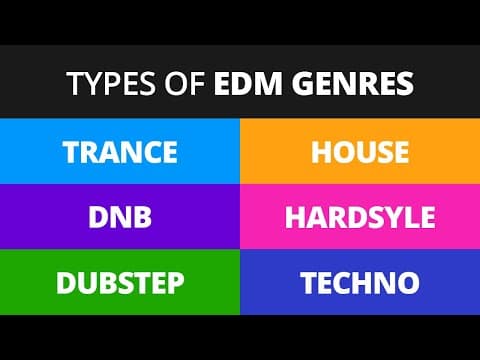
This beginner's guide explores the major genres and subgenres of EDM, including house, trance, dubstep, drum and bass, trap, future bass, hard dance, and techno. It provides descriptions, notable DJs, podcast recommendations, and music examples to help newcomers understand and appreciate the diverse world of electronic dance music.
Electronic Dance Music (EDM) is a vast and diverse world filled with numerous genres and subgenres, each with its own unique sound and culture. Whether you're new to EDM or looking to deepen your understanding, this guide will introduce you to the major EDM genres you are likely to encounter at raves and festivals, complete with examples and notable artists.
EDM encompasses a wide range of electronic music styles played at festivals and clubs worldwide. This guide is a beginner-friendly overview, aiming to categorize and explain the main genres and subgenres of EDM. While the distinctions can be complex and sometimes overlapping, this article will help you get a general sense of what each genre sounds like and who the key artists are.
House music is one of the foundational genres of EDM, characterized primarily by its rhythm and beat rather than big drops. It has many subgenres, including:
House music focuses on a steady, danceable beat and often features soulful or melodic elements. Producers often mix styles, making it sometimes difficult to categorize a track precisely.
Watching live sets from festivals like Tomorrowland and Ultra Music Festival on platforms like YouTube, SoundCloud, and Mixcloud is a great way to experience house music.
Big Room House is a more commercial and mainstream subgenre, often heard on the main stages of large festivals. Notable artists include:
Due to copyright, specific music examples are not included here, but their live sets are widely available online.
Electro house is more energetic and less focused on rhythm compared to traditional house music. It features heavy bass and synths.
Trance is known for its melodic and euphoric qualities but also includes more psychedelic and edgy subgenres such as:
Trance can range from melodic and vocal-driven to psychedelic and intense. It often aims to create an emotional or hypnotic experience.
Dubstep is known for its heavy bass and energetic drops, often creating a high-energy atmosphere at live events.
Dubstep varies from edgy and aggressive to melodic and vocal-based tracks.
Drum and Bass is characterized by its fast tempo and distinct beat patterns.
Trap music in EDM is heavily influenced by hip hop and features rhythmic beats and bass-heavy drops.
Trap often overlaps with other genres, making it challenging to pinpoint specific trap-only artists.
Future bass is a distinct genre known for its melodic and emotional soundscapes.
Hard dance is a broad category that includes hardstyle and other related subgenres.
Techno focuses on rhythm and beat, often taking listeners on a journey without relying on big buildups or drops.
EDM is a rich and diverse musical landscape with many genres and subgenres, each offering unique sounds and experiences. This guide covers the major categories to help beginners navigate the scene. For a deeper dive, exploring live sets, podcasts, and artist discographies is highly recommended.
Feel free to explore these genres, discover your favorites, and enjoy the vibrant world of electronic dance music!