This article explores a remote viewer's unsettling claim that Earth functions as a soul trap, recycling human souls through reincarnation for energetic extraction. It examines the theory's origins, supporting arguments, counterpoints, and the psychological implications of believing in such a system. Ultimately, it advocates for discernment, awareness, and conscious living regardless of the truth behind these claims.
Have you ever looked at the world and felt that something about it is profoundly off? Not just a fleeting feeling, but a persistent intuition that something unseen is quietly extracting our attention, emotions, or even our life force? This unsettling question is at the heart of a theory discussed by a remote viewer on the Inspired YouTube channel, which suggests that Earth may be under the influence of a parasitic non-human force recycling human souls for energetic extraction.
The claim, often referred to as the "soul trap theory," proposes that human souls are caught in a cycle of reincarnation not for spiritual growth but for the purpose of harvesting energy. This idea is not presented metaphorically but as a literal mechanism embedded in reality, operating subtly yet relentlessly.
The remote viewer, Brett Stewart, participated in a blind remote viewing project focused on liberation from the cycles of death and rebirth. His descriptions were chillingly mechanical rather than spiritual or mythic. He described a grid-like containment system on Earth, functioning as a checkpoint where souls attempt to exit the body but are intercepted and recycled back into the system.
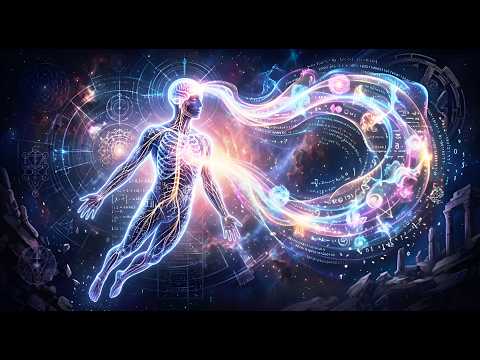
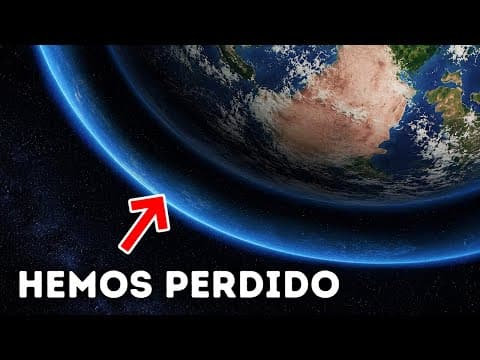
According to Stewart, Earth exists within an energetic net or containment field. When souls try to leave, they are bent back into the system, similar to the phenomenon of gravitational lensing where light bends back upon itself. This process involves a fracturing or extraction of something essential from the soul, followed by reincarnation with amnesia intact. This cycle is not about evolution through accumulation but repetition through depletion.
The language used to describe this system is systemic and structured, suggesting design and intent rather than randomness. This raises profound questions about the nature of reality and the forces that might be influencing human existence.
The soul trap hypothesis is not isolated; it appears across various disciplines including remote viewing, past-life regression, esoteric traditions, Gnostic cosmology, Eastern philosophy, and modern metaphysics. The recurrence of this idea from disparate sources without obvious coordination lends it conceptual significance, even if it remains unproven.
One of the strongest arguments for the soul trap theory is the universal amnesia associated with reincarnation. In any educational system, memory builds upon previous knowledge. However, reincarnation narratives almost always involve memory erasure. The soul trap theory interprets this amnesia as a means of control, preventing souls from remembering their past lives and thus maintaining the cycle of exploitation.
Earth generates a vast amount of emotional intensity—fear, grief, longing, rage, despair, and attachment. If emotional energy is harvestable, Earth would be an optimal environment for such extraction. The metaphor used compares this to bees harvesting honey, suggesting a sustainable system that extracts energy without destroying the source.
History on Earth does not just repeat; it loops. Wars reoccur, traumas echo, and revolutions often replace one hierarchy with another. This cyclical pattern raises the question of whether these events are random or curated to maintain the system.
Thinkers like Tom Campbell argue that Earth is a consciousness school designed for growth. The limitations and suffering experienced here are catalysts for evolution rather than goals of a parasitic system. This model explains moral development without invoking malevolent forces.
Another perspective suggests that souls choose to incarnate with difficulty intentionally. Memory erasure is necessary to prevent cheating and ensure genuine transformation. This view sees reincarnation as a voluntary process aimed at growth.
Taking the soul trap theory too literally can be psychologically corrosive. It may erode personal agency, breed nihilism, and foster learned helplessness—states that ironically could make individuals more susceptible to manipulation if such harvesting were real.
The author of the original discussion does not fully endorse either the soul trap or the school model exclusively. Instead, he suggests Earth may be a school infiltrated by demonic or opportunistic forces. This explains the paradox of beauty existing alongside exploitation and the possibility of transcendence despite suffering.
Both perspectives might be perceiving different layers of the same reality. This nuanced view encourages discernment and acknowledges the complexity of existence.
The remote viewer also described conditions for exiting the cycle: specific awareness, discernment, avoidance of lures, and assistance beyond the system. These ideas resonate with ancient spiritual traditions such as the Tibetan Book of the Dead, Gnostic warnings of Archons, mystical Christianity, and Eastern liberation paths. Despite different languages and cultures, these traditions share archetypal themes about liberation from entrapment.
The most effective trap, according to the discussion, is psychological. Fear collapses awareness, breeds compliance, and erodes sovereignty. Therefore, reducing fear and cultivating awareness are crucial strategies for maintaining agency.
Whether Earth is a soul trap, a school, or something more enigmatic, the prescription converges:
These practices strengthen individuals regardless of the ultimate truth about reality.
The author emphasizes discernment over certainty, recognizing that reality is layered and truth is probabilistic. Wisdom lies not in having all the answers but in how one holds the questions.
This journey toward liberation, or moksha, begins with awareness and conscious living here and now.
This exploration invites readers to open their reality, examine unsettling ideas with pragmatism, and maintain agency in the face of uncertainty.