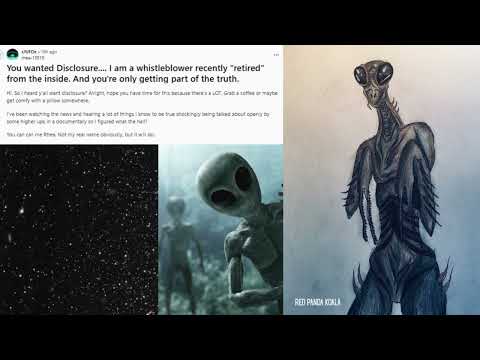
A whistleblower known as Ria reveals insider knowledge about extraterrestrial life, secret government programs, and an impending alien threat expected around 2027. The story includes a cosmic council monitoring Earth, a parallel human civilization uplifted on another planet, and advanced technologies being quietly shared with Earth governments to prepare for a hostile alien species. The disclosure has profound implications for humanity's societal structures and future.
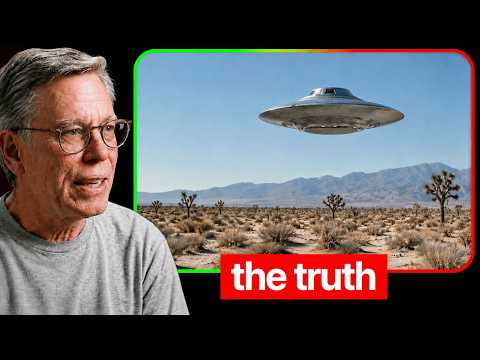
In a startling disclosure, a whistleblower who goes by the pseudonym Ria shares her insider knowledge from over a decade within a secretive U.S. intelligence compartment. Her revelations shed light on extraterrestrial life, covert government programs, and an impending alien threat expected to arrive around 2027. This comprehensive account challenges many conventional beliefs and offers a glimpse into a hidden cosmic reality.
Ria spent eight years in the military followed by more than ten years in a clandestine intelligence unit that officially does not exist. Her expertise lies in electro-optics, lasers, sensors, and imaging systems used to detect and sometimes engage distant targets. She has worked on counterterrorism, sanctions evasion, foreign missile tests, and space domain awareness, which involves tracking objects in space.
Her involvement in a specialized interagency group investigating anomalous aerospace and undersea systems exposed her to phenomena that defied conventional explanations. These anomalies appeared consistently across different sensors, countries, and decades, suggesting a real pattern rather than glitches.
Ria reveals the existence of a "Council," a collective of several advanced interstellar or possibly interdimensional civilizations. This Council has been conducting long-term surveys of stars and planets, including Earth, for billions of years. Approximately two billion years ago, their instruments detected biosignatures on Earth, marking it as a planet of interest.
The Council deploys automated, self-replicating probes that establish facilities on ocean floors. These facilities use local materials to build more probes and craft capable of operating underwater, in the air, and near space. They also create biomechanical avatars that interact with evolving life forms. These avatars may explain some abduction experiences reported by humans.
The ocean floor is chosen for its stability, unaffected by surface climate changes or political upheavals, making it an ideal base for long-term observation.
Unlike humans, who think in lifespans of decades, the Council operates on a scale of millions or billions of years. Their technology, including warp drives and advanced sensors, is ancient and far beyond human capabilities.
Earth is one among about a billion Earth-like planets in our galaxy. Many have microbial life, some have complex life, and a smaller subset hosts civilizations. The Council has observed the typical evolutionary trajectory from chemistry to biology to technology and the critical fork where civilizations either self-destruct or survive.
Humans are unique in their combination of high cooperation and organized violence, especially concerning nuclear and exotic energy technologies. Around 10,000 years ago, the Council recognized humanity's trajectory and debated whether to intervene.
As a compromise, the Council removed approximately 65,000 humans from Earth about 10,000 years ago and relocated them to a planet orbiting the star 82 Eridani. These humans, called the Arids, live in a controlled paradise with advanced replicator-like systems that eliminate scarcity.
Without material scarcity, the Arids have advanced technologically about 5,000 years ahead of Earth humans. They only discovered their true origins about a century ago and have since begun visiting Earth, explaining some UFO sightings of human-like aliens.
The existence of the Arids and their society challenges fundamental assumptions about scarcity, ownership, and economic systems. During the Cold War era, this was seen as a political threat, likened to proof that communism could outperform capitalism.
This systemic implication, rather than just the existence of aliens, has been the core reason for secrecy and cover-ups since the 1940s and 1950s.
Several famous crash retrieval incidents, such as Roswell (1947) and Kecksburg (1965), were not accidents but controlled tests and gifts from the Council. These events were designed to gauge human reactions and capabilities.
Efforts to disclose this information publicly have occurred at various times, including during the Reagan-Gorbachev summit in 1986, the Clinton administration, and the Obama-Trump transition, but full disclosure has been delayed.
About three years ago, a hostile alien species, not part of the Council, learned about the Earth Project. These ant-like beings, about five feet tall with segmented bodies and multiple limbs, resent the Council and seek to disrupt the experiment by causing chaos on Earth.
They are expected to arrive around 2027, initiating a crisis.
The Council decided against direct intervention to preserve the experiment's integrity. Instead, they have quietly provided scalarphase weapons—advanced energy weapons far beyond current human technology—to several major powers, including the United States, China, the European Union, Russia, and Brazil.
These weapons interact with fields not fully understood and can deliver massive energy without conventional explosions. They are being integrated into various military platforms under secrecy.
The Council has built in kill switches to disable these weapons after the conflict to prevent misuse. However, concerns remain about potential human conflicts using this technology once the external threat is gone.
Ria shares a personal story about a colleague who intended to reveal some of this information to Congress but died under suspicious circumstances. This highlights the dangers faced by insiders attempting to disclose classified information.
Ria predicts that within a few years, likely before the hostile species arrives, at least one major government will make a controlled public disclosure about unidentified aerial phenomena, contact with nonhuman intelligences, and new defensive technologies.
However, initial disclosures will likely omit the deeper truths about the Arids, the economic implications, and the vast cosmic context.
The critical question remains: how will humanity respond? Will we use advanced technologies to continue conflict, or will we evolve toward a more enlightened society?
This whistleblower account challenges us to rethink our place in the cosmos, the nature of our societies, and the future we choose to build. The knowledge of extraterrestrial monitoring, parallel human civilizations, and impending threats forces a reconsideration of long-held assumptions about scarcity, cooperation, and survival.
As the anticipated arrival of hostile forces approaches, humanity stands at a crossroads, armed with unprecedented technology and knowledge. The path we take will define not only our survival but our legacy in the universe.
Ria's revelations invite us to look beyond sensational questions about UFOs and aliens and focus on the profound implications for our civilization and future.