Inside every cell lies a switch controlling energy and aging, often turned off after 50. Activating the PGC1 alpha signal can rebuild mitochondria, lifting exhaustion and slowing aging. Six effective, mostly free methods—breath holding, heat exposure, fasting, cold exposure, rhythmic exercise, and consuming urolithin A—can reactivate this switch, restoring cellular energy and vitality.
There is a crucial switch inside your cells that determines whether you wake up tired or restored. This switch also governs how quickly you age. For most people over 50, this switch is turned off, and many are unaware of its existence.
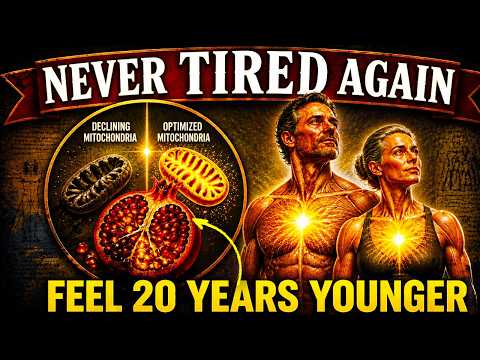
Inside every cell are tiny engines called mitochondria. These mitochondria convert the food you eat and the air you breathe into the energy that powers your heart, brain, and body. Around the age of 45, mitochondria stop replacing themselves. They do not break down but cease multiplying. The old mitochondria wear down, sputter, and leak, while no new mitochondria take their place.
This decline explains why the afternoon energy slump worsens with age, why sleep becomes less restorative, and why aging signs continue despite healthy habits. This is not a failure of willpower but a failure of cellular power.
Fortunately, the blueprint to build new mitochondria remains intact inside every cell. The factory line is merely shut down, not destroyed. One master signal, known as PGC1 alpha, can restart this process. Activating PGC1 alpha prompts cells to build fresh mitochondria within days, lifting exhaustion and slowing aging simultaneously.
The longevity industry often promotes expensive treatments like infusions and capsules. However, five of the six methods discussed here cost nothing and have been practiced for thousands of years before their mechanisms were understood. These six methods are ranked from effective to extraordinary.
Ancient yogis practiced breath holding, calling it kumbhaka—the pause between worlds. Holding your breath to a mild air hunger causes a temporary dip in oxygen, triggering a cellular sensor called HIF1 alpha. This sensor activates the same altitude response that gives mountain dwellers their endurance, signaling cells to sharpen and build more mitochondria.
Practice:
Heat rituals have been part of many cultures, such as Finnish saunas, sweat lodges, and Roman caldariums. Heat stresses the body, producing heat shock proteins that repair damaged proteins and protect mitochondria.
A 20-year study of Finnish men showed that those who used saunas 4-7 times a week had a significantly lower risk of dying from heart disease compared to those who used them once a week.
Practice:
Fasting has been used for purification in many traditions. At the cellular level, fasting triggers mitophagy—the controlled demolition of damaged mitochondria to make room for new ones. When you stop eating for a sufficient period, an enzyme called AMPK activates, signaling the clearing of old mitochondria and the building of new ones via PGC1 alpha.
The 2016 Nobel Prize was awarded for uncovering this self-cleaning machinery.
Practice:
Cold exposure triggers the sharpest and fastest mitochondrial response. When cold hits the skin, the body releases norepinephrine, which mobilizes energy and activates brown fat—a tissue rich in mitochondria that burns fuel to generate heat. Repeated cold exposure signals the body to build more mitochondria.
Practice:
Historically, humans moved for hours daily through walking, carrying, and climbing. Sustained rhythmic effort is the most powerful trigger for mitochondrial building. When you move with enough effort to deepen your breath, muscles demand more energy, activating PGC1 alpha to build new mitochondria not only in muscles but also in the brain, improving memory and reducing brain fog.
Practice:
The pomegranate, symbolizing renewal in many ancient cultures, contains compounds that gut bacteria convert into urolithin A. This compound uniquely clears out the most damaged mitochondria and signals the creation of new ones. Human trials show that middle-aged and older adults taking urolithin A experience measurable improvements in muscle endurance.
Only about one in three people have the gut bacteria to produce urolithin A naturally. For others, it is available as a studied supplement.
Practice:
These six methods are not isolated tricks but six pathways to the same cellular switch. Combining them compounds their effects. For example, cold exposure in the morning, rhythmic movement in the afternoon, and a closed eating window at night all send the same message to your cells: build.
Your mitochondria were never dead, just idling, waiting for the signal to restart.
Begin with one method tonight—either a cold shower or closing your eating window. The switch responds only to action.
By activating this cellular switch, you can lift chronic fatigue and slow aging, reclaiming energy and vitality after 50.