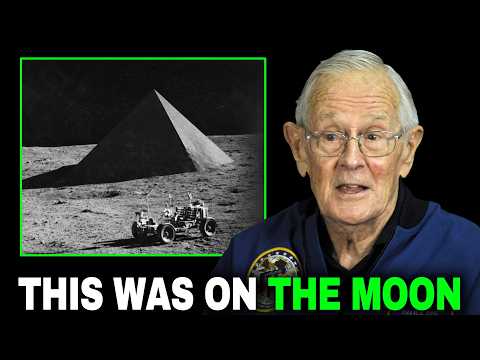
Charles Duke, the tenth astronaut to walk on the moon during Apollo 16, has broken decades of silence to reveal that what he witnessed on the lunar surface contradicts NASA's official reports. After 71 hours on the moon, Duke describes experiences and observations that challenge the long-held belief of the moon as a barren, lifeless rock, potentially changing our understanding of the lunar environment and humanity's place in space exploration.
For over fifty years, the moon has held its secrets tightly. Twelve men have walked on its surface, all Americans, and only four of those astronauts remain alive today. Among them, Charles Duke, the tenth man to set foot on the lunar soil, has now dared to tell a story that no one was supposed to hear.
Charles Duke describes being selected for one of the Apollo missions as both an honor and a humbling experience. He believes that the knowledge and experience gained from lunar missions will be invaluable as humanity prepares for future journeys to Mars and beyond. While the moon's potential for development remains uncertain, Duke emphasizes the importance of lunar exploration for advancing human space travel.
Understanding Duke's background is crucial to appreciating the weight of his revelations. Raised in South Carolina as the son of a naval officer, Duke was fascinated by flight from an early age, earning his pilot's license while still in high school. He attended the Naval Academy, became an Air Force pilot, and later a test pilot — a traditional path for astronauts in the 1960s.
NASA selected astronauts not as thrill-seekers but as engineers and test pilots who could handle complex systems and follow strict protocols without panic or exaggeration. Duke was known for his calm demeanor, technical brilliance, and reliability.
Before his own lunar mission, Duke served as the capsule communicator (CapCom) during Apollo 11, the first moon landing. He was the voice from Houston that Neil Armstrong and Buzz Aldrin heard during humanity's most historic moment. His calm and professional communication helped ensure the mission's success.
Three years later, on April 16, 1972, Duke flew on Apollo 16 alongside commander John Young and command module pilot Ken Mattingly. The crew spent eleven days in space, with Duke and Young spending seventy-one hours on the moon — longer than any previous mission.
Apollo 16's goals were scientific: to explore the Descartes Highlands, collect geological samples believed to be volcanic in origin, test new equipment, and conduct experiments. Every minute was planned meticulously to advance human knowledge of the lunar surface. By all measurable standards, the mission was a perfect success.
However, a closer look at the Apollo 16 footage reveals something unusual. At times, Duke stops moving entirely, standing still and staring at something off-camera. Commander Young's voice can be heard asking if Duke is okay, to which he replies, "Yeah, I'm fine, just looking."
The official transcripts and mission reports do not explain what Duke was observing during these moments. For decades, Duke remained silent, adhering to the official narrative of the moon as a barren, lifeless rock.
Now, at eighty-nine years old, Charles Duke is breaking his silence. He reveals that what he saw on the moon did not match NASA's reports, textbooks, or anything humanity was prepared to accept. His extraordinary claims challenge the long-held belief that the moon is simply a desolate, lifeless place.
While Duke has not disclosed all details publicly, his testimony suggests that the moon holds secrets NASA has kept hidden for decades. These revelations could fundamentally change our understanding of the lunar environment and humanity's place in the cosmos.
Duke's story invites us to reconsider what we know about the moon. For fifty years, the official narrative has portrayed it as a barren rock, but Duke's firsthand experience suggests otherwise. As we look toward future missions to Mars and beyond, understanding the true nature of the moon is more important than ever.
His courage to speak out after decades of silence opens the door to new questions and possibilities about lunar exploration and the mysteries that still await discovery.
Charles Duke's revelations remind us that space exploration is not just about science and technology but also about confronting the unknown and expanding the boundaries of human knowledge. The moon, once thought to be a silent witness to our history, may yet have stories to tell that could reshape our understanding of the universe.