This article presents a detailed discussion between Apollo astronaut Charlie Duke, the 10th man to walk on the moon, and Bart Crell, a leading moon landing skeptic. They explore the history, evidence, and controversies surrounding the Apollo moon missions, including eyewitness testimonies, technical challenges, alleged conspiracies, and the authenticity of moon rocks and footage. Readers are invited to consider both perspectives and decide for themselves.
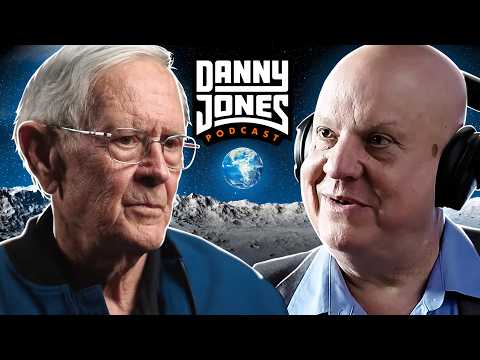
In a rare and insightful conversation, Charlie Duke, the 10th man to walk on the moon during the Apollo 16 mission, and Bart Crell, a prominent proponent of the moon landing hoax hypothesis, come together to discuss the Apollo moon missions. This article captures their extensive dialogue, covering personal experiences, technical details, and controversial claims surrounding the moon landings.
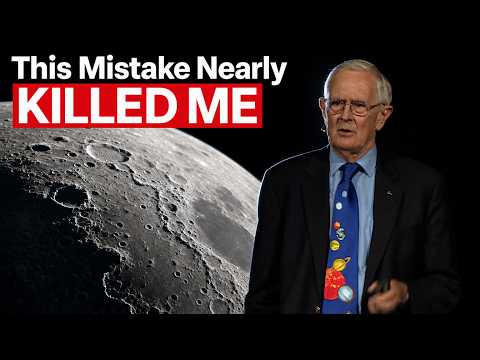
Charlie Duke was a fighter pilot in the Air Force, graduated from MIT with a master's degree, and was selected as an astronaut in 1966. He served as Capcom during Apollo 11 and later flew on Apollo 16, becoming one of the last surviving Apollo astronauts to walk on the moon.
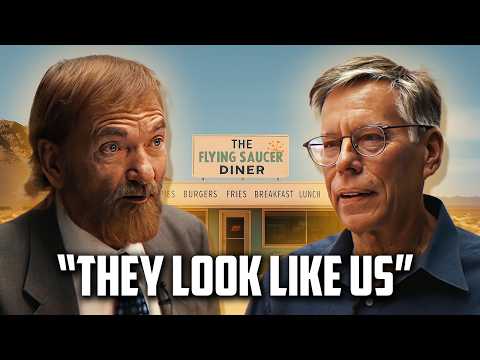
Bart Crell has dedicated much of his life to investigating and promoting the theory that the Apollo moon landings were faked by the U.S. government as a Cold War propaganda campaign. He argues that the missions were filmed on a set and never actually reached the moon.
Duke describes his path from Air Force test pilot to astronaut, his training in geology to identify lunar rocks, and his role in monitoring the Saturn V rocket development. He recounts the intense preparation and the excitement of the Apollo 16 mission, including the lunar landing and exploration using the lunar rover.
Duke served as Capcom for Apollo 11, communicating directly with Neil Armstrong and Buzz Aldrin during their historic moon landing. He recalls the tense moments during the descent, the fuel shortage, and the relief when Armstrong successfully landed the lunar module.
Bart presents the testimony of Cyrus Eugene Acres, a former chief of security at Canon Air Force Base, who allegedly confessed on his deathbed to witnessing the moon landing being filmed on a set and to committing a homicide to cover it up. Acres' son supports this claim and alleges government intimidation and cover-up.
Bart argues that the technology of the 1960s was insufficient to safely send humans to the moon and back, citing statements from Werner von Braun and modern rocket scientists who claim multiple fuel trips would be necessary to leave Earth orbit. He also points to the Van Allen radiation belts as a lethal obstacle that astronauts could not have survived.
Bart highlights alleged anomalies in the Apollo footage, including a suspicious 4-second delay in communications and inconsistencies in shadows in lunar photographs, suggesting studio lighting rather than sunlight. He also references the destruction or loss of original tapes and telemetry data.
Bart claims that some moon rocks are fake, citing an example of a rock given to the prime minister of the Netherlands that was later found to be petrified wood. He suggests that lunar meteorites collected on Earth and advanced ceramics labs could have been used to fabricate moon rocks.
Bart discusses the high number of fatal accidents among Apollo astronauts and personnel, suggesting these were targeted killings to silence whistleblowers. He references the deaths of Gus Grissom and James Irwin as suspicious.
Duke firmly asserts that the Apollo missions were real, supported by the physical moon rocks brought back, the extensive photographic and video evidence, and the overwhelming number of people involved in the program.
He explains the operation of the Saturn V rocket, the trajectory through the Van Allen belts, and the safety measures taken to protect astronauts from radiation. Duke also describes the lunar module docking procedures and the use of the lunar rover.
Duke denies any staged filming, explaining the technical aspects of the cameras and windows on the spacecraft. He acknowledges the loss of some original tapes but attributes it to NASA's tape reuse policies rather than a cover-up.
Duke shares his personal feelings about the mission, the excitement of being on the moon, and the challenges of returning to Earth. He also comments on Neil Armstrong's reserved demeanor post-mission.
Bart emphasizes the broader context of government deception during the Cold War, including assassinations, secret programs, and misinformation campaigns, to support his skepticism about the moon landings.
Duke acknowledges the turbulent times but maintains that the Apollo program was a genuine achievement.
The debate between Charlie Duke and Bart Crell presents contrasting views on one of humanity's most significant achievements. While Duke offers firsthand accounts and technical explanations affirming the moon landings, Bart raises questions about inconsistencies, lost evidence, and government motives.
Ultimately, the article invites readers to critically evaluate the evidence and decide for themselves the truth behind the Apollo moon missions.
This comprehensive discussion sheds light on the complexities and controversies surrounding the Apollo moon landings, reflecting the enduring fascination and debate over this historic event.