
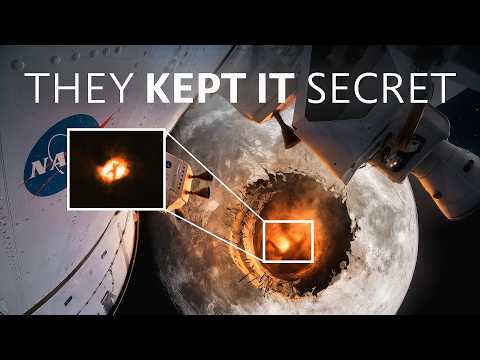
The Artemis II mission provided unprecedented human observations of the moon, revealing complex colors, dramatic topography, frequent meteoroid impacts, and mysterious features like the Rhina Gamma swirl. These findings challenge the long-held view of the moon as a quiet, geologically simple world and offer critical insights for future lunar exploration and habitation.
For decades, Apollo astronauts described the moon as a gray, dead, and geologically simple world. Their accounts, supported by thousands of photographs and scientific data, painted a picture of a quiet and predictable lunar surface where nothing significant had changed for billions of years. However, the Artemis II mission, which orbited the moon in April 2026, has challenged this long-standing perception with new, surprising observations.
On April 6th, 2026, four astronauts—Reed Wisman, Victor Glover, Christina Cook, and Jeremy Hansen—flew aboard the Orion spacecraft named Integrity, orbiting within 4,000 miles of the lunar surface. Equipped with specialized Mickon cameras, eclipse glasses, and two years of geological training from planetary scientist David Kring, the crew was prepared to observe the moon with a trained human eye, something previous missions lacked.
Unlike cameras that simply record light, the astronauts' trained eyes could detect subtle color gradients, structural clues, and topographic details that flat photographs and robotic instruments could not interpret fully. They worked in shifts, meticulously photographing and describing the lunar surface while minimizing light contamination inside the spacecraft.
One of the first targets was the Oriental Basin, a nearly 600-meter-wide multi-ring impact basin located on the boundary between the near and far sides of the moon. Formed about 3.88 billion years ago by a massive asteroid impact, Oriental is known for its geometrically precise concentric mountain rings resembling a bullseye.
The crew observed that the basin's innermost ring was more circular and exhibited distinct color variations—darker in the northern section and lighter in the southern—details that did not translate well from flat images to three-dimensional reality. This highlighted the limitations of previous photographic data and the value of direct human observation.
Canadian astronaut Jeremy Hansen was particularly struck by the moon's three-dimensionality. The elevation changes near the lunar south pole are greater than Mount Everest's height on Earth, a fact that flat images fail to convey.
Victor Glover was fascinated by the "Terminator," the line dividing the illuminated and shadowed halves of the moon. Along this boundary, sunlight strikes at a low angle, casting long shadows that reveal rugged terrain features invisible under direct light. These observations underscored how human eyes can perceive depth and structure in ways cameras cannot.
The crew reported unexpected shades of brown and green on the near side, with distinct color variations across crater walls and lava plains. These hues correspond to differences in mineral composition, such as iron and titanium deposits, which appear nearly identical in orbital photographs but separate into distinct colors when viewed directly.
This ability to detect mineral boundaries from orbit with human eyes represents a significant advancement in lunar geological fieldwork.
Among the most enigmatic features observed was Rhina Gamma, a bright swirling pattern about 60 km across on the near side's Oceanus Procellarum. First spotted in the 1600s, Rhina Gamma is not a crater but an albedo feature—variations in surface reflectivity without any topographic relief.
Beneath Rhina Gamma lies a magnetic anomaly creating a localized magnetic field strong enough to deflect solar wind particles, forming a miniature magnetosphere. This deflection likely causes the bright swirl pattern by protecting the soil from space weathering, which darkens exposed lunar soil over time.
However, the magnetic anomaly does not align neatly with geological structures, and its origin remains uncertain. Hypotheses include a comet impact magnetizing the area, a buried magnetized disc from an oblique impact, or sorting of dust particles by the magnetic field. The upcoming Luna Vertex mission aims to investigate Rhina Gamma further.
During the flyby, the moon passed between the spacecraft and the sun, creating a solar eclipse lasting nearly 54 minutes—much longer than the few minutes experienced on Earth due to different viewing geometry.
The crew observed the sun's corona, a ghostly white halo around the moon's edge, and stars including Venus, Mars, Saturn, and Mercury became visible. Earthshine softly illuminated the lunar surface.
Interestingly, the corona's halo may include zodiacal light caused by sunlight scattering off interplanetary dust, a measurement difficult to obtain from Earth.
Six times during the eclipse, the crew witnessed brief flashes of white to bluish light on the moon's dark side, each lasting less than a millisecond. These were meteoroid impacts—small rocks striking the surface at high speeds and vaporizing on contact.
Scientists monitoring the mission were thrilled, as six impacts exceeded expectations. Understanding the frequency and size of these impacts is crucial for future lunar bases, as the moon lacks an atmosphere to shield against such hazards.
The crew also photographed the lunar South Pole, a region of interest for future Artemis missions due to its permanently shadowed craters containing water ice. The terrain is rugged and dangerous, and the new images provide valuable context for landing site selection.
On the far side, they observed Herzsprung Basin, an older and more eroded crater compared to Oriental, offering insights into lunar geological evolution. They also studied Glushko Crater, known for bright ejecta rays indicating a relatively young age.
Additionally, the crew searched for low scarps—tectonic faults caused by the moon's cooling and contraction—that could be sources of moonquakes, important for planning long-term lunar structures.
After seven hours of observation, the Artemis II crew returned with approximately 10,000 photographs and hours of verbal descriptions. Their findings reveal that the moon is far more complex than previously thought:
These observations challenge the decades-old model of a quiet, predictable moon and provide critical data for future exploration and habitation.
The Artemis II mission marks a new era in lunar exploration, emphasizing the importance of human observation alongside robotic instruments. The data collected will be analyzed for months or years, informing the planning and safety of upcoming missions, including Artemis III, which aims to land astronauts on the lunar surface.
The moon, our closest celestial neighbor, continues to surprise us. After centuries of study, Artemis II has shown that there is still much to learn, and human eyes remain an invaluable tool in uncovering the moon's secrets.



















