Bryan Johnson shares his personal experiences with hair loss and sexual health, detailing his protocols for hair restoration and the importance of measuring nighttime erections as indicators of overall health. He discusses emerging technologies and therapies that aim to improve these aspects of men's health, emphasizing the psychological impact of hair loss and sexual dysfunction.
In a candid discussion, Bryan Johnson opens up about his struggles with hair loss and the psychological implications it carries for men. He shares his personal journey, detailing the protocols he follows to combat hair loss and improve sexual health. This blog post explores his insights into hair restoration technologies, the significance of measuring nighttime erections, and the broader implications for men's health.
Bryan began losing his hair in his early 30s, a challenge exacerbated by his genetics. He describes hair loss as a significant issue that requires constant attention and effort. Unlike women, who may experience hair loss differently, men often face a societal stigma associated with baldness. Bryan emphasizes that being bald can lead to psychological struggles, affecting self-esteem and relationships.
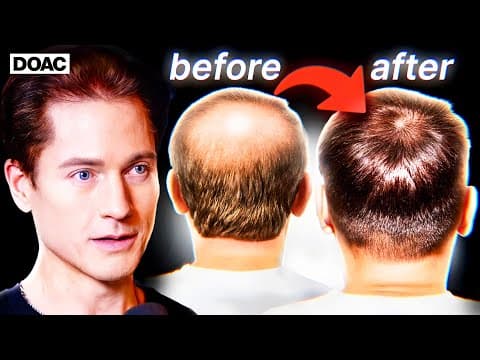
Bryan notes that while there are various treatments available, most focus on slowing hair loss rather than reversing it. He mentions the potential of gene therapy and emerging technologies like hair cloning, which involves taking a few hair follicles, cloning them, and re-implanting them. However, these technologies are still in development and not yet widely available.
To combat his hair loss, Bryan follows a specific protocol that includes:
Bryan also addresses the critical topic of sexual health, noting that libido issues can significantly impact relationships and overall well-being. He believes that discussing these issues openly can help break the stigma surrounding them.
As part of his health regimen, Bryan emphasizes the importance of measuring nighttime erections as a health indicator. He introduces a device that tracks the duration and quality of erections during sleep, providing valuable data on sexual health and psychological well-being.
The device is worn at night and records the number and duration of erections. Bryan shares that his average duration is currently 2 hours and 12 minutes, which he aims to improve to match that of an 18-year-old, approximately 3 hours and 30 minutes.
Bryan is also experimenting with focused shock wave therapy, a treatment that uses acoustic technology to rejuvenate the penis. This therapy creates micro-injuries that stimulate healing and improve erectile function. Although the treatment can be painful, Bryan reports significant subjective improvements in his sexual health, feeling as if his penis has rejuvenated by 15 years.
Bryan Johnson's journey highlights the challenges of hair loss and sexual health for men, emphasizing the psychological impact these issues can have. Through his detailed protocols and the use of emerging technologies, he aims to inspire others to take charge of their health and break the stigma surrounding these topics. By sharing his experiences, Bryan hopes to foster a sense of hope and encourage open discussions about men's health issues.