This blog post explores the misconceptions surrounding China's aging population and its economic implications. Contrary to popular belief, China's demographic challenges do not equate to an impending economic collapse. The analysis reveals that China's younger population and lower retirement costs position it favorably compared to Western nations, suggesting a more nuanced understanding of its economic future.
In recent years, there has been a surge of commentary regarding China's aging population and its potential impact on the economy. Many analysts and commentators have predicted an imminent economic collapse due to demographic shifts. However, a closer examination of the data reveals a more complex picture that challenges these assumptions.
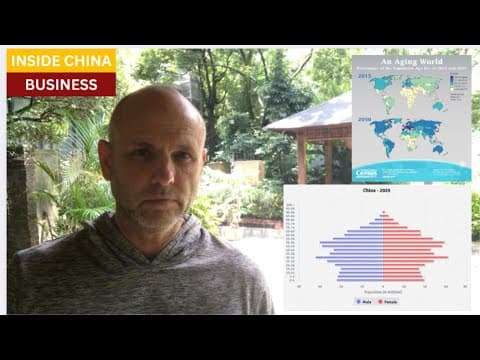
Population pyramids are essential tools for demographers and policy analysts, providing a visual representation of a population's age distribution. For instance, the population pyramid for China in 2024 illustrates various age groups, from newborns to those over 100 years old. The Y-axis represents age ranges, while the X-axis can show either percentages or raw numbers. In this pyramid, boys are represented on the left and girls on the right.
As of now, 8.3% of China's population falls within the 35 to 39 age range. In five years, these individuals will transition to the 40 to 44 age group. This demographic shift has led to widespread speculation about the economic implications of an aging population. However, many of these analyses overlook critical factors that could mitigate the perceived crisis.
While it is true that China is aging rapidly, it is essential to recognize that this trend is not unique to China. Many developed nations face similar demographic challenges. However, China is starting this process from a historically high baseline of approximately 1.4 billion people. This large population provides a buffer against the economic impacts of aging.
A significant assumption in the narrative of impending collapse is that China's government will face bankruptcy due to the costs associated with supporting its elderly population. Contrary to this belief, the financial burden of retirees in China is considerably lower than in the United States or Europe. The cost of living in China is significantly less, and medical expenses are substantially lower than in Western countries. For example, the latest medical treatments in the U.S. can cost up to a hundred times more than in China.
When comparing population pyramids of China and the United States, the differences become stark when examining raw numbers. In 2020, China had approximately 45 million boys aged newborn to four years, compared to about 11 million in the U.S. This trend continues across various age groups, with China having a significantly larger population of young people.
The population under 40 years of age is particularly crucial for economic growth. In China, this demographic totals around 708 million, while the U.S. has only 174 million. This disparity indicates that China will produce four times as many high school graduates and young professionals in the coming years, which is vital for economic dynamism.
When considering other countries, the European Union has about 209 million people under 40, Canada has 19.3 million, and Australia has 14.7 million. Even when combining the U.S. with its closest allies, the total young population falls short of China's by approximately 290 million.
The BRICS nations, including Brazil and Indonesia, also play a significant role in this demographic landscape. Brazil has around 136 million people under 40, while Indonesia boasts 179 million. These countries are experiencing economic growth driven by their young populations, which is a critical factor in their development.
Despite a declining overall population, China's economy continues to grow, primarily due to productivity gains and a burgeoning middle class. The narrative that an aging population will lead to economic decline fails to account for these dynamics.
Another critical aspect often overlooked is the cost of supporting retirees. In the U.S., government pensions and entitlement benefits are among the highest globally, placing a significant burden on the economy. In contrast, Chinese retirees cost the government far less, with average monthly benefits significantly lower than those in the U.S.
China has the option to adjust retirement ages, which can alleviate some financial pressures. Historically, the retirement age in China has been lower than in many Western countries. By increasing these ages, the government can reduce the fiscal burden while retaining experienced workers in the labor force.
Raising the retirement age not only eases financial strain but also enhances economic growth. Keeping older, experienced workers in the workforce longer can drive productivity and innovation, benefiting the economy as a whole.
The narrative surrounding China's aging population and its economic implications is often oversimplified. While demographic changes present challenges, they also offer opportunities for growth and adaptation. By understanding the complexities of China's population dynamics and the relative costs of supporting retirees, it becomes clear that predictions of economic collapse may be misguided. Instead, a more nuanced perspective reveals that China is better positioned than many analysts suggest, with a robust young population and strategies to manage its aging demographic effectively.