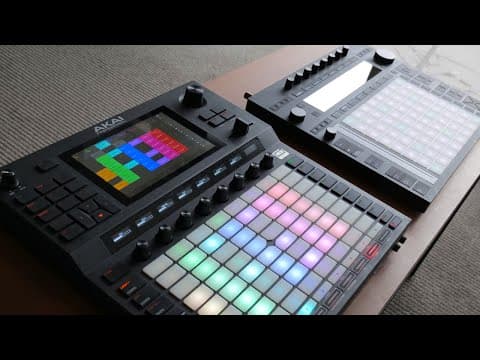
This blog post explores the key differences between the Akai Force and Push 3, highlighting the advantages of the Force in terms of price, maturity, and standalone capabilities, while also discussing the strengths of the Push 3 in production and performance contexts.
In the world of music production, the choice between different hardware devices can be daunting. Two popular options are the Akai Force and the Push 3. In this post, we will explore why the Akai Force may have the edge over the Push 3 in certain areas, while also acknowledging the strengths of each device.
One of the most significant advantages of the Akai Force is its price. The Force can often be found for around $725, especially if purchased used, while the Push 3 retails for approximately $2,000. This price difference is substantial, especially for those looking to enter the world of standalone music production without breaking the bank.
The Akai Force stands out as a fully standalone device, meaning it can operate without being plugged into a computer. This feature is particularly appealing for musicians who prefer to create music on the go or in live settings. In contrast, the Push 3 requires external power, which can limit its portability.
The Akai Force has been on the market since 2019, allowing it to benefit from years of updates and improvements. This maturity means that users can expect a more stable and feature-rich experience compared to the relatively new Push 3, which has only been available for a few weeks. The Force's established software ecosystem provides a level of reliability that new users may find comforting.
When it comes to sound design, the Akai Force offers a more intuitive experience. Users can easily create and save custom sounds and effects chains, which is crucial for those who enjoy experimenting with sound. In contrast, the Push 3 currently lacks the ability to save instrument racks, making it less flexible for sound designers.
While the Force excels in standalone capabilities, the Push 3 is designed with performance in mind. It offers features that facilitate quick access to automation and other production tools, making it a powerful interface for those who prioritize production over standalone performance. The Push 3's pads are also highly regarded for their responsiveness and playability, particularly for MPE (MIDI Polyphonic Expression) applications.
The user interface of the Akai Force is often described as more straightforward, allowing users to navigate and create without the steep learning curve that can accompany more complex devices. The Push 3, while powerful, can feel cumbersome due to its reliance on a computer interface and the limitations of its standalone capabilities.
In conclusion, while both the Akai Force and Push 3 have their strengths, the Force currently holds several advantages, particularly in terms of price, standalone functionality, and sound design flexibility. However, the Push 3 remains a formidable tool for production and performance, especially for those who are already integrated into the Ableton ecosystem. Ultimately, the choice between these two devices will depend on individual needs and preferences in music production.