This blog post explores the science and practical steps behind creating an effective vision board for 2024. It discusses the importance of the subconscious mind, the role of the reticular activating system, and provides actionable dos and don'ts for building a vision board that resonates with your goals and aspirations.
Vision boards have gained immense popularity as a tool for manifesting goals and dreams. In this guide, we will explore the science behind vision boards, how they work, and provide practical steps to create an effective vision board for 2024.
To understand how vision boards work, consider the iceberg analogy. The visible part of the iceberg represents our conscious mind, which is only about 7% of our mental activity. The remaining 93% is our subconscious mind, which drives our behaviors and actions. This subconscious mind is influenced by past experiences and learned beliefs, often formed during our early years.
The reticular activating system (RAS) is a crucial function in our brain that helps us filter information and focus on what we deem important. When we create a vision board, we are essentially programming our RAS to seek out evidence that supports our goals and aspirations. This is akin to setting a GPS for our minds, guiding us toward our desired outcomes.
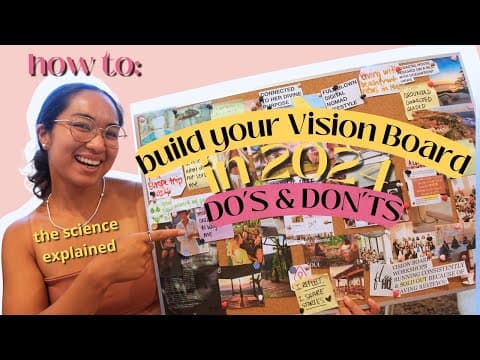
A vision board is a visual representation of your goals and dreams. It serves as a roadmap for your subconscious mind, helping you to focus on what you want to achieve. By consistently exposing yourself to the images and words on your vision board, you can reprogram your subconscious to align with your aspirations.
In 2024, aim for clarity in your vision board. Instead of cluttering your board with images, consider spacing them out in a grid format. This allows your subconscious to absorb the information more efficiently without visual overload.
Avoid cramming too many images or words onto your board. Select images that resonate with you emotionally and represent your goals clearly. Too much clutter can detract from the effectiveness of your vision board.
When selecting images, ensure they evoke an emotional response. Instead of using generic images, choose ones that personally resonate with you. If necessary, emotionally charge generic images by connecting them to your desired feelings and outcomes.
Place your vision board in a location where you will see it regularly. A larger board can be more impactful, as it allows for a deeper emotional connection. Consider placing it across from your bed so that it is the first and last thing you see each day.
Transform any limiting beliefs into personalized affirmations. For example, if you often think, "I never have enough money," reframe it to, "I always have more than enough money." This shift helps to align your mindset with abundance.
Segment your vision board by different areas of your life, such as career, relationships, and finances. This clarity allows you to focus on specific goals without blending them together, which can dilute your vision.
Spend time actively looking at your vision board. Engage in practices such as meditation or visualization to connect emotionally with your goals. This helps to reinforce your intentions and align your energy with your aspirations.
Include a specific image that captures a moment when you felt expansive and aligned with your dreams. This personal touch creates a deeper connection to your vision board and reminds you of your capabilities.
Creating a vision board is a powerful practice that combines science and personal intention. By understanding how your subconscious mind works and following the dos and don'ts outlined in this guide, you can create a vision board that truly resonates with your goals for 2024. Embrace the process, and remember that vision boards are a personal journey toward manifesting your dreams.