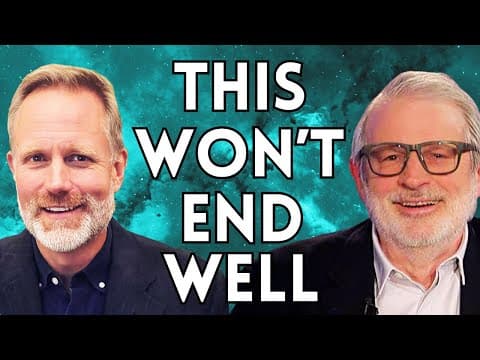
David Stockman discusses the alarming trajectory of U.S. debt and deficits, emphasizing the unsustainable fiscal policies that could lead to a significant economic crisis. He highlights the challenges posed by government borrowing, entitlement programs, and the Federal Reserve's role in enabling this situation, urging a reevaluation of current economic strategies.
In a recent discussion, former presidential cabinet member David Stockman shared his insights on the current state of the U.S. economy, particularly focusing on the alarming levels of national debt and government deficits. Stockman, who has extensive experience in both government and finance, believes that the U.S. is entering a critical phase where the consequences of runaway debt will become increasingly evident.
Stockman asserts that we are now in a post-central bank absorption era, where private investment will increasingly compete with government borrowing. This shift, he argues, will not yield the positive outcomes many expect. He emphasizes that the current fiscal policies are unsustainable and that the government’s approach to managing debt is fundamentally flawed.
David Stockman served as the head of the Office of Management and Budget under President Reagan and has a rich history in both politics and finance. His career spans decades, during which he has witnessed the evolution of U.S. fiscal policy and its implications on the economy. Stockman’s unique perspective combines insights from his time in Congress, the Reagan administration, and Wall Street, making him a credible voice on economic matters.
Stockman highlights that the U.S. public debt has skyrocketed from $930 billion in 1981 to approximately $37 trillion today. He warns that this trajectory is not just a number but a significant threat to the economy. The gap between government spending (24% of GDP) and revenue (17% of GDP) is widening, leading to an unsustainable fiscal situation.
The recent bipartisan budget bill, which Stockman refers to as the "big ugly budget buster bill," is a prime example of the government’s failure to address the underlying issues. Instead of making efforts to reduce the deficit, the bill adds an estimated $5 trillion over the next decade, exacerbating the existing debt crisis. Stockman argues that this approach is merely cosmetic and fails to tackle the fundamental problems facing the economy.
Looking ahead, Stockman warns that if current policies remain unchanged, the U.S. could face a staggering $185 trillion in public debt by 2054. This projection is based on the assumption that there will be no significant changes in entitlements, taxes, or government spending. He emphasizes that the demographics of an aging population will only worsen the situation, with millions more Americans relying on Social Security and Medicare in the coming decades.
A significant factor in this crisis is the Federal Reserve's role in monetizing debt. Stockman explains that the Fed has historically acted as a buyer of last resort, absorbing government debt and keeping interest rates low. However, he believes that this practice is no longer sustainable, as inflation fears have led to a reluctance to engage in further money printing. This shift will force the government to rely on private savings to finance its debt, leading to increased competition for capital and potentially higher interest rates.
Stockman expresses skepticism about the current administration's ability to effectively manage the economy. He critiques the notion that economic growth can solve the debt crisis, arguing that the current fiscal structure is too rigid to allow for meaningful change. He believes that both major political parties are failing to address the fundamental issues, with Republicans focusing on tax cuts and Democrats on increased spending without a clear plan for fiscal responsibility.
Given the uncertain economic landscape, Stockman suggests that investors should consider hard assets with intrinsic value, such as gold, as a safe haven. He also recommends short-duration government securities for liquidity, as these investments are likely to provide reasonable returns without significant risk.
David Stockman’s insights serve as a stark warning about the trajectory of U.S. fiscal policy and its implications for the economy. As the nation grapples with unprecedented levels of debt and deficits, the need for a reevaluation of economic strategies becomes increasingly urgent. Without significant changes, the consequences of current policies could lead to a severe economic crisis, affecting millions of Americans in the years to come.