This article analyzes the viral arrow drone shot video, providing a detailed mathematical breakdown of its feasibility. By examining the location, trajectory, and physics involved, we conclude that the shot is indeed impossible with a standard bow, debunking claims of its authenticity.
In recent times, a video showcasing an impressive arrow shot captured by a drone has sparked widespread debate. Many viewers have claimed it to be a remarkable feat of archery, while others have labeled it as fake. In this article, we will delve into the mathematics and physics behind the shot to determine its authenticity.
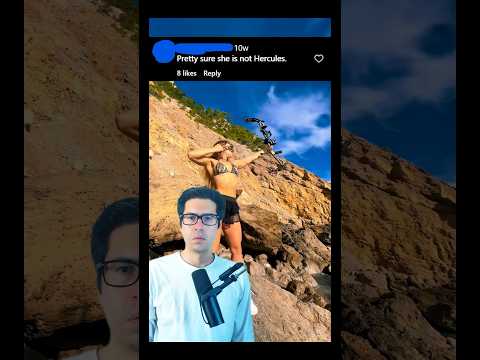
To begin our analysis, we first need to identify the location where the video was recorded. After some investigation, it was determined that the video was filmed in Mayorca, Spain. By examining the landscape, we can see that it features a beach adjacent to hills and rocky terrain. This geographical context is crucial for understanding the shot's trajectory.
In the video, we can observe the arrow in flight. To analyze its trajectory, we need to estimate two key parameters: the maximum height and the horizontal distance traveled by the arrow.
To understand the trajectory of the arrow, we can use the formula for position based on constant acceleration. This can be broken down into two components: horizontal (x) and vertical (y). In this scenario:
Assuming a launch angle of 45 degrees (a common angle for maximizing range), we can derive the trajectory equation by eliminating time from the equations of motion.
Using the trajectory equation, I graphed the path of the arrow and plugged in various initial velocities to see if they could match our estimated maximum height and distance of 100 meters and 400 meters, respectively.
After calculations, I found that an initial velocity of 62 m/s yields a range of approximately 392 meters and a height of 98 meters, which closely aligns with our estimates from the video.
To further validate our findings, I researched the specific model of the bow used in the video. The bow in question is a Solac compound bow, which has an IBO speed rating of 310 FPS. This translates to a maximum initial velocity of 89 m/s, significantly higher than the calculated requirement of 62 m/s.
However, there is a critical factor that must be considered: the kinetic energy of the arrow. The formula for kinetic energy is given by:
[ KE = 0.5 \times m \times v^2 ]
Where:
In the video, the arrow is labeled as carbon, and I assumed its mass to be 22.7 grams. The camera attached to the arrow, a Huawei Invisian, weighs 30 grams. Therefore, the combined mass of the arrow and camera is 52.7 grams.
Using these values, we can calculate the maximum initial velocity of the arrow:
[ v_{max} = 89 \times \sqrt{\frac{m_{arrow}}{m_{total}}} ]
Substituting the values:
This results in a maximum initial velocity of approximately 58 m/s. Since this value is less than the required 62 m/s, it indicates that the video is indeed not feasible under the given conditions.
After thorough analysis, it is clear that the arrow drone shot depicted in the video is not possible with a standard bow setup. The calculations reveal that while the bow can achieve high speeds, the combined mass of the arrow and camera limits the maximum initial velocity, making the shot impossible. Thus, the claims of authenticity surrounding this video can be confidently debunked.
In conclusion, while the video may have captivated audiences with its stunning visuals, the underlying physics tells a different story, reinforcing the importance of critical thinking and scientific analysis in evaluating extraordinary claims.