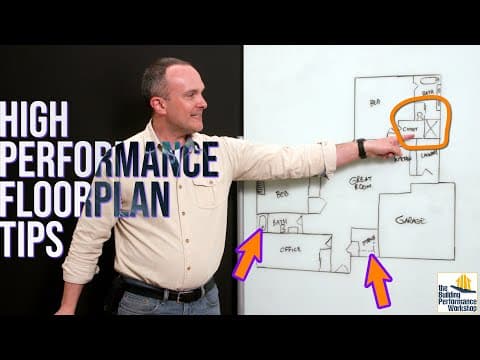
This blog post discusses essential design considerations for creating high-performance home floorplans, focusing on preventing condensation, odors, and discomfort. Key topics include the strategic placement of closets, bathrooms, and mechanical systems, as well as the importance of working with architects to ensure effective airflow and maintenance.
Creating a high-performance home involves careful planning and design to ensure comfort, efficiency, and longevity. This post explores essential design considerations that can help prevent common issues such as condensation, odors, and discomfort in your living space.
Closets play a crucial role in the insulation of a home. They can act as an extra layer of insulation, which is particularly important in preventing condensation and mold growth.
Having lived in a tiny house on wheels for five years, I learned that the compact nature of tiny homes often leads to increased condensation and mold due to the way insulation is integrated into the walls. Hot, moist air can get trapped behind insulation, leading to cold surface condensation. Therefore, the placement of closets should be carefully considered.
When designing your home, avoid placing storage against exterior walls. For example, if you have a storage room, consider placing shelves along interior walls rather than exterior ones. Similarly, in bedrooms, placing closets away from exterior walls can prevent moisture issues. This is especially critical in areas where thermal bridging may occur, which can lead to condensation problems.
Bathrooms are another area where design can significantly impact performance. Proper ventilation is essential to maintain air quality and prevent moisture buildup.
In a well-designed bathroom, the exhaust vent should be strategically placed to maximize airflow. For instance, placing the toilet between the door and the shower allows air to flow effectively towards the exhaust vent, capturing moisture and odors. However, avoid placing bathtubs against exterior walls, as this can lead to quicker heat loss, making it difficult to enjoy a relaxing bath.
When specifying exhaust fans, consider the following:
This ensures adequate ventilation and helps maintain a comfortable environment.
A well-thought-out mechanical system is vital for high-performance homes. Consider the following:
Working with architects is essential for creating a functional and efficient home layout. Architects excel at considering flow, lifestyle, and the usefulness of spaces. Their expertise can help you avoid common pitfalls, such as designing a large great room with a vaulted ceiling that complicates ductwork installation.
Limiting the amount of equipment and maintenance required is another key aspect of high-performance home design. Consider the following:
Designing a high-performance home requires thoughtful planning and attention to detail. By considering the placement of closets, bathrooms, and mechanical systems, and by collaborating with architects, you can create a comfortable and efficient living space. Remember to prioritize ventilation and maintenance to avoid costly issues down the line.
Feel free to share your thoughts or questions in the comments below. Your input is valuable as we continue to explore the intricacies of home performance design.