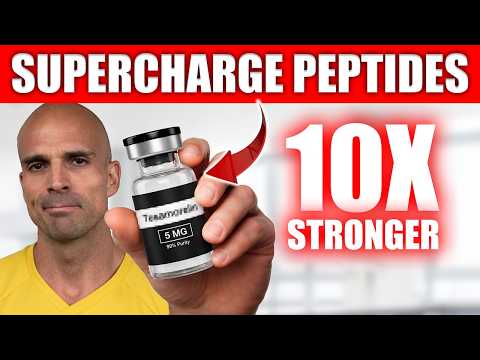
Many peptide users experience diminished results over time due to chronic inflammation and improper protocol execution. Dr. Jones explains that the key to enhancing peptide effectiveness lies in four layers: priming receptors by reducing inflammation, precise timing of injections, proper sequencing of peptide layers, and ensuring source and dose fidelity with pharmacy-grade products. Following these steps can significantly improve peptide outcomes.
If you have been using peptides for several months and noticed that your results have plateaued or disappeared, you might be making a common mistake. Many people respond by increasing doses, switching peptides, or stacking more compounds, but this approach often fails. Dr. Jones, DC, explains that the peptide itself is not the main variable determining success; rather, it is the environment in which the peptides operate, particularly at the receptor level.
Chronic inflammation reduces the sensitivity of the receptor systems that peptides signal through. This means that the same dose of peptide that was effective initially may become less effective over time because the receptors are "dialed down" or desensitized. The peptide compound remains active, but the signal does not effectively land on the receptors.
This phenomenon is common among patients who have been using peptides for months without seeing continued benefits. The key is to address the underlying inflammation and receptor sensitivity before expecting peptides to work optimally.
Dr. Jones outlines four critical layers that influence whether your peptide protocol delivers results at 30% or 100%. Three of these layers are unrelated to the specific peptide used.
The foundation involves priming the receptors by reducing chronic inflammation. This is achieved by using peptides that repair the gut lining and support tissue recovery, which lowers the inflammatory load.
For patients with more severe gut issues, KPV can be added to the stack for systemic gut support.
It is important to run these peptides at clinical-grade doses for a sufficient duration (often 4 to 12 weeks or more) to effectively lower inflammation and prime receptors. Short-term or low-dose use will not yield the desired results.
Timing is often dismissed as "broscience," but research supports its importance. The effectiveness of peptides, especially growth hormone releasing peptides like CJC and Ipamorelin, depends on the body's hormonal state at the time of injection.
Patients who follow these timing guidelines report better sleep, faster recovery, and visible body composition improvements.
Many users make the mistake of running multiple peptides simultaneously without sequencing, which leads to poor results.
This phased approach allows the body to respond effectively to each layer, resulting in better outcomes.
The quality and authenticity of peptides are critical. Many research site products are unreliable, with mislabeled doses or degraded peptides.
Patient One: Runs BPC 157, TB500, CJC Ipamorelin, and Tesamorelin simultaneously, buys peptides from research sites, injects at random times, and sees no improvement despite spending thousands.
Patient Two: Uses the same peptides but follows the proper protocol:
After 12 weeks, Patient Two experiences better recovery, deeper sleep, and visible body composition changes.
Success with peptides requires more than just choosing the right compounds. It demands:
If you are currently running peptides without seeing results, evaluate which of these four layers is your weakest and focus on improving it first.
Dr. Jones emphasizes that peptides done right involve real prescriptions, pharmacy-grade products, and medical oversight. If you want to optimize your peptide protocol, consider working with knowledgeable providers who can guide you through these layers.
Reflect on your current peptide stack and protocol. Are you running multiple peptides simultaneously? Are you timing your injections properly? Are you using verified, pharmacy-grade peptides? Identifying and addressing these factors can dramatically improve your results.
If you want to learn more about peptide cycling, dosing, and protocols, stay tuned for further detailed guides and consider consulting with medical professionals experienced in peptide therapy.