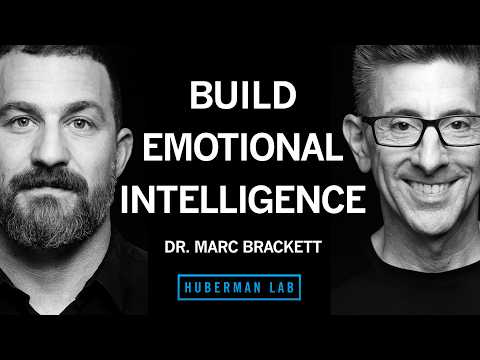
Dr. Marc Brackett, a leading expert in emotional intelligence, discusses practical strategies for emotion regulation, emphasizing that emotions are not to be suppressed but understood and managed wisely. He highlights the importance of mindset, self-awareness, and context in handling emotions effectively, and advocates for systemic emotional education to improve well-being and relationships.
Emotion regulation is often misunderstood as simply getting rid of unwanted feelings. However, Dr. Marc Brackett, a professor of psychology at Yale University and director of the Yale Center for Emotional Intelligence, clarifies that emotion regulation is about having a different relationship with your emotions and using them wisely to achieve your life goals.
Dr. Brackett defines emotion regulation as a goal-oriented process involving specific strategies tailored to the emotion, the individual, and the context. He introduces a formula: ER (emotion regulation) = goals + strategies, which are functions of emotion + person + context.
Strategies vary depending on the emotion (e.g., anxiety vs. anger), the individual's personality, and the situation.
A critical aspect of emotion regulation is the mindset about emotions. Dr. Brackett shares his personal experience with anxiety, initially hating it but later realizing anxiety signals that something important is at stake. This shift in mindset helps in managing emotions constructively.
Self-awareness is essential but should not lead to obsessive checking of feelings throughout the day, which is unproductive. Instead, emotions should be acknowledged, especially when there is a shift in environment or relationships, and managed appropriately.
Dr. Brackett discusses how cultural and familial backgrounds influence emotional expression, especially among boys and men. Historically, vulnerability has been seen as weakness, particularly for males, leading to suppression of emotions like sadness or shame.
However, recent work in schools shows a shift, with younger generations becoming more comfortable expressing emotions and discussing feelings openly. Emotional intelligence education helps dismantle harmful stereotypes and encourages healthy emotional expression.
Emotional intelligence involves:
Dr. Brackett emphasizes that emotional intelligence is measurable, teachable, and predictive of success in relationships, leadership, and well-being.
Between stimulus and response, there is a space. The "meta moment" is a deliberate pause to:
Mindfulness practices and meditation improve stress tolerance and help create the space needed for effective emotion regulation.
Regular exercise, such as martial arts or resistance training, supports emotional regulation by reducing stress and improving overall well-being.
Seeking support from friends or trusted individuals can provide perspective and help manage difficult emotions.
Developing a rich emotional vocabulary helps in identifying specific feelings (e.g., distinguishing anxiety from fear or pressure) and choosing appropriate regulation strategies.
Dr. Brackett acknowledges the complexities of today's world, including political polarization, social media, and rapid technological changes, which contribute to emotional overwhelm. He warns against over-identification with emotions or labels and encourages curiosity and empathy to understand others' experiences.
He also highlights the importance of systemic approaches to emotional education involving leaders, teachers, parents, and students sharing a common language and strategies.
Human connection is vital for emotional health. While technology offers tools, it cannot replace the empathy and support provided by real relationships. Emotional intelligence fosters better communication, reduces misunderstandings, and builds compassion.
Emotion regulation is a lifelong journey requiring practice, reflection, and adaptation. By cultivating emotional intelligence, individuals can improve their mental health, relationships, and ability to navigate life's challenges.
Dr. Brackett's work provides actionable tools and a framework for understanding and managing emotions effectively, making emotional intelligence an essential life skill for all ages.
This article is based on a detailed discussion between Dr. Marc Brackett and Dr. Andrew Huberman on the science and practical application of emotional intelligence and emotion regulation.