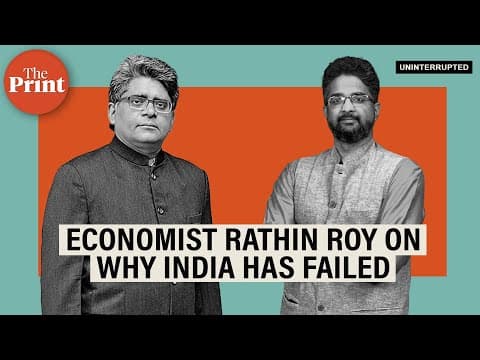
Economist Rathin Roy critiques the Indian government's economic policies, highlighting the persistent issues of poverty, low productivity, and structural failures in manufacturing and exports. He argues for a serious reevaluation of economic strategies to foster genuine growth and prosperity for all citizens.
In a recent discussion, economist Rathin Roy shared his insights on the current state of the Indian economy, critiquing government policies and their impact on economic growth and poverty. Roy, a former member of the Economic Advisory Council to the Prime Minister, emphasized the need for a serious reevaluation of economic strategies to address the structural issues plaguing the country.
Roy begins by addressing the alarming statistics surrounding poverty in India. Approximately 50% of the Indian population, or around 800 million people, are vulnerable to falling into poverty. While government programs have managed to keep many from starving, this does not equate to a decrease in vulnerability. Roy argues that the government's focus on short-term solutions, such as cash transfers, fails to address the underlying issues of economic insecurity.
Roy expresses skepticism about the optimistic narratives surrounding India's economic potential. He points out that growth rates have been low since 2016, exacerbated by the COVID-19 pandemic. The economy has only recently returned to pre-pandemic levels, and structural changes have further hindered growth. Manufacturing, in particular, has seen a significant decline, with productivity levels remaining abysmally low.
The economist highlights that India's manufacturing sector is not competitive on a global scale. Despite the government's attempts to create special economic zones, these initiatives have largely failed. Roy argues that without a focus on improving productivity and education, India cannot hope to become an export powerhouse. Current export levels are reminiscent of those from the 1970s and 1980s, with a world share of less than 2%.
Roy critiques the government's narrative of economic success, pointing out that many citizens are unable to afford basic necessities. He notes that the demand for affordable goods, such as clothing and housing, remains unmet. The majority of low-income individuals cannot consume without subsidies, which perpetuates a cycle of dependency rather than fostering genuine economic growth.
Despite the economic hardships faced by many, Roy observes that Indian voters have been remarkably forgiving of government failures. He attributes this tolerance to a broader understanding of the government's limitations. Citizens have come to expect compensatory measures rather than genuine economic progress, leading to a culture of dependency on government handouts.
Roy emphasizes that the structural issues within the Indian economy are deeply rooted in sociological factors. He argues that the lack of investment in poorer regions, particularly in North India, exacerbates inequality. The migration of labor from these areas to more prosperous regions does not lead to economic development but rather a transfer of wealth, leaving the original regions impoverished.
A significant barrier to economic growth, according to Roy, is the education system. He argues that the focus should be on creating a genuinely educated populace rather than merely providing credentials. A robust education system is essential for improving productivity and, consequently, economic growth.
Roy outlines several key areas that need to be addressed to foster genuine economic growth:
Rathin Roy's insights paint a sobering picture of the Indian economy, highlighting the need for serious policy reforms. He calls for a shift away from performative politics towards a focus on sustainable economic growth that benefits all citizens. As India navigates its economic challenges, it is crucial for policymakers to engage in honest conversations about the structural issues holding the country back from achieving its true potential.