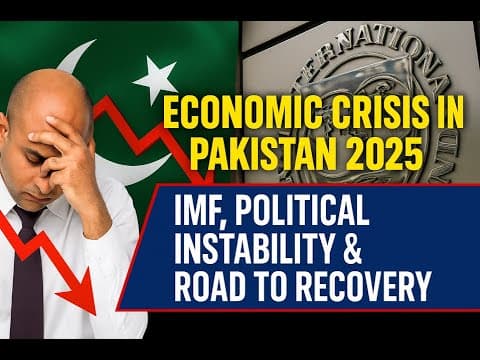
The economic situation in Pakistan has been a topic of significant concern, especially as we approach 2025. This blog post aims to provide a comprehensive analysis of the economic crisis in Pakistan, focusing on the major causes, impacts, and potential recovery strategies. The discussion will also cover the implications of repeated engagements with the International Monetary Fund (IMF) and the relationship between political instability and economic performance.
Understanding the Economy
Definition of Economy
Economy encompasses the system of production, distribution, and consumption of goods and services within a society or state. It is crucial to understand this definition as we analyze the economic crisis in Pakistan.
What is an Economic Crisis?
An economic crisis refers to a significant downturn in economic activity, marked by declining GDP, rising unemployment, and financial instability. According to economists like Paul Krugman and Nouriel Roubini, economic crises often stem from sudden disruptions in economic activity, frequently triggered by failures in the financial system.
Current Economic Status of Pakistan
As of May 2025, Pakistan's GDP ranks 41st globally, with a per capita GDP placing it at 162nd. The Economic Freedom Index ranks Pakistan at 146th, indicating significant challenges in business freedom and corruption perception.
Official Statements on Economic Crisis
Recent statements from key figures, including Finance Minister Muhammad Aurangzeb and the State Bank of Pakistan, emphasize the need for sustainable structural reforms for long-term economic stability. The World Bank has also highlighted the critical nature of reform implementation for continued economic recovery.
Major Causes of Economic Crisis
- Chronic Fiscal Deficit: Pakistan has been grappling with a fiscal deficit for years, where expenditures exceed revenues, leading to increased reliance on foreign loans.
- Low Tax Revenue: The tax-to-GDP ratio in Pakistan is alarmingly low at approximately 9%, compared to 25% in India and 20% in Bangladesh, primarily due to inefficient tax collection mechanisms.
- Energy Sector Losses: The energy sector is plagued by inefficiencies, leading to a circular debt that reached 6.5 trillion PKR by January 2025.
- Political Instability: Frequent changes in government disrupt consistent policy implementation, leading to investor uncertainty and economic stagnation.
- External Shocks: As an import-dependent country, Pakistan's economy is vulnerable to fluctuations in global markets, particularly in energy prices.
- Structural Weaknesses: Over-reliance on agriculture and textiles without diversification has left the economy exposed to global market fluctuations.
Impacts of the Economic Crisis
Economic Impacts
- Currency Depreciation: The Pakistani Rupee has experienced significant depreciation, reaching a record low against the US dollar, leading to increased import costs and inflation.
- High Inflation: Inflation peaked at 38% in May 2023, severely affecting purchasing power and affordability of essential goods.
- Unemployment: The closure of numerous textile mills has resulted in the loss of approximately 5 million jobs.
- Debt Accumulation: External debt has surged, with debt servicing consuming a significant portion of government revenue.
- Investment Decline: Foreign direct investment has decreased by 25% due to political instability and currency volatility.
- Social Unrest: Rising inflation and unemployment have led to widespread protests and strikes across the country.
Socio-Political Impacts
- Decline in Public Trust: Economic hardships have eroded public confidence in government institutions.
- Rise in Populism: Economic struggles have fueled populist sentiments, leading to increased polarization in politics.
- Brain Drain: Skilled professionals are leaving Pakistan for better opportunities abroad, exacerbating the skills gap in the economy.
Implications of Repeated IMF Engagements
The repeated engagements with the IMF have raised concerns about Pakistan's economic sovereignty. The conditions imposed by the IMF often prioritize fiscal consolidation over social welfare, leading to public discontent and protests. Key implications include:
- Policy Conditionalities: IMF programs often require the removal of subsidies and increased taxation, which can lead to social unrest.
- Sovereignty Concerns: The need for IMF approval for government spending decisions undermines Pakistan's economic autonomy.
- Debt Servicing Pressures: A significant portion of government revenue is allocated to debt servicing, limiting funds available for development.
Government Policies for Economic Improvement
The government has initiated several reforms aimed at stabilizing the economy:
- Tax Reforms: Efforts to broaden the tax base and improve collection efficiency are underway.
- Energy Sector Reforms: Addressing circular debt and enhancing production efficiency are critical goals.
- Export Promotion: Incentives for export-oriented industries are being implemented to boost foreign exchange earnings.
- Social Safety Nets: Programs like the Ehsaas Program aim to support vulnerable populations amidst economic hardships.
- Privatization Initiatives: The government is working to privatize state-owned enterprises to improve efficiency and reduce fiscal burdens.
Role of Industrialization and CPEC
Industrialization is vital for economic development, with initiatives like the China-Pakistan Economic Corridor (CPEC) playing a significant role in infrastructure development and job creation. CPEC has facilitated energy supply improvements and enhanced connectivity for trade.
Lessons from Regional Economies
Pakistan can learn valuable lessons from regional economies:
- India: Focus on IT and service sectors to drive growth and build strong institutions to boost investor confidence.
- Bangladesh: Successful export-oriented policies in the textile sector can be emulated.
- China: Rapid industrialization through economic liberalization and infrastructure investment can serve as a model.
- Vietnam: Diversification of exports and enhancing education and labor reforms are crucial for sustainable growth.
Conclusion
The economic crisis in Pakistan is multifaceted, driven by chronic fiscal deficits, low tax revenues, and political instability. Addressing these challenges requires comprehensive structural reforms, effective governance, and a focus on industrialization and export diversification. By learning from regional successes and implementing strategic policies, Pakistan can pave the way for a more stable and prosperous economic future.