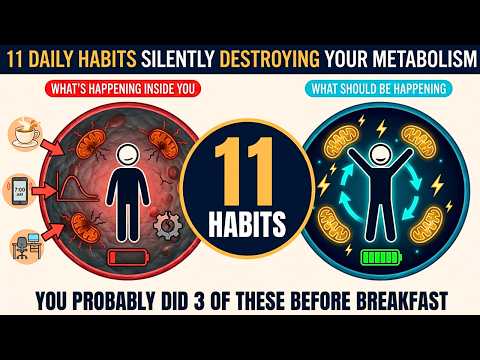
Many common daily habits silently suppress metabolism by affecting resting metabolic rate, insulin sensitivity, and hormonal signaling. These include insufficient protein intake, prolonged sitting, poor breakfast choices, late dinners, dehydration, blue light exposure before bed, inadequate sleep, regular alcohol consumption, liquid calorie intake, excessive steady-state cardio without resistance training, and chronic stress. Addressing these habits can significantly improve metabolic health.
What if the reason your metabolism feels broken has nothing to do with your diet? Not your calories, macros, or the food itself. Instead, there are 11 daily habits that most people do, which seem harmless or even healthy but quietly suppress your metabolic rate, wreck insulin sensitivity, and make fat loss harder over time. These habits happen outside of mealtime — before breakfast, during work, after dinner, and in how you move or don’t move throughout the day.
This article explores each of these 11 habits, explaining what they are, how they affect your metabolism biologically, and what you can do instead.
Metabolism is not a single thing but the sum of every chemical process your body runs to keep you alive and functional. When people say their metabolism is slow, they usually mean one or more of the following:
All 11 habits impact one or more of these mechanisms, some hitting all three simultaneously. They add up daily over years, causing significant metabolic damage.
Most people focus on exercise to fix metabolism, but it only addresses up to 30% of the picture. The other 70% involves factors like sleep, stress hormones, muscle mass, protein intake, hydration, meal composition, and timing.
Muscle tissue drives your resting metabolic rate. Every pound of muscle burns about 6 calories per day at rest, compared to 2 calories for fat tissue. Eating insufficient protein causes your body to break down muscle for fuel, lowering your metabolic rate and causing diet plateaus.
Fix: Aim for 0.7 to 1 gram of protein per pound of body weight daily. For example, a 160 lb person should consume 112 to 160 grams of protein daily. Protein also has the highest thermic effect of food (25-30%), meaning your body burns more calories digesting it compared to carbs or fat.
Sitting still for long periods reduces the activity of lipoprotein lipase (LPL) in leg muscles by 50%, which slows fat oxidation and reduces insulin sensitivity. Even after running 5 miles, sitting for 8 hours can cause metabolic damage.
Fix: Set a timer every 50 minutes to stand up and move for 2 minutes (e.g., squats, walking). Incorporate more NEAT activities like standing desks, walking meetings, and pacing.
Many breakfasts are high in refined carbs and low in protein, causing rapid glucose spikes and insulin overshoot, leading to reactive hypoglycemia and increased hunger.
Fix: If you eat breakfast, make protein the anchor (minimum 30 grams). Examples include eggs, Greek yogurt, cottage cheese, or smoked salmon. If you fast, break the fast with protein, not refined carbs.
Insulin sensitivity is highest in the morning and declines throughout the day. Eating large meals late at night causes higher blood glucose spikes and longer insulin elevation, disrupting fat metabolism and sleep quality.
Fix: Make dinner your smallest meal, focusing on protein and vegetables if eating late. A 15-minute walk after dinner can reduce blood glucose spikes by 50%.
Even mild dehydration (1-2% of body weight) slows lipolysis, the breakdown of stored fat. Dehydration also elevates vasopressin, which increases glucose production in the liver, raising blood glucose levels.
Fix: Drink water consistently throughout the day, aiming for about half your body weight in ounces daily. Keep a water bottle visible and drink before you feel thirsty.
Blue light from screens suppresses melatonin, a hormone that regulates sleep and metabolism. Suppressed melatonin disrupts insulin regulation at night, promotes fat storage, and elevates cortisol.
Fix: Avoid screens for an hour before bed or use blue light blocking glasses and night mode. Use dim, warm-toned lighting in the evening and maintain a consistent sleep schedule.
Sleep deprivation drastically reduces insulin sensitivity, growth hormone secretion, and leptin (fullness hormone), while increasing cortisol and ghrelin (hunger hormone). Fat cells become insulin resistant, promoting fat storage.
Fix: Aim for 7-9 hours of consistent sleep in a cool, dark room with no screens before bed.
Alcohol is a toxin that your body prioritizes metabolizing over fat burning, which stops during alcohol clearance (2-4 hours per drink). Alcohol also suppresses testosterone and disrupts sleep architecture.
Fix: Limit alcohol to 2-3 days per week, one drink per occasion, and consume earlier in the evening.
Liquid calories (e.g., lattes with syrup, protein shakes with fruit, smoothies) do not trigger satiety like solid food and often contain refined sugars or high fructose corn syrup, which promotes liver fat accumulation.
Fix: Audit your drinks for calories and sugar. Replace sugary drinks with water, sparkling water, black coffee, or plain tea. Drink water before other beverages to reduce cravings.
Steady-state cardio burns calories during the session but does little to raise resting metabolic rate and can reduce muscle mass if done excessively without resistance training.
Fix: Incorporate 2-3 resistance training sessions per week focusing on compound movements (squats, deadlifts, rows, presses) combined with adequate protein intake.
Chronic stress elevates cortisol, which raises blood glucose, promotes visceral fat deposition, suppresses thyroid hormone conversion, and degrades muscle tissue.
Fix: Use physiological stress reduction tools such as zone 2 aerobic exercise, diaphragmatic breathing, and adequate sleep. Manage psychological stress where possible.
None of these habits alone cause immediate emergencies but quietly compound over time, hitting the same hormonal systems (insulin, cortisol, growth hormone, leptin, ghrelin) and making each other worse.
Fixing sleep improves cortisol, which improves insulin sensitivity, which improves fat burning. Adding protein preserves muscle, resistance training builds muscle, and muscle raises resting metabolic rate. The effects multiply.
Start with the two habits that resonate most with you, typically sleep and protein intake. Give each change 4-6 weeks before adding more. Your metabolism is dynamic and responds to the signals you send daily.
Your metabolism isn’t broken; it’s responding to your daily habits. By changing these 11 silent metabolic suppressors, you can restore your metabolic health, improve fat loss, and feel more energetic. Focus on sleep, protein, movement, hydration, meal timing, and stress management to unlock your metabolism’s full potential.