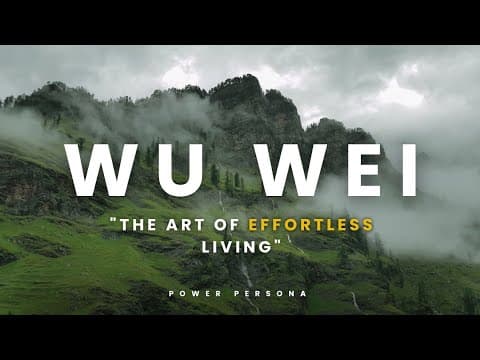
This blog post explores the concept of effortless action from Taoism, emphasizing the importance of aligning with life's natural flow rather than forcing outcomes. It provides practical steps to implement this philosophy in daily life, highlighting the benefits of simplicity, adaptability, and mindfulness.
In a world where many feel stuck and overwhelmed, the ancient philosophy of Taoism offers a refreshing perspective on how to take meaningful action without the struggle. If you find yourself pushing too hard in your pursuits, whether learning a new skill or striving for self-improvement, you may be caught in a cycle of frustration and burnout. This blog post delves into the concept of effortless action, or "wu wei," and how you can apply it to your life for a more balanced and fulfilling experience.
Effortless action is often misunderstood as passivity or inaction. However, it is about aligning with the natural flow of life, responding to challenges with ease, much like water flowing around obstacles in a river. This philosophy encourages us to act in harmony with the world around us rather than forcing outcomes.
Taoism is built on three foundational pillars:
By understanding these principles, we can learn to navigate life with greater ease and fulfillment.
To incorporate wu wei into your life, consider the following key principles:
Stop trying to control every detail of your life. Recognize that life has its own rhythm, and learn to move with it instead of against it. This shift in mindset can alleviate stress and frustration.
Adapt to changes rather than resisting them. Life is dynamic, and your approach should be as well. Flexibility allows you to respond to challenges more effectively.
True fulfillment comes not from chasing after more but from appreciating what you already have. Simplifying your life can lead to greater satisfaction and peace.
To determine if you are taking action naturally, follow these steps:
Imagine you are learning to play the piano. Forcing action might involve practicing for hours, leading to frustration and eventual burnout. In contrast, effortless action would look like practicing for just 20 minutes a day, enjoying simple melodies, and allowing progress to unfold naturally. The former drains your energy, while the latter empowers you.
Understanding the science behind this philosophy can further illuminate its benefits:
Nature operates effortlessly; rivers carve their paths, trees grow toward the sun, and ecosystems maintain balance. Wu wei teaches us to adapt to our environment rather than resist it.
Physics shows that systems work best when energy is used efficiently. Forcing actions creates resistance, wasting energy, while acting in alignment with natural rhythms conserves energy and promotes success.
Our bodies naturally maintain balance, regulating functions like temperature and blood pressure. Stress disrupts this harmony, but aligning with our needs can restore it.
To start living with effortless action, let go of the need to force outcomes. Embrace the flow of life and trust the process. Remember, success is not about how hard you push but about how well you align with the natural order of the universe. By adopting these principles, you can cultivate a more peaceful and fulfilling life.
As you embark on this journey, stay focused, stay driven, and never settle. Your strength is your own, and the path to effortless living is within your reach.