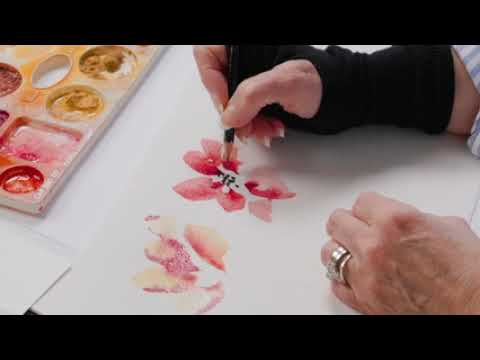
This blog post explores various techniques for enhancing loose watercolor floral paintings, focusing on color selection, brush techniques, and the use of different watercolor papers to create depth and vibrancy in floral art.
Watercolor painting can be a delightful and expressive medium, especially when it comes to creating floral art. In this post, we will explore some simple yet effective techniques to elevate your floral watercolor paintings, giving them more detail and vibrancy.
One of the first steps in enhancing your floral paintings is selecting the right colors. A favorite among many artists is Naples Yellow, which serves as an excellent glazing color and a base for many floral compositions. When starting, ensure your palette is damp but not soupy; this allows for better control over the paint application.
The choice of watercolor paper can significantly affect the outcome of your painting. For this demonstration, Arches 140 lb cold press watercolor paper is used. Cold press paper has a textured surface that retains water longer, allowing for more blending and layering of colors. While some artists prefer to tape down their paper to prevent buckling, this technique can be avoided if you are not saturating the entire surface with water.
When applying paint, start with the corner of your brush. This technique allows for a fanning out of the bristles, creating a natural bloom effect. As you apply color, lift the brush gently to create soft edges. Avoid twisting the brush; instead, focus on a quick pull and lift to maintain the integrity of the stroke.
To add depth to your blooms, consider using a darker color like Lizard Crimson. Apply this color while the previous layer is still wet to allow for blending. The cold press paper's ability to stay wet longer gives you the flexibility to manipulate the paint without losing defined lines.
Don't hesitate to mix colors directly on the paper. For instance, combining Lizard Crimson with a hint of Prussian Blue can create a rich, dramatic effect. If your colors appear too pale or lifeless, adding a punch of contrasting color can bring your florals to life.
Once the base layers are dry, you can add details using a sharp pencil. A 4H pencil is recommended for its hard lead, which allows for fine lines without smudging. Use the pencil to create loose lines that reflect the movement of the petals, enhancing the overall composition.
When adding leaves, start with a lighter green and layer in darker shades for contrast. Use the corner of your brush to create loose, organic shapes that suggest foliage without being overly defined. As you work, remember to leave some white space; this adds interest and prevents the painting from feeling cluttered.
As you near completion, consider adding small details like stems or additional blooms. Use a smaller brush for precision and to create varied sizes and shapes. This variation helps avoid a mechanical look and keeps the composition dynamic.
Throughout the painting process, don't be afraid to experiment. Try different color combinations, brush techniques, and layering methods. Each painting is an opportunity to learn and discover new effects. Remember, the goal is to enjoy the process and let your creativity flow.
Enhancing your loose watercolor florals involves a combination of color selection, brush techniques, and an understanding of your materials. By experimenting with these elements, you can create vibrant and engaging floral compositions that capture the essence of nature. Happy painting!