In a journey of artistic growth, two artists challenge themselves to learn new art forms in two weeks. They discover the importance of experimentation, mentorship, and embracing mistakes, ultimately finding freedom in the process of creation.
In the last five years of being a full-time artist, I have learned four very important lessons:
However, in the past three months, I found myself stuck in comfort, which I realized is the enemy of growth.
To break free from this stagnation, I teamed up with Vex, an artist I admire. We decided to challenge each other by choosing completely unfamiliar art forms to learn within a two-week deadline. Vex would learn Japanese woodblock printing, while I would dive into the world of ceramics.
To make this challenge even more interesting, we set some additional limitations:
Ceramics is an ancient art form that has transcended time and borders, and I was excited to draw inspiration from my own culture. My journey began at the anthropology museum in Mexico City, where I was captivated by figures created centuries ago that still felt modern. Inspired, I sketched my ideas and quickly realized that I needed a mentor to guide me through this new craft.
I reached out to a legendary ceramics workshop in Guadalajara, where I would learn from my master, Joseo. However, I faced a tight deadline: I needed to create a 3D model of my character within three hours to ensure we could finish on time. Despite having no experience with 3D art, I set my laptop to smart mode, watched tutorials, and struggled until I finally produced something usable, thanks to the Intel Core Ultra processor.
Upon arriving at the workshop, I quickly learned that ceramics is a slow, delicate, and unpredictable art form. Each piece must be modeled, air-dried, and then fired in a kiln at 1200°C for 12 hours. This process is fraught with risks; if the piece isn't hollow or well-built, it can explode or break. Given my limited time, I relied on my 3D model as a mold, which proved to be a crucial step in my creation.
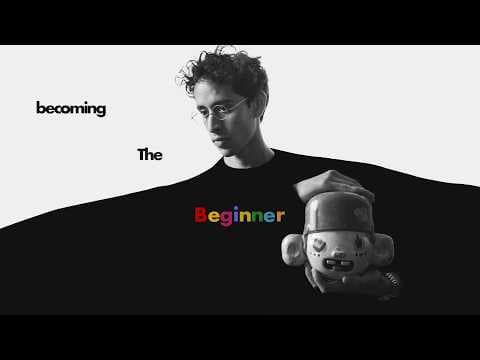
I named my piece Caveson, and after successfully getting it through the kiln, I moved on to the glazing process. This was where I thought I would be comfortable, but ceramics continued to surprise me. The colors changed dramatically at different stages, and I learned to embrace the unpredictability of the medium. I welcomed mistakes, allowing them to guide my creative process.
As my time in the workshop came to an end, I wanted to bring Caveson to life through animation. I had a detailed plan to transform my figure into a multi-styled loop animation. Using my Lenovo Yoga Slim 7i, I scanned my piece from every angle, creating a digital model that I could animate.
Opening Blender was daunting, but I simplified my approach and animated a simple knotting cycle of my model. Each frame became a canvas for experimentation, and I connected my drawing tablet to the Slim 7i to create different styles for each frame. Over the next two days, I immersed myself in this process, and the transformation of Caveson was complete.
Ultimately, this project became less about the final result and more about the journey. It was about growing as artists and as humans, embracing mistakes, and finding beauty in the process. We became forever beginners, experiencing the strange freedom of knowing nothing.
After two weeks, it was time to reveal our creations. Vex and I shared our pieces, both of us amazed at how much we had grown in such a short time. The challenge not only pushed our artistic boundaries but also deepened our understanding of creativity.
This experience taught us that the journey of learning and creating is just as important as the final product. Embracing the unknown and allowing ourselves to make mistakes can lead to unexpected beauty and growth. We invite you to explore this strange freedom of knowing nothing in your own creative endeavors.