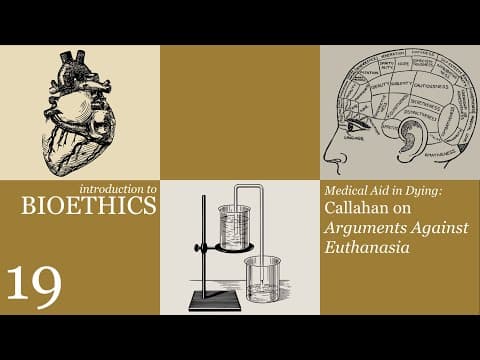
Daniel Callahan presents a comprehensive critique of euthanasia, arguing that it introduces a new category of killing, undermines the purpose of medicine, and raises ethical concerns about patient autonomy and the potential for slippery slopes in medical practice.
In recent discussions surrounding euthanasia, various perspectives have emerged, particularly regarding its moral implications. In this blog post, we will delve into the arguments presented by Daniel Callahan against euthanasia, exploring the nuances of his critique and the ethical considerations involved.
Euthanasia can be categorized into two main types: active and passive. Active euthanasia involves the direct killing of a patient, either by the patient themselves or with the assistance of a physician. In contrast, passive euthanasia refers to allowing a patient to die by withholding or withdrawing treatment. Each of these categories can further be divided into voluntary, involuntary, and non-voluntary euthanasia:
Callahan's essay, "When Self-Determination Runs Amok," presents a robust argument against euthanasia, asserting that it introduces a new category of killing that society has been striving to limit. He identifies several key points in his critique:
Callahan argues that allowing euthanasia would create a new moral category of killing that does not align with existing justifications for killing, such as capital punishment, wartime actions, or self-defense. He emphasizes that society has been working to reduce the circumstances under which one person can take the life of another, and introducing euthanasia contradicts this effort.
According to Callahan, euthanasia undermines the traditional role of medicine, which is to promote and preserve human health. He contends that the practice of euthanasia shifts the focus from alleviating suffering to determining whether a life is worth living, which is a philosophical question rather than a medical one. This shift, he argues, is detrimental to the integrity of the medical profession.
While proponents of euthanasia often argue for the respect of patient autonomy, Callahan challenges this notion by stating that autonomy cannot justify the involvement of a physician in ending a life. He posits that asking a physician to assist in euthanasia transforms the decision from a personal choice into a mutual social decision, which complicates the ethical landscape. Furthermore, he argues that certain rights, such as the right to life, cannot be surrendered to another person.
Callahan addresses the concern that legalizing voluntary euthanasia could lead to non-voluntary and involuntary euthanasia. He argues that if autonomy is the primary justification for euthanasia, there is no logical reason to restrict it to terminally ill patients. This lack of boundaries could lead to a broader acceptance of euthanasia for non-terminal patients, raising ethical concerns about the value of life and the potential for abuse.
Callahan also critiques the argument that euthanasia is a compassionate response to suffering. He questions why compassion should only extend to competent patients, suggesting that non-competent patients also experience suffering. If compassion is the driving force behind euthanasia, then it should apply universally, which could lead to morally troubling scenarios.
Finally, Callahan argues that euthanasia is not consistent with the goals of medicine. He asserts that physicians should focus on promoting health and alleviating suffering without crossing into the realm of determining which lives are worth living. This philosophical inquiry is beyond the scope of medical practice and should not be the responsibility of healthcare professionals.
Daniel Callahan's arguments against euthanasia raise significant ethical questions about the implications of allowing such practices in society. By introducing a new category of killing, undermining the purpose of medicine, and challenging the limits of patient autonomy, Callahan presents a compelling case for reevaluating the moral landscape surrounding euthanasia. As discussions continue, it is essential to consider these arguments carefully and engage in thoughtful dialogue about the future of euthanasia and its place in our society.