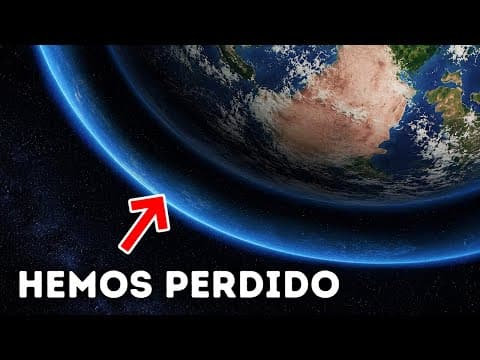
This blog post delves into the concept of isostasy, exploring how the Earth's crust balances itself under varying pressures, particularly from oceans and mountains. It discusses the implications of heat and geological processes on this balance, emphasizing the Earth's memory of past conditions and the dynamic nature of its surface.
Isostasy is a fundamental concept in geology that describes the equilibrium of the Earth's crust as it floats on the denser, underlying mantle. This blog post delves into the intricate dynamics of isostasy, examining how various forces, particularly heat and pressure from oceans and mountains, influence the Earth's surface.
The term isostasy comes from the Greek word "isos," meaning equal, and "stasis," meaning standing still. It refers to the state of gravitational equilibrium between the Earth's lithosphere (the crust and upper mantle) and the asthenosphere (the semi-fluid layer beneath). This balance is crucial for understanding how the Earth's surface responds to changes in load, such as the addition or removal of ice sheets, sediment, or water.
Heat plays a significant role in the processes that govern isostasy. As the Earth heats up, it affects the viscosity of the mantle, which in turn influences how the crust behaves under various loads. The transcript emphasizes the repetitive mention of heat, highlighting its importance in geological processes.
The phrase "the earth remembers" suggests that geological formations and the current state of the Earth's crust are influenced by historical conditions. For instance, when glaciers melt, the land beneath them can rebound, a process known as post-glacial rebound. This phenomenon illustrates how the Earth's crust retains a memory of past pressures and adjusts accordingly.
The transcript poetically describes the interaction between oceans and mountains, stating, "oceans press down" and "stones rise." This imagery captures the essence of isostatic adjustment. When large bodies of water accumulate, they exert pressure on the crust, causing it to sink slightly. Conversely, when mountains erode or glaciers melt, the crust can rise as the weight is removed.
The dynamic nature of the Earth's surface is a result of various geological processes:
Isostasy is a complex yet fascinating aspect of Earth science that illustrates the delicate balance of forces acting upon our planet. The interplay of heat, pressure, and geological processes shapes the landscape we see today. Understanding isostasy not only provides insight into the Earth's past but also helps predict future changes in our environment. As we continue to study these processes, we gain a deeper appreciation for the dynamic nature of our planet and its ability to adapt to changing conditions.