David Bolinsky, a medical illustrator, discusses the intersection of art and science in understanding cellular biology. He emphasizes the importance of visual storytelling in education, particularly through animation, to reveal the intricate workings of cells and their micro-machines, which are essential for life.
David Bolinsky, a medical illustrator, presents a unique perspective on the relationship between art and science. He believes that both fields express truth and beauty, which can be difficult to appreciate without a proper understanding of the underlying concepts. In his talk, Bolinsky shares his journey to make the complexities of cellular biology accessible through visual storytelling and animation.
Bolinsky reflects on his upbringing, where he was exposed to both the arts and sciences. He describes truth and beauty as ideals that scientists aspire to understand. However, these concepts can often be opaque to those outside the scientific community. For instance, mathematical equations like E=mc² or the cosmological constant can be challenging to grasp without a solid foundation in the subject matter.
To bridge this gap, Bolinsky aims to use animation and visual storytelling to help people comprehend the beauty and intricacies of biological sciences. He argues that education often compartmentalizes subjects, stripping away the inherent truth and beauty. He likens this to boiling chicken soup until the flavor is gone, emphasizing the need to preserve the richness of knowledge.
Bolinsky recounts a pivotal moment when he received a call from Robert Lue at Harvard's Molecular and Cellular Biology Department. They discussed a project aimed at revolutionizing medical and scientific education at Harvard. The goal was to explore the truth and beauty of molecular and cellular biology, allowing students to visualize the cell as a bustling city filled with micro-machines.
These micro-machines, made of amino acids, are essential for life. They power cellular functions such as movement and replication, and they are the envy of nanotechnologists worldwide. Bolinsky and his team sought to create an animation that would serve as a centerpiece for BioVisions, a Harvard website dedicated to molecular and cellular biology. This animation would complement traditional educational materials, providing students with a vivid mental image of cellular processes.
The project involved collaboration with Harvard scientists to accurately depict how molecules function within a cell. Bolinsky describes a scene where macrophages navigate through capillaries, gathering information about inflammation. This process illustrates how molecular motors respond to signals, changing their shape to fulfill the cell's needs.
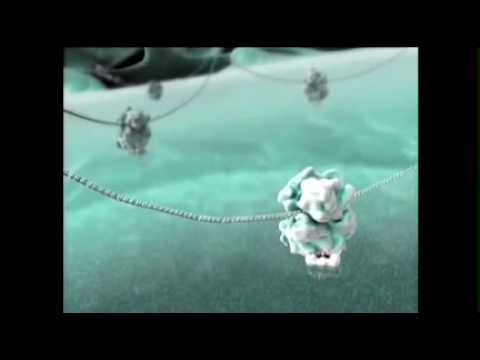
The animation showcases kinesins, the "FedEx delivery guys" of the cell, which transport essential proteins to various locations within the cell. Bolinsky highlights that each human cell contains approximately 100,000 kinesins, emphasizing the remarkable activity occurring within our bodies at all times.
Bolinsky concludes by encouraging the audience to reflect on the power of cells and the ongoing research into cellular mechanics. He notes that current scientific understanding is still limited, with only about one percent of cellular processes fully understood. However, as research progresses, there is potential for significant advancements in health and longevity.
The collaboration between art and science, as exemplified by Bolinsky's work, aims to uncover more truths and beauties of life at the cellular level. By making complex biological concepts accessible through animation, Bolinsky hopes to inspire future generations of scientists and thinkers.
David Bolinsky's innovative approach to visualizing cellular biology highlights the importance of integrating art and science in education. Through animation, he seeks to reveal the intricate workings of cells and their micro-machines, fostering a deeper understanding of life itself. As we continue to explore the mysteries of cellular mechanics, we may unlock new possibilities for health and well-being, ultimately enhancing our appreciation for the beauty of life.