This blog post delves into the complexities of modern lunar missions, comparing them to past successes, discussing recent failures, and exploring the potential for a lunar GPS system. It also touches on the broader implications of space exploration and consciousness.
As humanity prepares to return to the moon, many are left wondering why this endeavor seems more challenging now than it did during the Apollo missions of the late 1960s. While some may view this as suspicious, the reality is that lunar exploration has always been a monumental task, fraught with difficulties and requiring vast resources. In this blog post, we will explore the current state of lunar missions, the reasons behind recent failures, and the exciting innovations on the horizon.
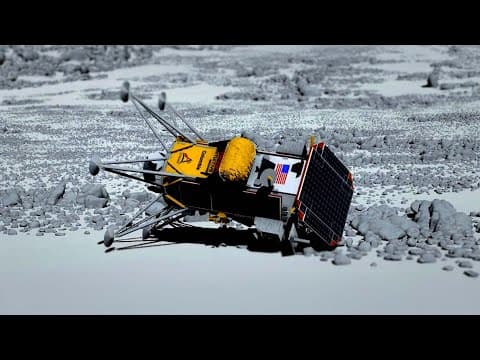
In recent years, there has been a surge in lunar missions, but the success rate has been less than stellar. Out of the last twelve moon landing attempts since 2019, only five have been successful. Notably, Firefly Aerospace's Blue Ghost lander became the first private company to successfully land on the moon, a significant milestone in the realm of space exploration. However, this achievement comes amidst a backdrop of failures, including Japan's recent mission that crashed in June and another in March of the same year.
The question arises: why are modern missions struggling compared to the successes of the 1960s? One major factor is funding. Adjusted for inflation, the Apollo program had a budget that was three times larger per launch than current missions. This financial backing allowed for more extensive research, development, and testing.
Additionally, the landing sites for current missions are more complex. For instance, missions are now targeting the far side of the moon and the lunar South Pole, areas that present unique challenges due to their terrain and lighting conditions. The angle of the sun at the South Pole creates shadow artifacts that can interfere with the visual systems of landing equipment, complicating the landing process.
One of the questions raised by viewers is whether a GPS-like constellation could be established around the moon to assist with navigation. Currently, there are only six active satellites orbiting the moon, which is far fewer than one might expect. These include NASA's Lunar Reconnaissance Orbiter, India's Chandrayaan-2 orbiter, and Korea's Pathfinder lunar orbiter, among others.
NASA is developing a system called Lunaet, which aims to provide navigation services for lunar missions. This system is designed to facilitate communication between landers, orbiters, and astronauts, potentially offering a GPS-like capability for lunar navigation. Interestingly, Firefly's Blue Ghost mission utilized Earth-based GPS satellites to navigate, marking a significant technological achievement in lunar exploration.
As we look to the future, the potential for lunar exploration is vast. The idea of establishing a lunar colony, discovering undeniable evidence of extraterrestrial life, or even sending humans to Mars are all tantalizing prospects. However, the most transformative event could be the discovery of life beyond Earth, which would fundamentally alter our understanding of our place in the universe.
In a broader context, the exploration of space also raises profound questions about consciousness and our understanding of reality. The concept of being a "brain in a jar"—a metaphor for our subjective experience of reality—can be both terrifying and awe-inspiring. Our brains construct our perceptions based on sensory inputs, leading to unique interpretations of the world around us. This understanding emphasizes the importance of curiosity and open-mindedness in our interactions with others and the information we consume.
The challenges of lunar exploration are significant, but so are the innovations and discoveries that lie ahead. As we continue to push the boundaries of what is possible in space, we must also reflect on the philosophical implications of our findings and the nature of our consciousness. The journey to the moon is not just about landing on its surface; it is about understanding our place in the cosmos and the shared experience of humanity.
As we embark on this new era of exploration, let us remain curious and open to the wonders that await us beyond our planet.