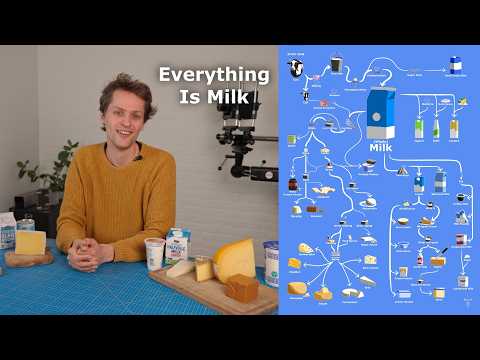
Milk contributes 5% of global calorie intake, rivaling staples like corn and potatoes. This article explores the intricate processes from cow impregnation to the production of various dairy products, including cheese, yogurt, butter, and more. It also highlights modern dairy farming practices, ethical concerns, and the science behind milk processing techniques such as pasteurization, homogenization, and aging.
Milk is a staple in diets worldwide, providing about 5% of all calories consumed globally, comparable to major food staples like corn and potatoes. However, the journey from a cow to the diverse array of milk products we enjoy is a complex and fascinating process involving intricate technology and traditional craftsmanship.
Milk production starts with impregnating a cow. Cows must have a calf before they begin producing milk. After birth, the calf is typically separated, and the milk is collected for human consumption. Dairy cows produce milk steadily for about 10 months, necessitating impregnation roughly every year to maintain production.
Artificial insemination is commonly used, where sperm from genetically desirable bulls is stored in liquid nitrogen and introduced into the cow as needed. While some cows can live up to 20 years, the average dairy cow's productive lifespan is about 5 years. Once they stop producing or face health issues, they are usually sent for meat production.
Milking today is highly automated. Cows wear necklaces that monitor vital signs like heart rate. When a cow is ready to be milked, she approaches the milking machine, which scans her necklace, cleans her teats, applies suction, and collects the milk.
The milk collected directly from cows is called raw milk. It contains many living microorganisms and has a short shelf life of a few days, even when refrigerated, due to its nutrient-rich nature.
To improve milk's stability and safety, it undergoes homogenization and pasteurization:
Homogenization: Milk is forced through tiny openings to break fat into small particles, preventing cream from separating and floating to the top. This creates a stable emulsion.
Pasteurization: Milk is heated to just over 70°C for about 20 seconds to kill harmful bacteria and pathogens. This process ensures safety without significantly affecting nutritional value.
After pasteurization, the milk is considered whole milk and serves as the base for most dairy products.
Milk is approximately 87% water, 5% lactose (milk sugar), 3.12% fat, and 3.5% protein, primarily casein and whey. It also contains less than 1% minerals. Different cow breeds produce milk with varying fat and protein content, influencing the characteristics of dairy products.
For shelf-stable milk, raw milk is rapidly heated to about 140°C for 2 to 5 seconds under high pressure to prevent boiling. This process, known as UHT treatment, extends shelf life significantly.
Cheese production is one of the most elaborate branches of milk processing. It primarily involves separating casein proteins and some fat from the milk.
Milk fat is separated through skimming, traditionally by letting fat rise to the top or using centrifuges today.
The health and quality of milk and dairy products depend heavily on farming practices, including the health and treatment of cows. While some farms prioritize animal welfare, many animals worldwide are subjected to factory farming conditions considered cruel by many.
Organizations like Farm Kind research and recommend charities working to end factory farming and improve animal welfare. Donations to such causes can have significant impacts, helping thousands of animals annually.
Milk is not just a simple beverage but a complex starting point for a vast family tree of products, each with unique production methods and characteristics. From the biology of cows to advanced processing technologies and ethical farming, the story of milk encompasses science, tradition, and responsibility.
Understanding this complexity enriches our appreciation of everyday dairy products and highlights the importance of sustainable and humane practices in the dairy industry.