This blog post delves into the complexities of tariffs as an economic tool, examining their historical context, recent applications, and potential impacts on consumers and industries. It highlights the nuanced trade-offs involved in tariff implementation and discusses the geopolitical implications of relying on tariffs in today's global economy.
Tariffs have resurfaced as a significant topic of economic discussion, particularly since Donald Trump's election as President of the United States. His administration utilized tariffs as both a negotiating tactic and a solution to various economic challenges. This approach draws inspiration from the 19th century when tariffs were a cornerstone of U.S. trade policy, purportedly helping to maintain a zero income tax and protect burgeoning industries. This raises the question: if tariffs were effective in the past, could they be beneficial again today?
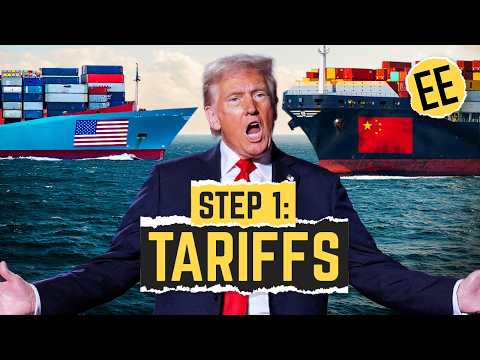
Tariffs are essentially taxes imposed on imported goods, paid by domestic businesses importing these products. This government intervention falls under protectionism or economic nationalism. The primary objective of tariffs is to make imported goods more expensive, thereby making domestic products relatively cheaper. This shift encourages consumers to buy locally produced goods, fostering investment, job creation, and industrial growth within the domestic economy. This process is known as import substitution industrialization.
Historically, many countries have employed tariffs to protect and develop their industrial bases, with the United States being a notable example. The first significant tariff legislation was passed shortly after the ratification of the U.S. Constitution in 1789, highlighting the long-standing role of tariffs in American economic policy.
In the late 18th and 19th centuries, U.S. industries were struggling to compete with European manufacturers, who had already begun their industrial revolutions. To protect its nascent industries, the U.S. government imposed tariffs to raise the prices of European imports, encouraging domestic production. By the late 19th century, tariffs accounted for 90% of federal income, and income tax was not introduced until 1910.
However, the use of tariffs was contentious. While they benefited Northern industrial interests, they adversely affected the agrarian South, which relied on exports that faced retaliatory tariffs from Europe. This historical debate around tariffs continues to resonate today.
Post-World War II, the U.S. transitioned to a pro-free trade stance, becoming a leader in global trade. The establishment of the World Trade Organization in 1995 marked a significant shift towards lower tariffs and increased trade efficiency. However, this trend faced challenges when the U.S. imposed tariffs on its largest trading partner in 2018, reigniting discussions about the impacts of tariffs.
The 2018 tariffs on washing machines provide a clear example of the immediate effects of tariffs on consumer prices. Research indicated that the costs of these tariffs were passed onto consumers, leading to significant price increases not only for washing machines but also for related products like dryers. The overall burden on consumers exceeded the tariff amount, effectively acting as a hidden tax.
The tariffs generated approximately $80 billion in indirect taxes on Americans, marking one of the largest tax increases in decades. While the tariffs aimed to protect domestic jobs, the cost per job created was exorbitantly high, raising questions about the efficiency of such measures.
Tariffs can also have detrimental effects on industries reliant on imported materials. For instance, a 25% tariff on steel imports in 2018 increased costs for various sectors, including automotive and construction, leading to layoffs despite job creation in the domestic steel industry. This illustrates the complex interplay between tariffs and employment across different sectors.
Moreover, retaliatory tariffs imposed by other countries can exacerbate the situation. For example, China's tariffs on U.S. agricultural products led to significant financial losses for American farmers, necessitating government intervention to mitigate the impact.
While the short-term effects of tariffs appear negative for consumers and many industries, the long-term implications may differ. Historical examples, such as the 25% tariff on light trucks introduced in 1964, show that tariffs can protect domestic industries and encourage investment over time. However, this protection can also lead to complacency and reduced competition, ultimately harming consumers.
For tariffs to be effective, they must be implemented with precision. Blanket tariffs can lead to widespread economic disruption, increasing input costs and consumer prices while failing to bring jobs back to the U.S. Instead, targeted tariffs that consider the complexities of global supply chains and domestic market conditions are essential.
In today's increasingly unstable global landscape, tariffs may also serve as a tool for national security. Reliance on foreign countries for critical goods poses risks, particularly in strategic sectors like semiconductors and energy. In times of geopolitical tension, tariffs could be necessary to ensure domestic production capabilities.
The debate surrounding tariffs is multifaceted, encompassing economic, industrial, and geopolitical dimensions. While tariffs can serve as a useful tool in certain contexts, their implementation must be carefully considered to avoid unintended consequences. As the global economy evolves, the challenge lies in balancing protectionist measures with the realities of a complex and interconnected world.