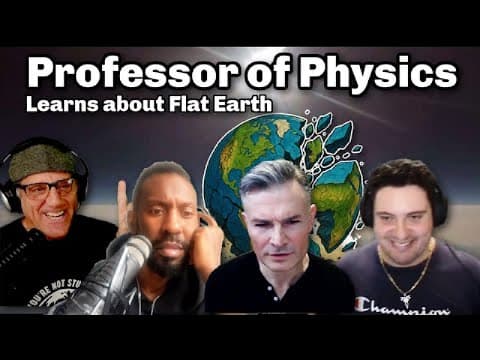
This article presents a comprehensive discussion between proponents of the Flat Earth model and a physicist advocating the heliocentric model. The Flat Earth perspective describes a stationary, enclosed, geocentric plane with luminaries rotating around Polaris, challenging conventional scientific explanations such as gravity and space vacuum. The physicist emphasizes evidence-based science and invites respectful debate, encouraging readers to verify claims independently.
In a recent engaging discussion, Flat Earth proponents and a physicist came together to debate the nature of our world and the cosmos. The conversation aimed to delve deeper into the contrasting views of the Flat Earth model and the widely accepted heliocentric model taught in schools worldwide.
The participants included Flat Earth Dave and Angel of Light, representing the Flat Earth perspective, and Dr. Matthew Jelavic, a professor of physics specializing in fluid mechanics and thermodynamics, representing the scientific community.
Angel of Light succinctly summarized the Flat Earth stance in three sentences:
Flat Earth Dave agreed with this summary, emphasizing the clarity of their position.
Dr. Matthew Jelavic introduced himself as a physicist and professional engineer with over two decades of experience. He expressed his intention to engage in a respectful and informative discussion, aiming to understand the Flat Earth model better and to share scientific insights.
He acknowledged that the Flat Earth model is new to many and that the heliocentric model is the standard educational framework. He pointed out that both models cannot be correct simultaneously, prompting the need for critical examination.
The Flat Earth proponents argue that the globe model defies natural laws. They highlight several issues:
Flat Earth Dave emphasized the importance of skepticism and verification. He urged listeners not to accept their claims blindly but to investigate and verify the information independently. He suggested that belief can hinder true knowledge and encouraged critical thinking.
An illustrative exchange highlighted the difference between belief and knowledge. When asked where he lives, Dr. Jelavic responded based on trust in the information provided, which is belief rather than direct knowledge. This example was used to demonstrate how much of what people accept is based on belief rather than empirical knowledge.
Flat Earth Dave recounted a recent conversation with a school principal and science teachers, questioning the evidence they consider as proof of living on a globe. This anecdote underscores the Flat Earth community's challenge to mainstream scientific education and their call for re-examination of accepted facts.
This discussion between Flat Earth advocates and a physicist highlights the ongoing debate between alternative worldviews and established scientific understanding. The Flat Earth model presents a stationary, enclosed, geocentric plane with rotating luminaries, challenging concepts such as gravity and the vacuum of space.
Conversely, the scientific perspective relies on extensive empirical evidence supporting the heliocentric model and the laws of physics as currently understood.
The conversation encourages readers to approach such topics with an open mind, critical thinking, and a commitment to verifying information independently. Whether one aligns with the Flat Earth model or the heliocentric model, the dialogue exemplifies the importance of respectful discourse and inquiry in the pursuit of knowledge.
This article aims to provide a balanced and comprehensive overview of the key points discussed in the debate, preserving the integrity of each viewpoint and fostering informed understanding among readers.