This article delves into the intricate relationship between music, mathematics, and astrology, tracing the evolution of jazz and its connections to African mathematical concepts, particularly through the works of John Coltrane. It highlights how these elements intertwine to create harmony in life and art, emphasizing the significance of the number twelve in both music and astrology.
Harmony is a multifaceted concept that can refer to various aspects of life, including the harmony of a nation, family, spirit, music, art, and even a beautiful day. The ancient Egyptian term "Ma'at" embodies this idea of harmony and balance, suggesting that the ultimate goal of life is to achieve a state of harmony. The exploration of harmony can be deeply enriched by understanding its mathematical roots, particularly through the lens of music.
Jazz, a genre deeply rooted in African American culture, has undergone significant transformations over the last century. Early jazz was heavily influenced by New Orleans funeral marches, which were characterized by a march rhythm in 4/4 time. This rhythmic foundation laid the groundwork for the evolution of jazz through various styles:
This progression from whole beats to chaotic improvisation reflects a mathematical journey through fractions, paralleling the African approach to mathematics, which often involves doubling or halving numbers.
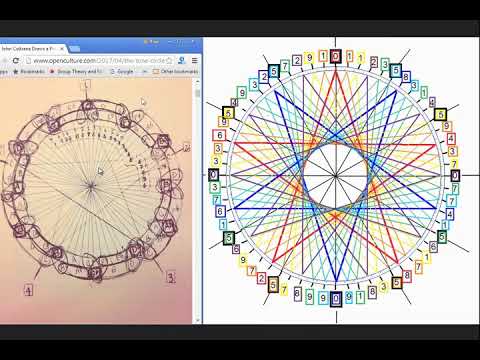
Coltrane's work exemplifies the intersection of music and mathematics. He developed a visual representation known as the circle of fifths, which illustrates the chromatic scale and the relationships between musical notes. This diagram connects musical notes to astrological symbols, highlighting the metaphysical aspects of music.
Coltrane's exploration of the number sixty is particularly significant, as it relates to the ancient Egyptian understanding of proportions and harmony. The Fibonacci sequence, often attributed to the mathematician Fibonacci, was known to African cultures long before his time. This sequence, where each number is the sum of the two preceding ones, reflects a modulus 10 system that resonates with the structure of music and astrology.
Astrology, with its twelve signs, mirrors the twelve notes in the chromatic scale. Each zodiac sign corresponds to specific lessons and experiences in life, akin to musical notes that create a symphony of existence. The twelve-fold structure of the zodiac is not only a framework for understanding personality and destiny but also reflects the molecular structures of life, such as hemoglobin and chlorophyll.
The zodiac's twelve signs can be seen as a guide for personal growth, with each sign representing a unique aspect of the human experience. This connection emphasizes the importance of understanding one's astrological chart as a musical composition, where each planet and sign contributes to the overall harmony of life.
Breathing is a fundamental aspect of both music and life. The average human breathes about 18 times per minute, a rhythm that aligns with the harmonic ratios found in music and the zodiac. The structure of music often dictates breathing patterns, as phrases in music require pauses and breaths, much like the cycles of life.
The ancient Egyptians understood the significance of breathing in relation to harmony and art. They maintained consistent harmonic ratios in their artistic representations to ensure stability and balance in the human spirit. This understanding of breathing and harmony is crucial for achieving a balanced life.
When composing music, one can apply mathematical principles to enhance the structure and emotional impact of a piece. By utilizing the Fibonacci sequence, composers can strategically place key moments in their music, ensuring that listeners experience a natural flow and resonance. For instance, significant transitions or themes can be introduced at measures that correspond to Fibonacci numbers, creating a more engaging listening experience.
The exploration of music, mathematics, and astrology reveals a profound interconnectedness that can guide individuals toward a harmonious life. By understanding the principles of harmony, one can navigate the complexities of existence with greater ease and clarity. The teachings of figures like John Coltrane serve as a reminder of the beauty that arises when we align our lives with the rhythms of the universe.
Incorporating these insights into daily life can lead to a deeper understanding of oneself and the world, fostering a sense of balance and harmony that resonates through music, art, and personal growth.