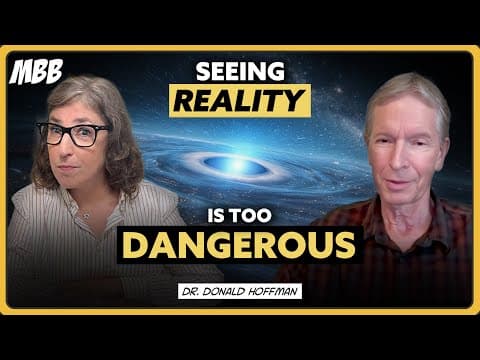
Dr. Donald Hoffman argues that our perception of reality is a construction of consciousness, akin to a VR headset. He discusses the intersection of science and spirituality, suggesting that understanding consciousness can lead to profound technological advancements and a deeper understanding of existence.
In a thought-provoking discussion, Dr. Donald Hoffman, a cognitive science professor at MIT, presents a radical perspective on reality. He posits that everything we perceive within spacetime is merely a construction of our consciousness, akin to wearing a virtual reality headset. This blog post delves into the key concepts from his insights, exploring the implications for science, spirituality, and our understanding of existence.
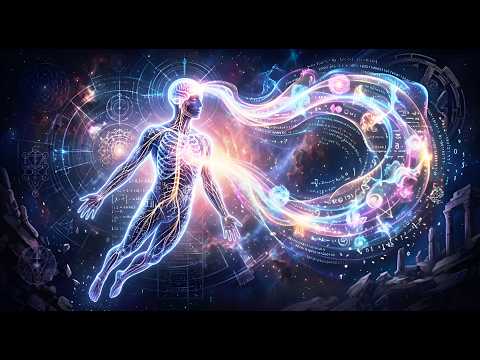
Dr. Hoffman suggests that spacetime is not fundamental; rather, it is a construct generated by our consciousness. He emphasizes that our brains provide clues about how this "headset" is created, hinting at a deeper reality that lies beyond our perceptions. This perspective challenges the traditional dichotomy between science and spirituality, suggesting that both realms may converge in understanding the nature of existence.
Hoffman highlights a significant shift in high-energy theoretical physics, where scientists are beginning to acknowledge that spacetime may not be the ultimate reality. This realization opens the door to exploring concepts that have long been discussed in spiritual traditions, such as the idea that consciousness is fundamental and that there is something beyond the physical world.
One of the most intriguing aspects of Hoffman's theory is the potential for technological advancements that could arise from understanding consciousness. He speculates about the possibility of downloading languages, regrowing limbs, or even manipulating the laws of physics as we know them. This idea parallels the concept of characters in the movie "The Matrix," where individuals can download skills and knowledge instantaneously.
However, with great power comes great responsibility. Hoffman warns that unlocking such capabilities could lead to catastrophic consequences if misused. The ability to manipulate reality could result in playing God, raising ethical questions about how such power should be wielded.
Hoffman argues that our perception of separation from others is an illusion. He draws on the allegory of Plato's cave, suggesting that we are chained to our limited perceptions and that true understanding requires us to transcend these limitations. By recognizing that we are all part of a collective consciousness, we can begin to dismantle the barriers that divide us.
On an emotional level, many individuals identify strongly with their bodies and the physical world, leading to fear and attachment. Intellectually, the challenge lies in imagining what exists beyond spacetime. Hoffman encourages us to embrace the idea that our sensory experiences are just a fraction of the reality that exists.
As humanity evolves, Hoffman envisions a future where our understanding of consciousness leads to profound changes in how we interact with the world and each other. He believes that as we develop technologies based on the principles of consciousness, we may find ourselves more connected and compassionate.
Despite the potential for positive change, Hoffman acknowledges that human nature may resist this evolution. Our instinctual drive for survival and self-preservation can hinder our ability to embrace a more expansive understanding of reality. However, he remains hopeful that the integration of scientific and spiritual insights will inspire individuals to seek deeper connections with themselves and others.
Dr. Donald Hoffman's exploration of consciousness and reality challenges us to reconsider our perceptions and the nature of existence. By recognizing that our experiences are shaped by a complex interplay of consciousness, we can begin to unlock new possibilities for understanding and technology. As we navigate this journey, it is essential to remain open-minded and humble, acknowledging that our current understanding is just the beginning of a much larger exploration of reality.