Water is often taken for granted, yet it possesses remarkable properties that go beyond the traditional understanding of its three phases. Recent discoveries reveal a fourth phase of water essential for cellular function, and studies suggest water responds to human emotions and words at a molecular level. Understanding water's complex nature deepens our appreciation of life and its magical qualities.
Water is a substance so familiar that we often overlook its true value and complexity. As Benjamin Franklin famously said, "We only know the worth of water when the well is dry." This statement highlights how easily we take water for granted, simply turning on the tap expecting clean, drinkable water without a second thought.
In conventional science, water has traditionally been viewed as a passive background medium — the substance that fills bathtubs and carries the molecules of life without any active role. It was considered to have no molecular structuring, intelligence, or responsiveness. This perception is so ingrained that many cell biology textbooks scarcely mention water in their indexes.
However, this view is changing as new research uncovers the extraordinary nature of water. Water is not just a simple liquid; it exhibits properties that challenge our understanding of biology and physics.
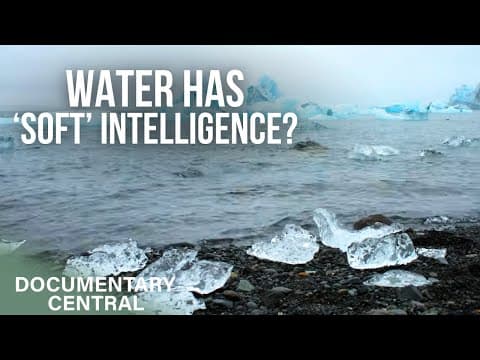
Most of us learn early on that water exists in three phases: solid (ice), liquid, and vapor. Yet, scientists have discovered a fourth phase of water that is crucial for nearly every function within cells. This phase is not just a scientific curiosity but a fundamental aspect of life itself.
Water's ability to change states — from liquid to solid to vapor — is a form of malleability that, if humans could emulate, might lead to greater adaptability and happiness.
Water exhibits remarkable quantum mechanical properties. Experiments have shown that water can respond to human emotions and words at a molecular level. For example, when water is exposed to positive words like "thank you" in Japanese, its molecular structure forms beautiful, symmetrical patterns upon freezing. Conversely, negative words like "you fool" result in disordered, unattractive formations.
One particularly striking experiment involved asking water if it knew the researcher's name. Upon freezing, the water formed a pattern resembling the initials of the name, a result that was reproducible in multiple trials.
These findings suggest that water has a form of intelligence or consciousness, responding to human intention and emotion in ways we are only beginning to understand.
Water is described as a living consciousness, a being capable of shape-shifting to meet the needs of its environment. This perspective invites us to see water not just as a chemical compound but as an active participant in life processes.
The story of water is rich and complex, and it is our responsibility to bring this story forward to foster a deeper, richer understanding of life itself. If there is magic on this planet, it is contained within water.
Humans are approximately two-thirds water, but the water inside our cells is not the simple H2O we commonly know. Instead, the body converts it into a unique form with the formula H3O2. This specialized water plays a vital role in cellular function and overall health.
Understanding this unique form of water and its properties could unlock new insights into biology and medicine.
Water is far more than a passive substance; it is a dynamic, intelligent, and essential component of life. From its multiple phases to its responsiveness to human emotions and its unique forms within our bodies, water holds secrets that challenge our conventional scientific views.
Recognizing the intelligence and magic of water enriches our appreciation of the natural world and underscores the importance of preserving this vital resource. As we continue to explore water's mysteries, we may uncover answers to questions we have yet to even ask.