This blog post delves into a thought-provoking discussion on whether mathematics is invented or discovered, and how this relates to the existence of a divine mind behind the universe. Through a dialogue between Steven Meyer and Michael Shermer, the post explores the implications of mathematical realism and its connection to theism, ultimately suggesting that the structure of mathematics points towards a higher intelligence.
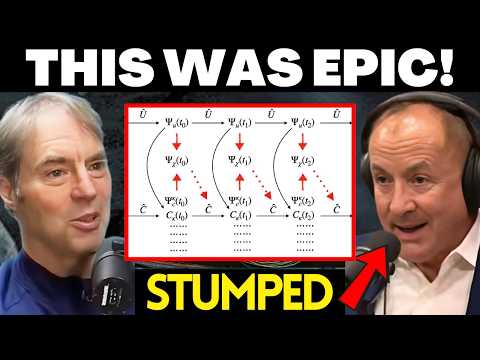
Mathematics has long been a subject of fascination and debate, particularly regarding its nature: is it invented or discovered? This question not only touches on the foundations of mathematics but also leads to profound implications about the existence of a mind behind the universe. In a recent discussion, Steven Meyer and Michael Shermer engage in a compelling dialogue that unpacks these ideas, revealing layers of thought that challenge conventional perspectives.
At the heart of the discussion is the philosophical debate surrounding mathematics. Many in contemporary culture view mathematics as a social construct, akin to concepts of gender or morality. However, Meyer presents a compelling argument that suggests otherwise. He posits that the evidence increasingly points towards mathematics being discovered rather than invented.
Meyer references a mathematician who argues that most mathematicians are mathematical Platonists. This philosophical stance holds that mathematical objects—such as circles and equations—exist independently of human thought. They possess an objective reality that is stable and consistent, regardless of individual perception. For instance, the Pythagorean theorem (a² + b² = c²) remains true irrespective of human existence. This raises a critical question: if these mathematical truths exist independently, in whose mind do they reside?
The mathematician Meyer speaks with suggests that the existence of these objective mathematical truths points towards an immaterial mind, potentially aligning with theistic beliefs. This perspective implies that if mathematics is conceptual and independent of human perception, it may reside in the mind of a divine creator.
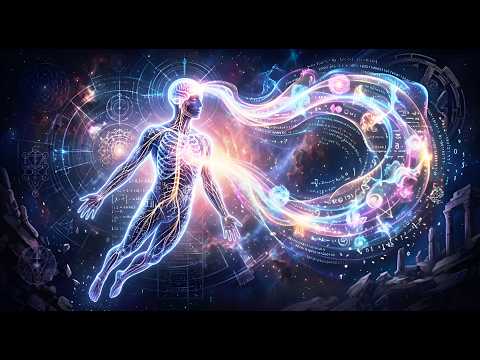
Meyer further explores how mathematics describes the laws of nature. For example, the process of stellar fusion can be described mathematically, yet the mathematics itself does not exist within the star. Instead, it exists as a conceptual framework that helps us understand the universe. This leads to the question of where this mathematical description resides, suggesting that it may exist in a divine mind that orchestrates the universe.
The discussion also touches on quantum cosmology, which presents its own theistic implications. The mathematical functions that describe the universe, such as the universal wave function, pre-exist the physical universe. This raises the question of whether the existence of such mathematical structures inadvertently suggests a mind behind the universe.
One of the most intriguing points raised in the dialogue is the unreasonable applicability of mathematics to the physical world. Historical examples show that mathematical theories developed without immediate application later become crucial in understanding complex physical phenomena, such as quantum mechanics. This phenomenon raises questions about why the mathematics we develop aligns so closely with the universe's design.
Meyer references the principle of correspondence, which was pivotal during the scientific revolution. This principle posits that the same intelligence that designed the universe also designed human minds to comprehend its mathematical structure. This alignment suggests that the universe is intelligible and can be understood through scientific inquiry, reinforcing the idea of a divine creator.
While Meyer presents a strong case for theistic implications of mathematics, Shermer offers a skeptical perspective. He references physicist Max Tegmark, who proposes that all mathematically possible structures exist in some possible world, which does not necessarily lead to a theistic conclusion. This skepticism highlights the ongoing debate within the philosophical community regarding the nature of mathematics and its implications.
Ultimately, the dialogue between Meyer and Shermer underscores a deeper quest for truth—capital T truth—that exists outside human constructs. This truth, as Meyer argues, is authored by God, who has established the universe to operate in a predictable and repeatable manner. The irony lies in the attempt to use science or mathematics to disprove God, as the very ability to engage in such inquiry points to a divine intelligence that pre-exists our understanding.
The conversation between Steven Meyer and Michael Shermer invites us to reflect on the profound relationship between mathematics and the existence of a higher intelligence. As we explore the nature of mathematical truths and their implications, we are reminded that our discoveries in science and mathematics may reveal more than just the workings of the universe; they may also point towards the divine. This dialogue encourages us to engage with these deep questions, fostering a spirit of inquiry that transcends mere intellectual curiosity.
In conclusion, mathematics not only serves as a tool for understanding the universe but also invites us to consider the possibility of a mind that orchestrates its intricate design. As we continue to explore these ideas, we may find that the intersection of mathematics and theism offers a rich field for contemplation and discovery.