This blog post delves into the controversial idea of the 'selfish gene' theory in biology, exploring how genes, rather than individuals or species, are the primary units of natural selection. It discusses the implications of this perspective on altruism, reproduction, and the evolution of complex life forms, while addressing criticisms of the theory and its relevance in understanding evolutionary processes.
Understanding evolution can be a complex endeavor, often leading to intriguing questions about the nature of life itself. One such question that can reveal a lot about our grasp of evolutionary principles is: Why does poop smell bad? While the answer may seem trivial, it opens the door to deeper discussions about survival, natural selection, and the essence of life.
The unpleasant odor of feces is primarily due to the presence of bacteria and other compounds that can be harmful to humans. This aversion to the smell serves a crucial evolutionary purpose: it discourages behaviors that could lead to illness and death, thereby ensuring that individuals who find the smell repulsive are more likely to survive and reproduce. This leads us to the concept of natural selection, often summarized as the survival of the fittest.
Most people interpret natural selection as a process favoring the survival of individual organisms. However, this perspective raises questions about altruistic behaviors observed in nature. For instance, worker bees sacrifice themselves to protect their hives, and monkeys adopt orphans. These behaviors challenge the notion that survival is solely about individual selfishness.
Some argue that natural selection operates at the level of species or groups. However, this view is problematic because groups do not replicate in the same way individuals do. Natural selection requires entities that can create copies of themselves, which complicates the idea of group selection.
To understand the true mechanics of evolution, we must look back to the origins of life on Earth. In the primordial void, simple molecules interacted under the influence of energy sources, leading to the formation of more complex compounds. This process hints at the law of stability: unstable compounds disappear, while stable ones endure.
Eventually, through random interactions, a unique shape formed that could attract similar molecules, leading to the first replicator. This marks a significant milestone in evolution, as it allowed for the copying of structures, setting the stage for the emergence of life.
As replicators filled the void, mutations began to occur. These mutations could be beneficial, harmful, or neutral, leading to a battleground for survival among different replicators. The competition for limited resources shaped which replicators thrived, emphasizing the importance of replication rates, death rates, and mutation rates in determining success.
Over billions of years, replicators evolved into more complex forms, leading to the bacteria, plants, fungi, and animals we see today. These organisms serve as vessels for the replicators, which we now recognize as genes. The transition from simple replicators to complex life forms illustrates the intricate relationship between genes and survival.
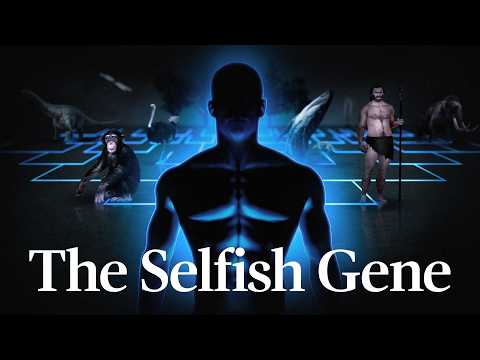
Richard Dawkins popularized the idea that genes are the primary units of natural selection in his book "The Selfish Gene." This perspective suggests that every trait, whether altruistic or selfish, ultimately serves the purpose of gene survival. From this viewpoint, organisms are seen as vehicles for their genes, programmed to ensure their replication.
Altruistic behaviors, such as those exhibited by California ground squirrels, can be explained through kin selection. By helping relatives, individuals increase the chances of their shared genes being passed on, even at a personal cost. This gene-centric view provides a compelling framework for understanding the evolution of social behaviors.
One of the significant questions arising from the selfish gene perspective is the evolution of sexual reproduction. Why would organisms choose to discard half their genes? While some argue that sexual reproduction increases genetic variation, it also raises the question of whether the genes that promote sexual reproduction are simply replicating themselves at the expense of others.
Despite its influence, the selfish gene theory is not without controversy. Critics argue that it oversimplifies the complexities of evolution, implying that every gene is actively selected for, while many may drift through genetic drift without significant selection pressure. Additionally, the term "selfish" can mislead, suggesting agency where there is none.
Genes are not straightforward; one gene can influence multiple traits, and many traits can be influenced by several genes. This complexity challenges the notion that natural selection operates solely at the level of individual genes. Environmental factors also play a crucial role in gene expression, further complicating the picture.
The selfish gene theory offers a powerful lens through which to view evolution, emphasizing the role of genes in shaping behaviors and traits. While it simplifies some aspects of evolutionary biology, it also opens up discussions about the nature of life and the intricate relationships between organisms and their genetic material. Understanding evolution through this framework can deepen our appreciation for the complexity of life and the forces that drive it.
In the end, whether we view ourselves as mere vessels for our genes or as autonomous beings, the interplay between genes and survival remains a fundamental aspect of our existence. The journey of life, from simple replicators to complex organisms, continues to unfold, revealing the profound connections that bind us all together in the tapestry of evolution.